Tag: national security
2618 articles

Australia's Taiwan Dilemma Exposes Maritime Security Gaps
As US Senator Tammy Duckworth warns, China may opt for a stealthier approach to controlling Taiwan, imposing an economic blockade by 2028 rather than launching a full-scale invasion, highlighting a pressing concern for Canberra. This looming threat exposes gaps in maritime security, raising questions about how access to Taiwan's maritime approaches can be safeguarded without sparking conflict.
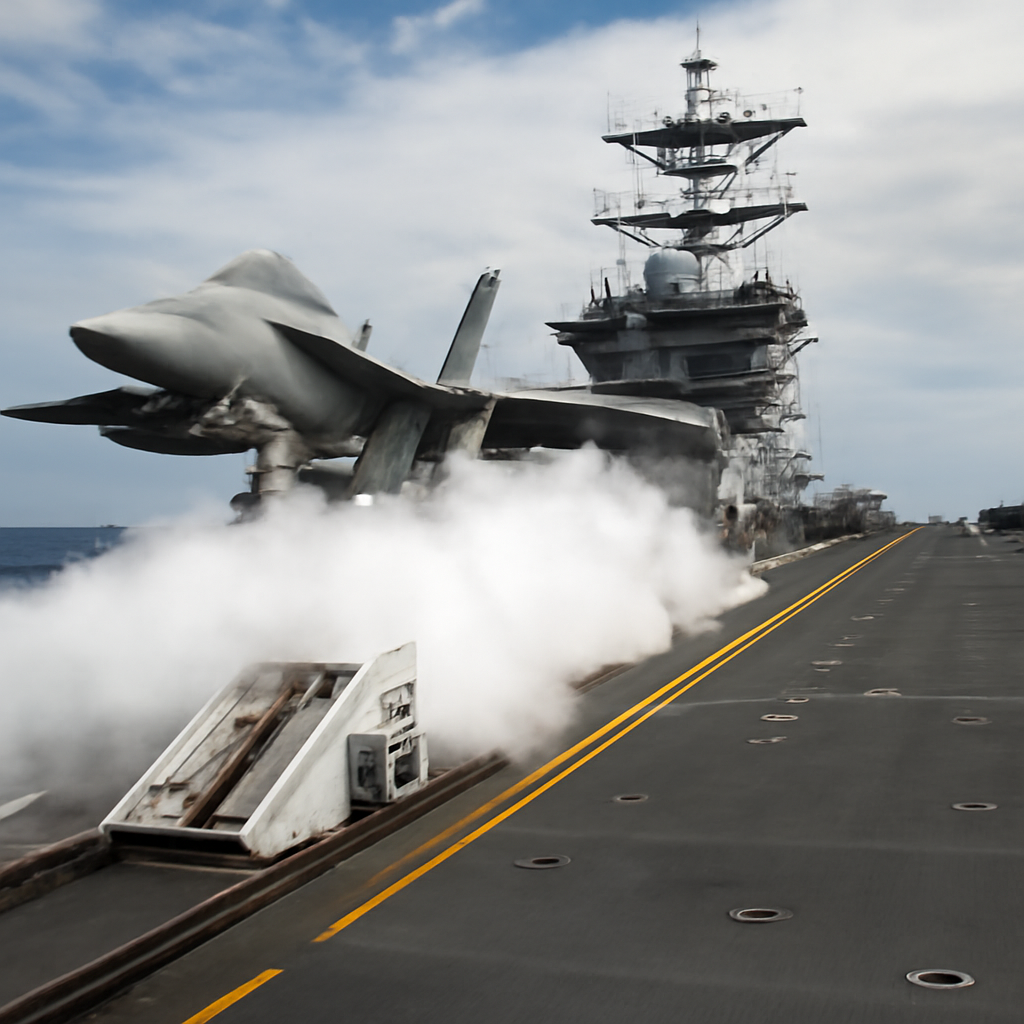
Trump Orders Navy to Reinstate Steam Catapults on Aircraft Carriers
President Trump has signed an executive order directing the Navy to bring back steam catapults for its Ford-class aircraft carriers, aiming to boost performance and reliability. This move reverses a previous decision, with the President confident that steam power will eliminate problems with the catapults.

US Bolsters Latin America Security with New Task Force
The US has taken a significant step in bolstering Latin America security with the launch of the Joint Task Force Western Hemisphere, a bold move to combat organized crime in the region. This development is part of a broader effort, Operation Southern Spear, which has already made waves with expanded military and economic initiatives.

Australia Urges Southeast Asian Nations to Clarify Maritime Incidents
Australia is stepping up its support for Southeast Asian nations to tackle maritime incidents, with a recent pledge of A$10 million to enhance the Philippine Coast Guard's drone technology and training. This move aims to boost the region's maritime domain awareness, but experts warn that more data doesn't always mean more clarity.

China Exploits New Zealand's Space Sector for Military Intelligence
China's military intelligence efforts have infiltrated New Zealand's space sector, with a local company unwittingly at the center of an attempted space-based spying operation. The plot involved a China-based organization called Purple Mountain Observatory, which tried to install Ground Based Space Infrastructure in New Zealand to track satellites and space debris.
Securing AI Systems Requires Continuous Validation
Trust in AI systems isn't a nicety, it's a necessity - and a tactical imperative for warfighters who rely on accurate, reliable, and secure recommendations to make life-or-death decisions. In combat, trustworthy AI means delivering predictable, verifiable, and explainable results from authoritative data, every time.

US Space Command Targets Anti-Satellite Capabilities as Top Priority
In space, there's no room for retreat - and that's why US Space Command is prioritizing the development of anti-satellite capabilities to protect its interests and deter potential threats. Gen. Stephen Whiting is sending a clear message: it's time to build new offensive capabilities to fight for control of orbit.

Poland Unveils Advanced Frigate Amid Baltic Security Push
Poland just took a major leap in Baltic security with the launch of its most advanced frigate, Wicher, a game-changing vessel that's a key part of the country's defense strategy. The impressive warship was unveiled in a ceremony attended by Polish President Karol Nawrocki, marking a significant milestone in Poland's naval modernization efforts.
US Military Grapples with China Rare Earth Dominance
The US military is facing a daunting reality: a single fighter jet, like the F-35, requires over 400 kilograms of rare earths to build, highlighting the alarming dependence on these critical minerals. China, which controls a whopping 70% of rare earth mining and 90% of processing, holds the reins on the global supply chain.

US Intelligence Community Charts Course for Autonomous AI Agents
The US Intelligence Community is revolutionizing its approach with autonomous AI agents that can work together, reason through complex problems, and support various operations. Maj. Gen. Robert Kinney, DIA's chief AI officer, envisions a future where specialized AI agents communicate and interact to drive mission success.
US Military Exposes Gaps in Homeland Drone Defense Capabilities
The US military is alarmingly unprepared to defend its homeland against a coordinated drone attack, with Lt. Gen. Joseph Jarrard bluntly admitting that it lacks the necessary sensors to detect and respond to such threats. The vulnerability is stark, with defenses largely dependent on the location of the attack and available resources to counter it.

Google Cloud Accelerates Post-Quantum Security Push with 2027 Milestone
Google Cloud is proactively bolstering its defenses against future quantum computer threats, aiming to complete a major milestone in its post-quantum security migration by 2027. The tech giant has mapped out a multi-year plan to adopt quantum-resistant cryptography, tackling key risks in data security and digital signatures.

US Authorizes Private Firms to Hack Foreign Cybercrime Groups
The US has taken a bold step in the fight against cybercrime, granting private firms the authority to hack foreign cybercrime groups in a bid to combat the staggering $20.8 billion lost by US consumers to cyber-enabled crime in 2025. This new power, enabled by a presidential memorandum, allows private security companies to apply for approval to conduct cyber operations against these malicious organizations.

US Authorizes Private Sector in Offensive Cyber Strikes
The White House is taking a bold stance against transnational cyber threats, authorizing the private sector to join forces with federal law enforcement on offensive cyber strikes to disrupt foreign cyber actors targeting the US. This new public-private program unlocks every available tool to protect Americans from cyber-enabled crime.

Army Selects Unit for Golden Dome Air Defense Mission Training
The Army has chosen a battalion-sized unit to kick-start training and testing for the Golden Dome homeland air defense mission, with Lt. Gen. John Rafferty confirming the selection at the Army Space and Missile Defense Symposium. This unit, part of the existing force structure, will play a crucial role in the mission, with support from other units.

US Army Tackles Readiness Crisis with New Industry Engagements
The US Army is facing a pressing readiness crisis, with an aging fleet and looming modernization challenges that won't arrive quickly enough to ease the strain, warns Brig. Gen. Beth Behn. As a result, the Army is bracing for a long-term supply-chain and sustainment headache.

US Space Command Outlines Key Tech Needs to Counter Adversarial Advances
The US Space Command is on high alert, warning that rival nations like China are rapidly advancing their space capabilities, which could give them a game-changing advantage in orbit and undermine US superiority. Gen. Stephen Whiting is sounding the alarm, calling for urgent development of new warfighting technologies to stay ahead of the threat.

Top US Military Leaders Outline Missile Defense Priorities
Top US military leaders, including Gen. Stephen Whiting and Lt. Gen. John Rafferty, took center stage at the 2026 Space and Missile Defense Symposium to outline the country's missile defense priorities. The high-profile keynote addresses signal a strong focus on missile defense, drawing both leadership and an engaged audience.

US Marine Corps Shifts Command in Pacific Amid Rising Threats
The US Marine Corps is bolstering its presence in the Pacific with a significant leadership shakeup, as Lt. Gen. James Glynn handed over command to Lt. Gen. Roger Turner in a ceremony at Marine Corps Base Hawaii. This strategic move comes as the region faces rising threats, with the Marine Corps' Commandant Gen. Eric Smith emphasizing that the Corps' future lies in the Pacific.

Britain's New PM Affirms AUKUS Commitment
New Prime Minister Andy Burnham is hitting the ground running, affirming Britain's commitment to AUKUS and hosting Ukraine's President Volodymyr Zelensky as his first international visitor, a move that signals continuity on defence and diplomacy. By doing so, Burnham is framing global issues as inextricably linked to domestic concerns, setting the tone for a joined-up approach to governance.

Pentagon's Space-Based Interceptor Contest Advances with All 12 Contractors Passing Milestone
The Pentagon's space-based interceptor contest is heating up, with all 12 contractors acing the first milestone in the competition, paving the way for the next round of development contracts. According to Gen. Michael Guetlein, the contenders have successfully passed Gate 1, completing design and component-level testing.

Australia Bolsters Defence with Self-Reliance Strategy
Australia is proactively shoring up its defence with a bold self-reliance strategy, aimed at navigating the country's increasingly complex and uncertain strategic environment. The move comes as global powers jostle for influence in a world without a single dominant leader.

Iranian F-5s Expose US Air Defense Vulnerabilities
A retired US Air Force general just revealed a shocking vulnerability in US air defense systems, saying that Iranian F-5s were able to evade detection and drop bombs on a US airbase, exposing a major security gap. This embarrassing breach, described as the first of its kind in decades, highlights the urgent need for improved counter-drone defenses.
Research Reveals Limits of AI in Military Decision-Making
In a groundbreaking study, 2,015 Israeli military personnel put an AI decision-support system to the test, revealing the surprising limits of AI in military decision-making. This eye-opening experiment simulated real-world combat scenarios to see how humans respond to AI recommendations.