"Trust isn’t an abstract ethical debate — it’s a non‑negotiable operational requirement," said Mandy Satterwhite, managing director and cyber lead at Accenture Federal Services, encapsulating the practical demand that now frames military uses of artificial intelligence.
Mandy Satterwhite on what "trustworthy AI" must deliver for warfighters
For Satterwhite, trust is not philosophical — it is tactical. An AI that produces results from poisoned data, gives an unexplainable recommendation, or silently fails “doesn’t give you an advantage; it creates unacceptable operational risk.” In combat, commanders must know that recommendations are “built on authoritative, untampered data under our control.” Predictability, verifiability, explainability and resilience under adversarial attack are not optional features; they are the baseline requirements for any decision-support tool operating where lives are at stake.
Supply chain risks from commercial frontier models like Mythos
Satterwhite warned of concrete supply-chain vulnerabilities when defense programs adopt commercial frontier models. “When you take a commercial frontier model off the shelf and fine-tune it, you inherit the data and potential vulnerabilities with it,” she said. The danger is not hypothetical: if a foundational model was trained on poisoned data or otherwise compromised, that compromise is imported into the secure environment the moment it is deployed.
She also named the specific manipulation vector of concern: adversaries have attempted to tamper with model weight files to skew outputs. That, she argued, is why defenders must “audit the building blocks — from data sources to model weights” and “verify the digital supply chain from end to end.” She noted additionally that the largest, most expensive frontier models are often unnecessary for specialized military tasks and that right‑sizing models for mission use cases is essential.

Audit-ready is a season. It shouldn't be.
Evidence in spreadsheets, controls drifting between audits, frameworks multiplying on flat headcount. Nubivance runs continuous compliance on Rapid7 Cyber GRC - SOC 2, HIPAA, ISO 27001, PCI, CMMC.
End the scrambleContinuous validation: AI-enabled red‑teaming, CI/CD pipelines, and OSCAL
Traditional cybersecurity checkboxes do not map well to the accelerated attack timelines introduced by modern models. Satterwhite pointed to “frontier models like Mythos” as having “completely collapsed the cyber‑attack timeline.” In response, periodic penetration testing and pre‑deployment checklists must give way to continuous, automated validation.
Her prescription: embed AI‑enabled red‑teaming and vulnerability scanning directly into continuous integration and continuous delivery (CI/CD) pipelines so that development, model behavior, and operational scaffolding are validated together. For national security work, she said, those pipelines should incorporate “NIST’s Open Security Controls Assessment Language (OSCAL) embedded directly into the build process,” checking against strict security controls in real time so systems are “secure by design” before they touch an operational boundary.
Design for augmentation: preserving human authority with guardrails and checkpoints
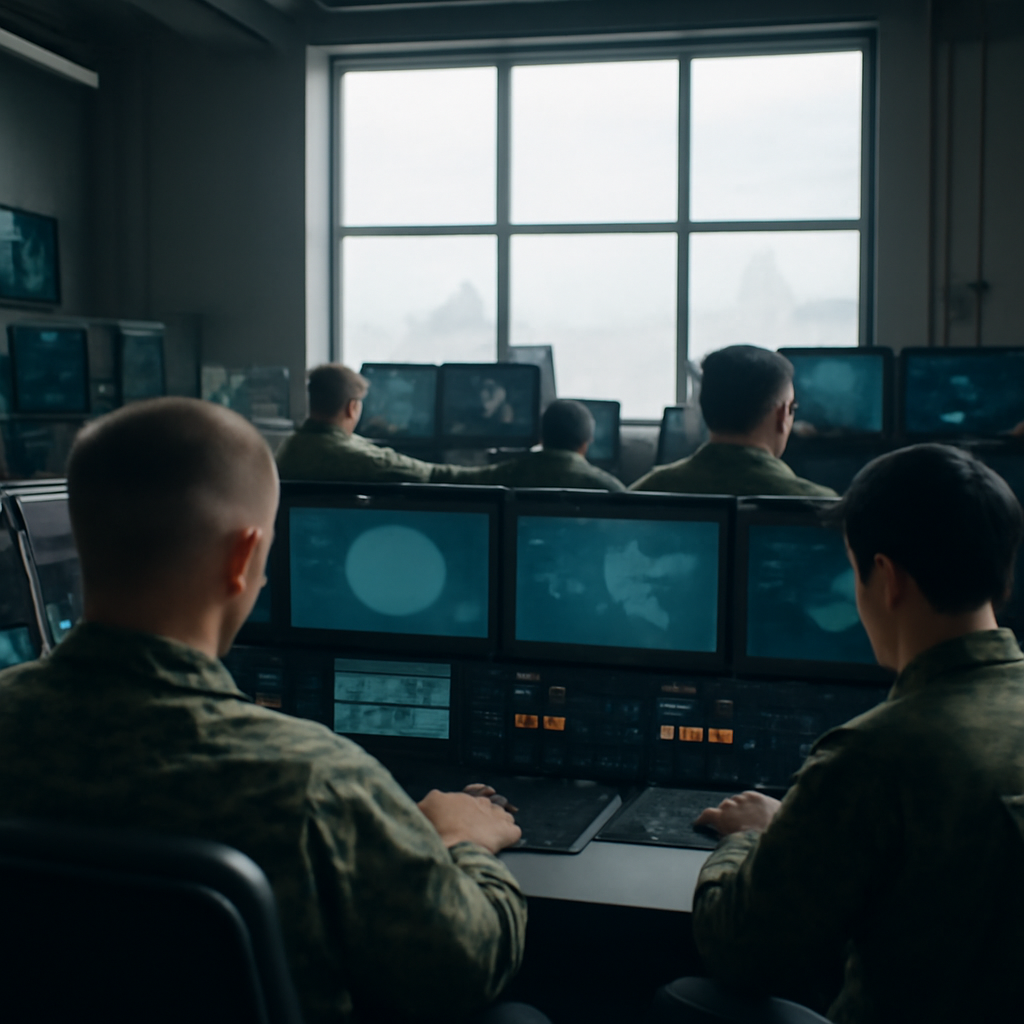
Satterwhite emphasized a design philosophy of augmentation rather than full automation. She framed this as a clear operational imperative: “keeping a human decision‑maker in the lead is paramount” in sensitive warfighting environments. Practically, that means engineering explicit architectural guardrails, OODA‑loop feedback checkpoints, and hard kill switches into the system architecture.
She gave a concrete example of the intended human‑AI division of labor: an AI model can rapidly process unstructured sensor data and surface “three actionable courses of action,” but a human operator must evaluate those verified choices “at a deliberate checkpoint before execution.” That approach, she said, both reduces risk and preserves command authority.
What this means for defense leaders, technologists and warfighters
- Defense leaders and procurement teams — They must treat model provenance and digital supply‑chain verification as acquisition prerequisites, favoring right‑sized models and insisting on end‑to‑end auditing before deployment.
- Technologists and security teams — They are being asked to move from periodic testing to continuous, automated validation: integrate AI‑enabled red‑teaming, vulnerability scanning, and OSCAL checks into CI/CD pipelines to validate code, models, and operational scaffolds together.
- Warfighters and commanders — They will receive faster analytic options but operational use will depend on systems that provide traceable provenance, explainable outputs, and deliberate human checkpoints supported by kill switches and OODA feedback loops.
The upshot of Satterwhite’s assessment is both simple and demanding: securing AI for combat requires rethinking acquisition, engineering and operations as a single, continuous process rather than a sequence of isolated steps. Embedding security “from day one” and automating validation is presented not as a cost but as the enabler of speed and resilience — the difference, in her phrasing, between deploying at operational speed and “fighting blind.”
Will defense programs adopt continuous, OSCAL‑driven pipelines and insist on audited, right‑sized models across procurement cycles? The answer will determine whether AI becomes a trusted force multiplier or an added operational risk.