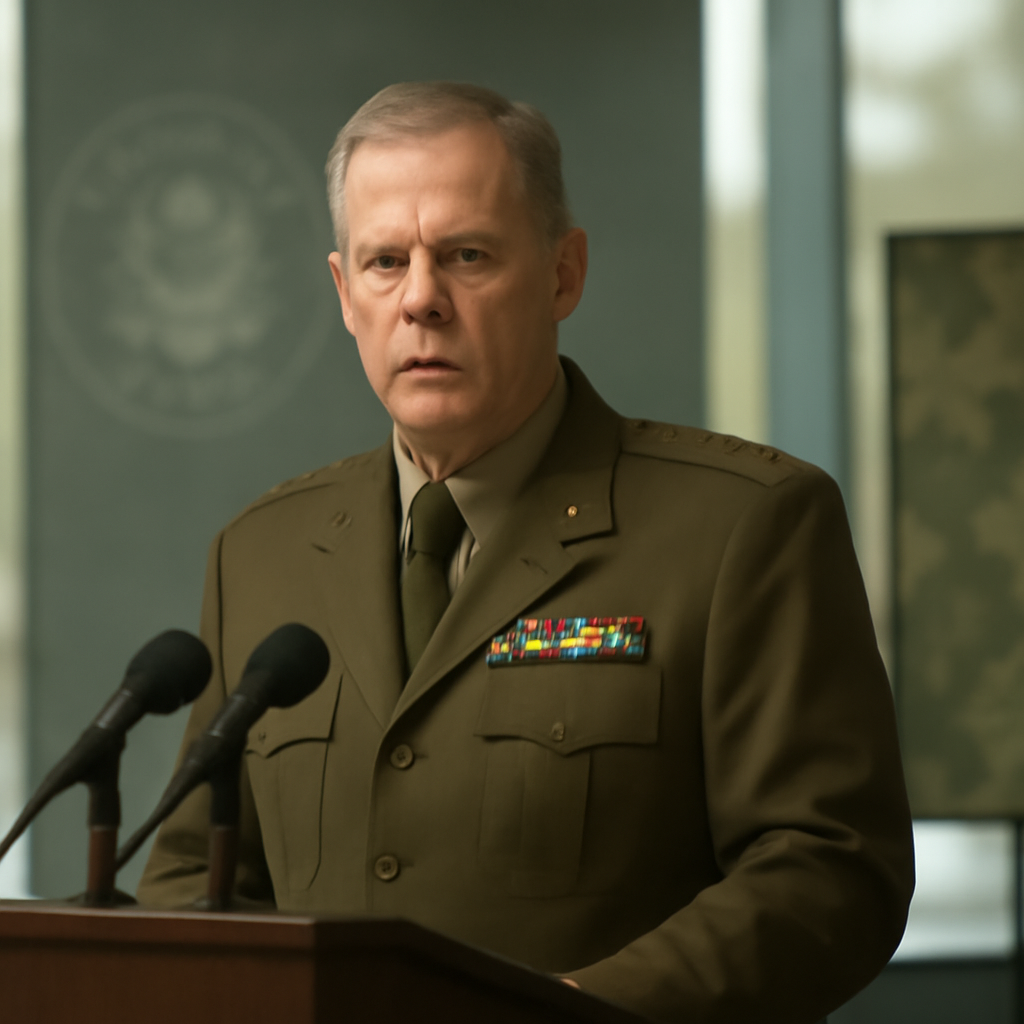
“We can’t prevent it. We can’t end it. But what we want to be able to do is navigate it,” said Hugh Jeffrey, deputy secretary for strategy, policy, and industry at the Department of Defence, describing the strategic environment now confronting Australia.
Hugh Jeffrey on an interregnum and the struggle between states
At the 2026 ASPI Defence Conference in June, Hugh Jeffrey framed the present international system as an “interregnum – a period between orders.” He said the United States is no longer the global hegemon but that no other state has replaced it, and that this produces a contest among states to “shape the structures of the new order to follow.” Jeffrey made plain that this is principally a great-power competition: middle power cooperation has value, he said, but the fundamental struggle will be “between states as they vie with each other to shape the structures of the new order.”
Self-reliance and the National Defence Strategy
Jeffrey presented “self-reliance” as the organising principle for Australia’s response. He described self-reliance as underpinning the government’s National Defence Strategy: strengthen Australia’s own military capability while still using relationships with the United States and other partners “to achieve, maintain and maximise that capability.” The aim, he said, is not to stop great-power competition but to build a posture that allows Australia to navigate it and to contribute to “a broader balance of power that precludes the use of force as a tool.”

The cyber insurance questionnaire just landed. Now what?
SOC 2, HIPAA, insurance renewals - someone has to own security strategy. Nubivance provides fractional CISO leadership without the full-time salary.
Get a security leadMilitary-technical trends: drones, AI and satellite surveillance
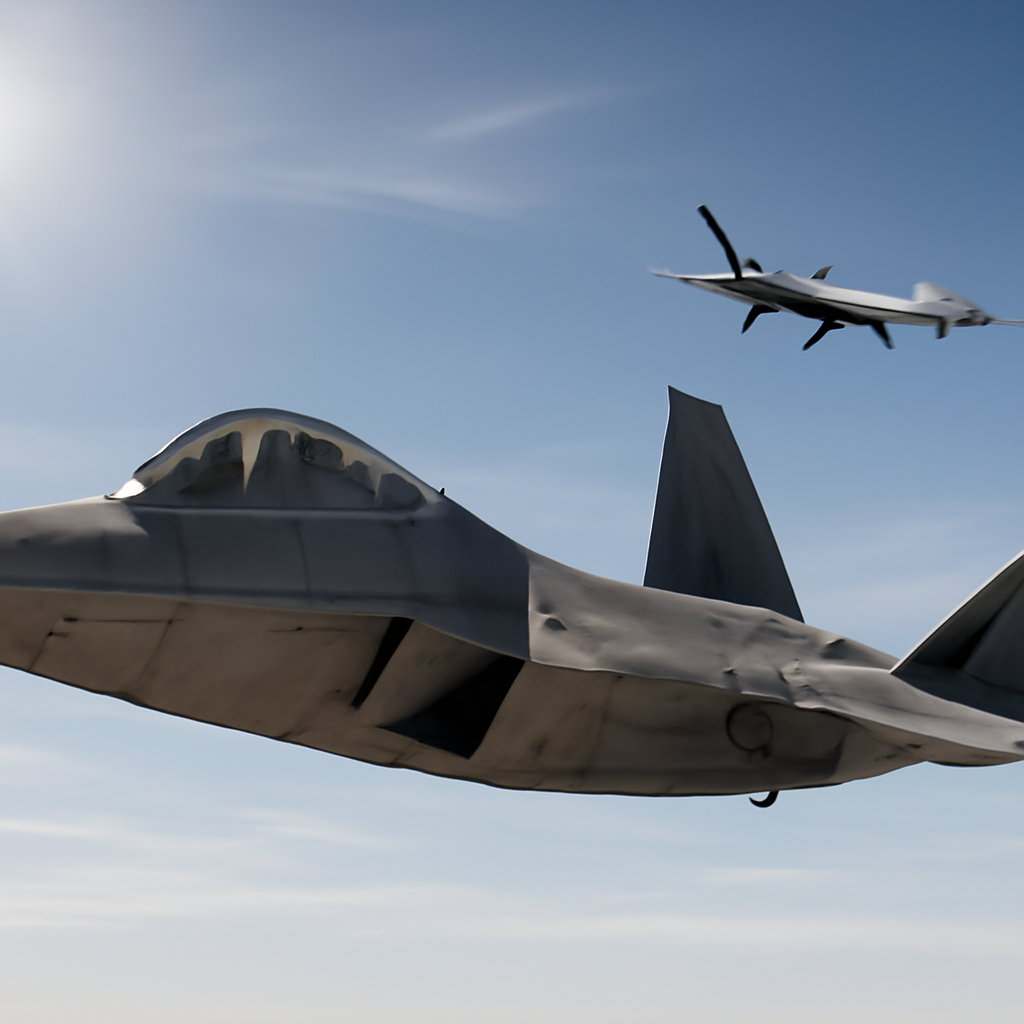
Jeffrey argued that recent military-technical developments have, for the moment, advantaged defenders and reduced the strategic gains attainable by attackers. He pointed to modern technologies — “drones, AI and widespread, real-time satellite surveillance” — as factors that have “minimised the strategic gains achieved through military action.” He described war as “more prevalent as a tool of statecraft than at any time since the end of the Second World War,” yet stressed that technological change has constrained the payoff from force.
Jeffrey noted concrete examples: battlefields in Ukraine have seen a return to immobility “under skies infested with drones,” and US and Israeli attacks on Iran “have been unable to fully suppress the threat of strike missiles, including cheap and abundant ones driven by propellers.” Those observations, he said, illustrate both the defensive advantage and the persistence of offensive threats despite technological countermeasures.
Strategic surprise and historical perspective
Jeffrey warned against assuming current conditions will persist. He invoked the historian’s cautionary tale of pre‑World War I optimism — Ivan Bloch’s argument that technological and organisational trends would make continental war unlikely — to show how a subsequent military revolution restored battlefield mobility in 1918. Jeffrey’s point was narrowly drawn: while recent developments favour defenders and might deter conquest, history shows a military-technical revolution can change strategic calculations quickly. “We don’t know when, how or where warfare will evolve,” he said, and unless humanity has broken an age‑old trend, it is not a question of “if.”
What this means for policymakers, technologists, and the public
- Policymakers and defence planners: Double down on the dual track Jeffrey described — invest in national capability and sustain partnerships that “achieve, maintain and maximise” that capability, while accepting that Australia cannot stop the great‑power struggle but can try to navigate it.
- Technologists and military acquisition teams: Focus on systems and doctrines that exploit defensive advantages from drones, AI, and satellite surveillance, while remaining alert to the possibility of a future military-technical upset that could reintroduce offensive advantage.
- The general public and civic leaders: Expect a strategic posture framed by preparation for surprise rather than planning for a single scenario; Defence, Jeffrey said, is preparing “for the unknown.”
Jeffrey’s prescription is simple in outline and demanding in practice: accept uncertainty, build resilient national capabilities, and use partnerships to broaden influence without pretending to control great-power dynamics. If his analysis is right, Australia’s immediate safety rests as much on hedging and adaptability as it does on any single weapon or alliance. The remaining, stark question he left on the table is the one his talk began and ended with — if history teaches anything, when the next military revolution comes it will be unexpected, and Australia’s task is to be ready for that surprise.
https://www.aspistrategist.org.au/preparing-for-surprise-australian-defence-in-an-age-of-flux/