Lt. Gen. Joseph Jarrard: sensors, effectors, and a candid assessment
At SMD, Jarrard, the deputy commander of U.S. Northern Command (NORTHCOM) and NORAD, told attendees that the U.S. currently lacks the sensor coverage and the effectors needed to defend against a swarm-style drone attack launched within the homeland. He warned that detection is the "biggest issue" and that whether defenses exist "depends on where that swarm is going to attack" and "whether we’ve got any effectors to go after that problem." He said the problem has been visible in combat zones "on a daily basis around the world" and that the U.S. is "not there yet" in terms of mitigation.
Operation Spiderweb and FPV strikes: real-world templates for a homeland attack
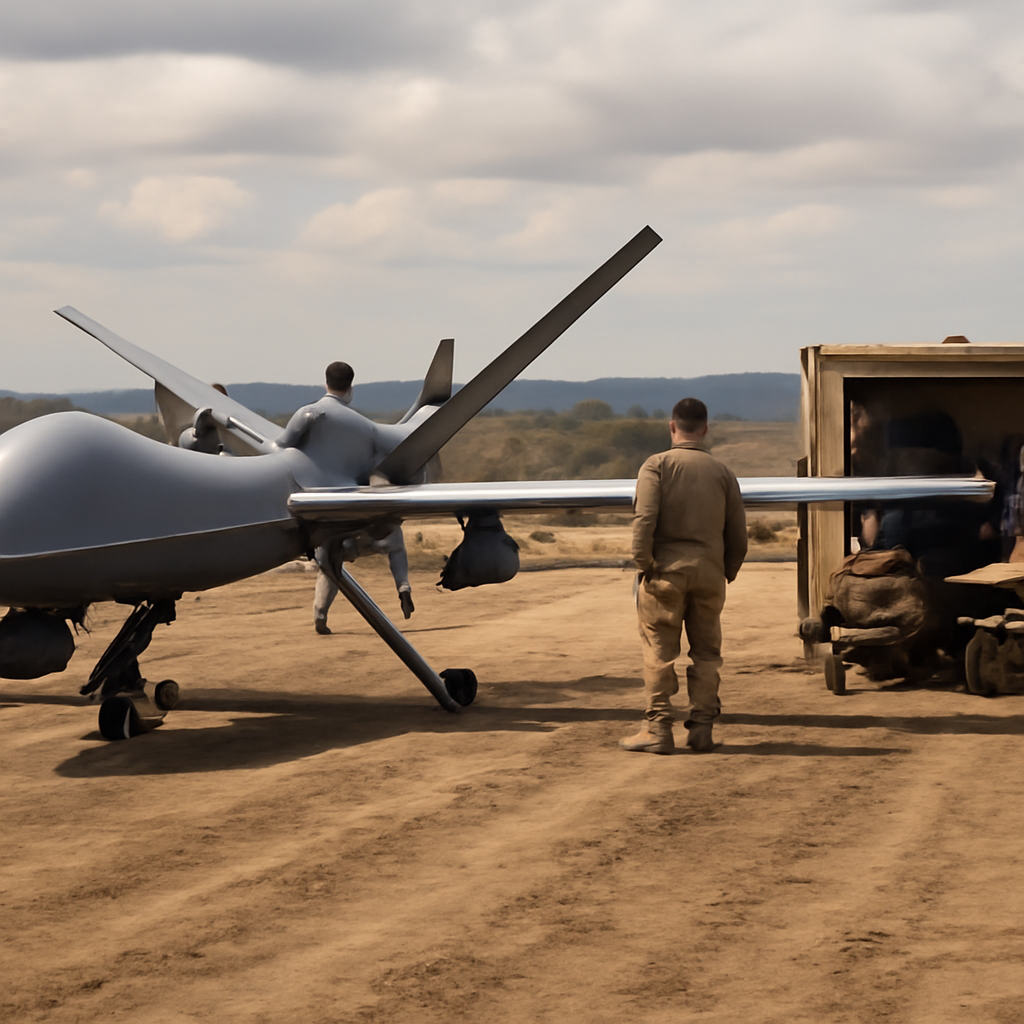
Jarrard did not sketch a specific domestic scenario, but the symposium discussion pointed to concrete, recent examples that show how damage could be done. The source cites Ukraine’s Operation Spiderweb, in which drones launched from prepositioned trucks struck Russian air bases and destroyed numerous aviation assets, and a March 25, 2026 first-person view (FPV) drone strike that hit a U.S. Army UH-60 Black Hawk at Camp Victory in Iraq. The Spiderweb footage was shared publicly (a June 1, 2025 post by Michael MacKay), and the FPV strike was documented by OSINTtechnical. Those incidents underscore the threat posed by near-field attacks and the difficulty of stopping them once underway, especially at sites with lower surveillance and alert levels.

Audit-ready is a season. It shouldn't be.
Evidence in spreadsheets, controls drifting between audits, frameworks multiplying on flat headcount. Nubivance runs continuous compliance on Rapid7 Cyber GRC - SOC 2, HIPAA, ISO 27001, PCI, CMMC.
End the scrambleNORTHCOM's fly-away kit and limits to quick-response counter-UAS
Facing recent incursions — including over two installations earlier this year, one of which was Barksdale Air Force Base (home to B-52 Stratofortress bombers and nuclear weapons storage facilities) — NORTHCOM has developed a counter-drone "fly-away kit" to give base commanders the ability to detect, quantify, and defeat small drones. The source notes, however, that these kits must be requested and delivered, and therefore cannot prevent sudden attacks like Spiderweb unless there is prior intelligence warning. The story also highlights a broader capacity shortfall for permanently installing such systems at installations and at critical civilian infrastructure and other high-value targets.
Operation Noble Eagle tactics, interoperability, and legal authorities
Jarrard said NORTHCOM is drawing on tactics, techniques, and procedures (TTPs) from Operation Noble Eagle — the post-9/11 mission that raised air defense posture, readiness levels, and surveillance over the U.S. — to inform the counter-UAS effort. He emphasized the need for interoperability with local law enforcement and the systems they are procuring, citing cooperative work during the FIFA World Cup as an example. Jarrard also noted that the authority to use counter-drone systems is "still catching up with the technology," implying a disconnect among detection capability, response tools, and the legal or procedural authorities needed to employ them.
What this means for base commanders, local law enforcement, and policymakers
- Base commanders: Must continue to rely on temporary measures such as fly-away kits and on improved TTPs, while facing a shortfall in permanently installed sensor and effector capacity at many installations.
- Local law enforcement: Will need interoperable systems and coordinated procedures with military commands, because Jarrard said homeland defense "is not just installations" but includes cities and critical infrastructure protected by civilian authorities.
- Policymakers: Face choices about funding and doctrine. The source records a policy pivot at the department level: in February the Pentagon issued guidance encouraging physical hardening — netting, cables, and other passive defenses — reflecting a change from prior resistance to such investments.
Jarrard’s admission — blunt and public — serves as both a warning and a prompt. The source frames the issue as a combination of intelligence and logistics shortfalls (sensor gaps, scarce effectors, and delivery timelines for fly-away kits), together with legal and procurement challenges around authorities and system interoperability. The Pentagon’s February guidance on passive defenses and NORTHCOM’s adoption of ONE-era TTPs are concrete steps, but the source is clear that capability gaps remain.
As the deputy NORAD commander put it, the nation is "ill-equipped right now to handle something like that," and acknowledging the deficit, the source concludes, may help "put in place real solutions to it in the not so distant future."