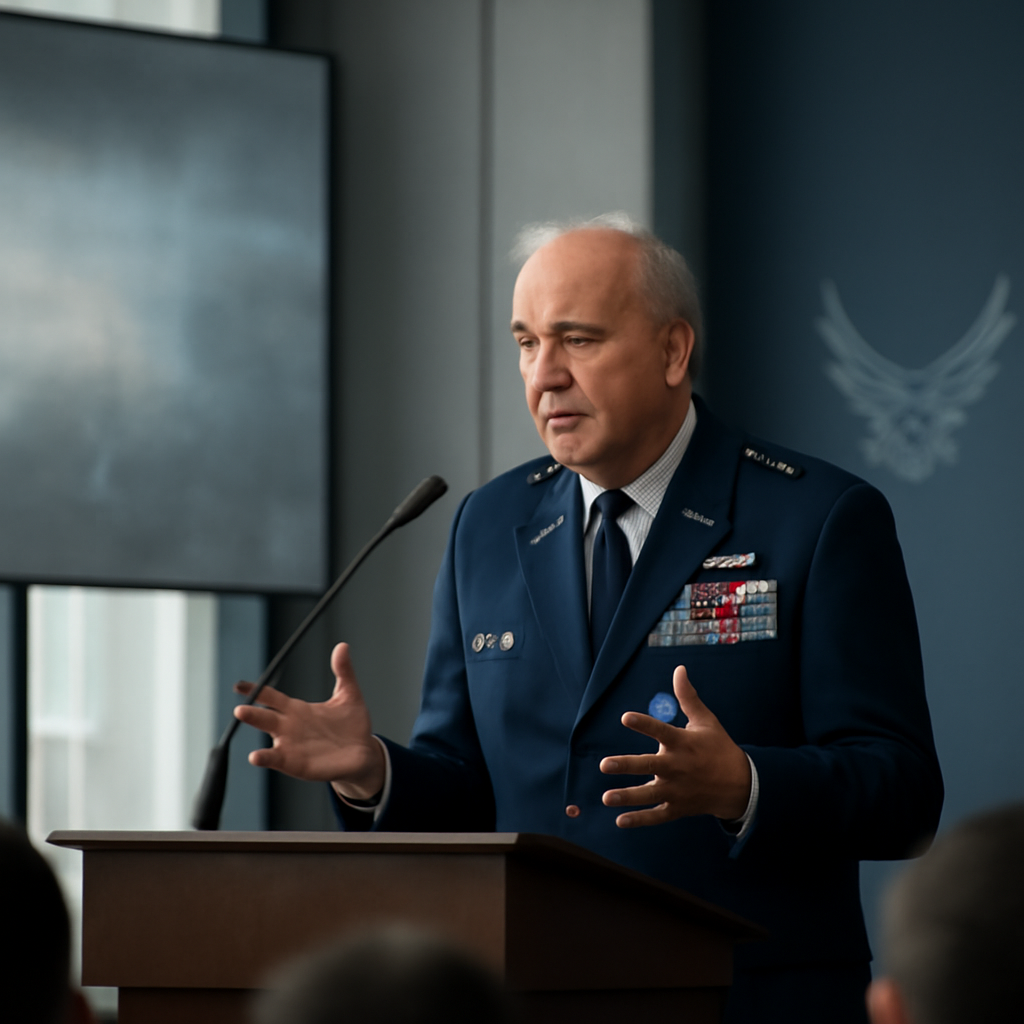
“Let’s be clear, we got our rear-end handed to us from drones and other vehicles, aerospace vehicles, if you will, including three F-5s that took off in Iran and flew low level and dropped bombs on an airbase,” retired U.S. Air Force Gen. Glen VanHerck told an audience at the Space & Missile Defense Symposium in Huntsville, Alabama.
VanHerck’s warning at the SMD Symposium
Retired Gen. Glen VanHerck—who served as head of U.S. Northern Command (NORTHCOM) and NORAD before retiring in 2024—used a panel on counter-drone defenses to describe what he called an embarrassing breach of U.S. base security. VanHerck said the strikes represent the first time in decades that U.S. forces had endured an aerial attack of this kind. He framed the incident not as an unforeseen surprise but as the consequence of a failure to assign clear responsibility between services: “We had two services pointing fingers at each other, and nobody made a decision on whose mission and role responsibility that was, candidly.”
The reported F-5 strikes on Camp Buehring
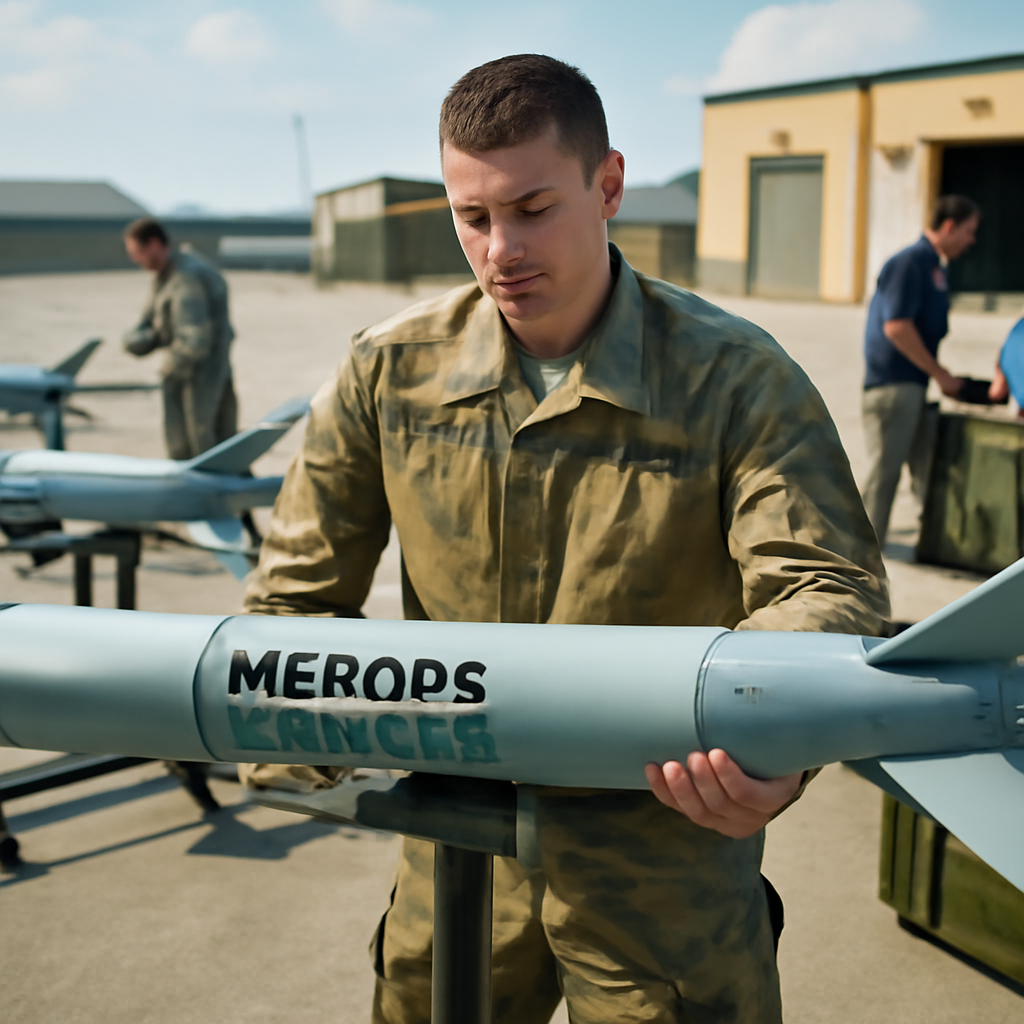
Multiple reports and Iranian state media claimed that Iranian F-5 jets struck Camp Buehring in Kuwait around March 1. PressTV aired a June segment that said three heavily refurbished F-5s—locally called Kowsars—flew the mission and included interviews with pilots said to have participated. That account claimed the jets flew at extremely low altitudes, at times below 50 feet, maintained radio silence, and followed a route designed to avoid Patriot batteries and other air defenses.
The U.S. government has not officially confirmed the Iranian F-5 strikes. TWZ contacted U.S. Central Command (CENTCOM) after VanHerck spoke; CENTCOM declined to comment. NBC News first reported the incident in April, citing anonymous U.S. officials and saying only that a single Iranian F-5 had struck Camp Buehring.

Audit-ready is a season. It shouldn't be.
Evidence in spreadsheets, controls drifting between audits, frameworks multiplying on flat headcount. Nubivance runs continuous compliance on Rapid7 Cyber GRC - SOC 2, HIPAA, ISO 27001, PCI, CMMC.
End the scrambleHow sensors, engagement envelopes, and tactics are described
PressTV’s description emphasized tactics intended to evade detection: low-level ingress, high speed, radio silence and routes avoiding Patriot batteries and AWACS coverage. The reporting in turn highlights several technical limits that the source says complicate ground-based defense: without “look-down” sensor capabilities, ground-based systems cannot see through the horizon or topography, and Patriot batteries have a defined engagement envelope that can leave gaps for low, fast targets. The source notes that new capabilities are being developed to expand Patriot’s flexibility and to address targets approaching from different vectors or those that have already passed overhead.
The report also connects the claimed F-5 operation to a wider campaign Iran reportedly ran against air and missile defense radars early in the conflict, suggesting attacks on sensors, command-and-control nodes, or the use of electronic warfare, cyber, or deception techniques could have supported an air penetration—though those supporting actions are described as possibilities rather than confirmed facts.
Operational questions about the mission and related air engagements
The source lists several practical puzzles: where the jets launched from, how they carried enough fuel to reach Kuwait and return (possibly requiring external tanks), and how they could have carried ordnance while maintaining speed and range. It also places the alleged F-5 mission alongside other March incidents: a pair of Iranian Su-24 swing-wing jets reportedly tried to strike targets in Qatar on March 2 and were shot down by Qatari F-15s, according to a Qatari Ministry of Defense statement. Separately, the PressTV account linked the chaos from the Camp Buehring strikes to a friendly-fire episode in which a Kuwaiti F/A-18 Hornet shot down three U.S. Air Force F-15E Strike Eagle jets over Kuwait; Americans and Kuwaiti authorities acknowledged the friendly-fire incident and reported no fatalities but have not provided an official explanation.
What this means for the U.S. Air Force, the U.S. Army, and CENTCOM
- U.S. Air Force: VanHerck noted the Air Force chief has “stood up and said, ‘Okay, I’m going to take that mission on,’” and the service is described as early in the process of taking on greater responsibility for defending air bases from ground-launched aerial threats, prioritizing acquisition and fielding of counter-drone and counter-cruise missile capabilities.
- U.S. Army: The Army retains broader responsibility for ground-based air and missile defense across the joint force and historically was given lead role for base defense after the Air Force split from the Army in 1947. The source says the Army has acknowledged gaps in counter-drone capability and that Patriot and THAAD units have been strained by prolonged demands.
- CENTCOM: The combatant command declined to comment to TWZ on VanHerck’s remarks; the command is cited in the source describing U.S. Army soldiers as supporting “the most integrated air defense umbrella in the history of the Middle East,” underscoring the joint nature of regional defenses.
VanHerck’s bottom line: without a clear decision assigning mission responsibility and without fused sensors and shared C2 between lower-tier counter-drone defenses and higher-altitude systems like Patriot and THAAD, the risk accepted by current arrangements will continue. The source also reports that U.S. stocks of interceptors for Patriot and THAAD were described as “very worryingly low” after months of fighting with Iran, with replenishment and capability expansions underway but still years from completion.
The reported March strikes, the service-role dispute VanHerck described, and the inventory pressures the source identifies form a tight factual knot: an alleged low-level air attack on a U.S. base, contested attribution and confirmation, and a set of capability and command questions that military leaders have publicly begun to address. Whether those public steps will translate into the fused sensors, clarified responsibilities, and munitions availability VanHerck says are necessary remains the unanswered, consequential step ahead.