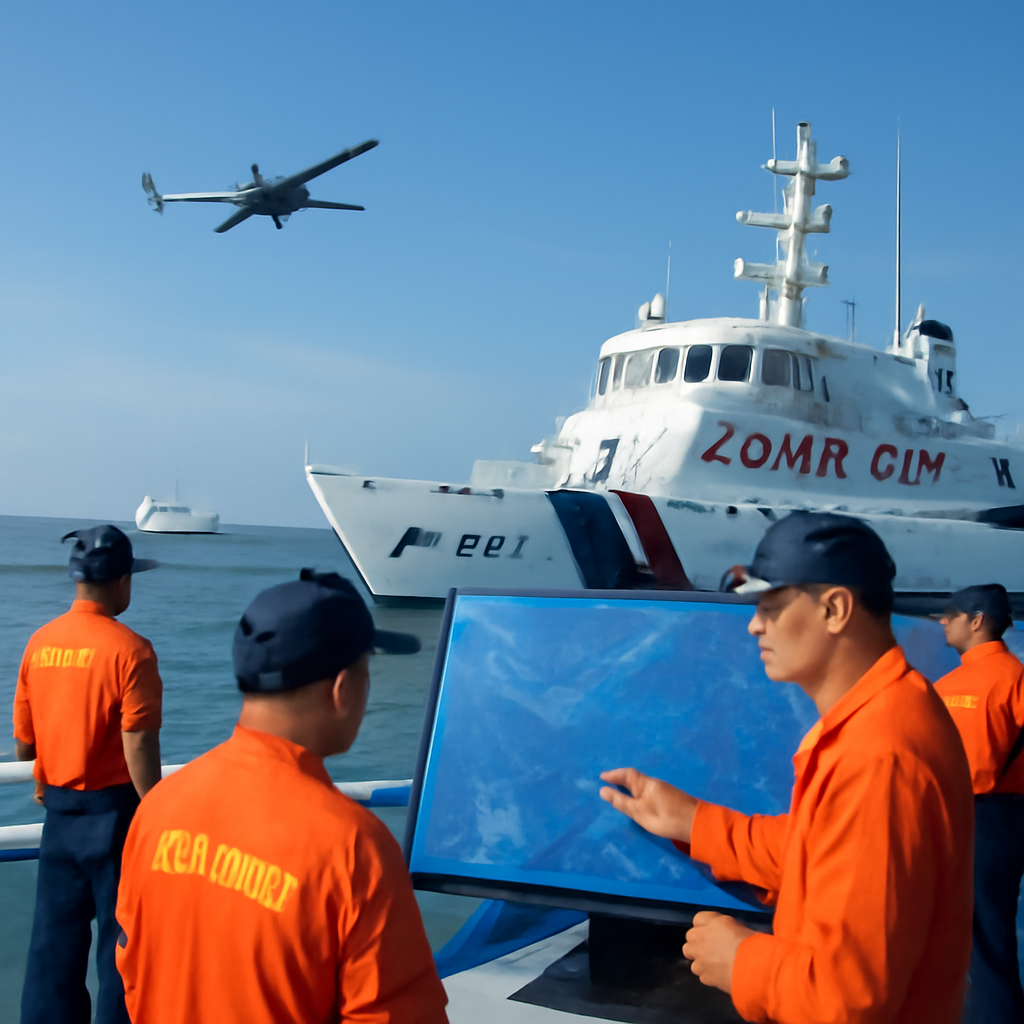
On 21 July, Australian Foreign Minister Penny Wong announced an additional A$10 million in drone technology and operator training for the Philippine Coast Guard — a concrete boost to Manila’s ability to detect irregular activity and build a clearer operational picture at sea.
21 July announcement: more sensors, not more answers
The A$10 million package is part of Canberra’s broader effort to expand maritime domain awareness for Southeast Asian partners. While drones and patrol vessels can capture incidents as they occur, the source makes a clear distinction: collecting imagery and tracks does not automatically produce public clarity about what those data show. The material cautions that edited video clips or isolated photographs can circulate on social media without operational context, shaping public perceptions before authorities have verified the full sequence of events.
Drone footage and social media: why surveillance alone falls short
Surveillance systems reveal that an incident occurred but not always what it means. In the South China Sea near the Philippines, the source documents examples where unofficial actors publish different angles and conflicting narratives about encounters at sea. These fragmentary releases can influence public understanding while authorities are still verifying events, potentially generating political pressure around preliminary interpretations and weakening public confidence if early explanations are later revised.

Audit-ready is a season. It shouldn't be.
Evidence in spreadsheets, controls drifting between audits, frameworks multiplying on flat headcount. Nubivance runs continuous compliance on Rapid7 Cyber GRC - SOC 2, HIPAA, ISO 27001, PCI, CMMC.
End the scramblePhilippine Sea Angels: a practical model for maritime communication
The source highlights operational experience within the Philippine Coast Guard to show how communication is an active part of maritime security. In 2017, the Coast Guard deployed female radio operators known as Sea Angels to reassure mariners facing piracy and kidnapping threats in the Sulu and Celebes Seas. That initiative evolved into the Angels of the Sea, where operators receive training in human behaviour, foreign languages, shipboard procedures and the rule of law to de‑escalate tension.
Those programs demonstrate that effective maritime communicators need not only messaging skills but a grounded understanding of the operational environment. The same pressures — high risk, tight timelines, legal and procedural complexity — apply when images and tracks are moved from an operation into public reporting.
Southeast Asia Maritime Partnerships and media initiatives: building blocks
Canberra is already investing at scale. The source states Australia is committing A$160 million over 10 years to Southeast Asia Maritime Partnerships to expand practical maritime cooperation. Separately, the Australia‑Southeast Asia Media and Broadcasting Initiative is designed to promote regional media capability. Australia is also expanding maritime domain awareness capacity-building specifically for the Philippine Coast Guard through the Civil Maritime Advancement through Partnerships and Support program.
Rather than creating a new regional institution, the source argues Canberra should connect these maritime assistance programs with independent media expertise to fill a capability that drones cannot provide: credible human voices that can clarify and convey what surveillance systems document.
What this means for the Philippine Coast Guard, Australia, and journalists
- Philippine Coast Guard: will gain more sensors and training but also faces a new operational requirement — deciding what imagery and tracking data can be disclosed without exposing sensitive capabilities or personnel, and briefing journalists quickly as incidents evolve.
- Australia (Canberra): can pilot a maritime communication program within existing Southeast Asia Maritime Partnerships, linking capacity building to independent media expertise rather than creating a separate regional body.
- Journalists and media practitioners: should receive independent technical training in vessel tracking, maritime law, visual evidence and coast guard procedures so they can assess official claims under deadline pressure while protecting editorial independence.
A practical program and its four functions
The source sets out a compact operational design for a regional maritime communication program. It should:
- support maritime agencies in validating evidence and deciding what can be disclosed;
- train public information officers to brief journalists swiftly as situations evolve;
- provide independent technical training to media practitioners on vessel tracking, maritime law, visual evidence and coast guard procedures;
- run joint simulations that test how maritime incidents are examined and explained to the public under pressure, while protecting operational security and editorial independence.
The model is explicitly intended to apply across illegal fishing, piracy, armed robbery at sea and marine pollution — all cases where surveillance requires credible, timely explanation to avoid misinterpretation and erosion of public confidence.
The move from sensors to stories is not merely rhetorical. Canberra has invested heavily in helping partners see more of what happens at sea; the next step, according to the source, is to equip those partners to say what the pictures mean. Australia’s next maritime security investment should be communication.