2028 — that is the year US Senator Tammy Duckworth warned Beijing might pursue an economic blockade of Taiwan rather than mount a full-scale invasion, and the year that reframes the strategic problem for Canberra: control access to Taiwan’s maritime approaches without firing a shot.
Tammy Duckworth’s warning and the exercise that produced it
Last month, US Senator Tammy Duckworth warned that China may be more likely to impose an economic blockade on Taiwan in 2028 than launch a direct military assault. Her scenario came from a US Senate tabletop exercise examining a potential Chinese attack on Taiwan. The most consequential element of her warning was not the date, the exercise organisers argue, but the method by which access to Taiwan might be restricted.
China Coast Guard reporting and compulsory escorts as a tool
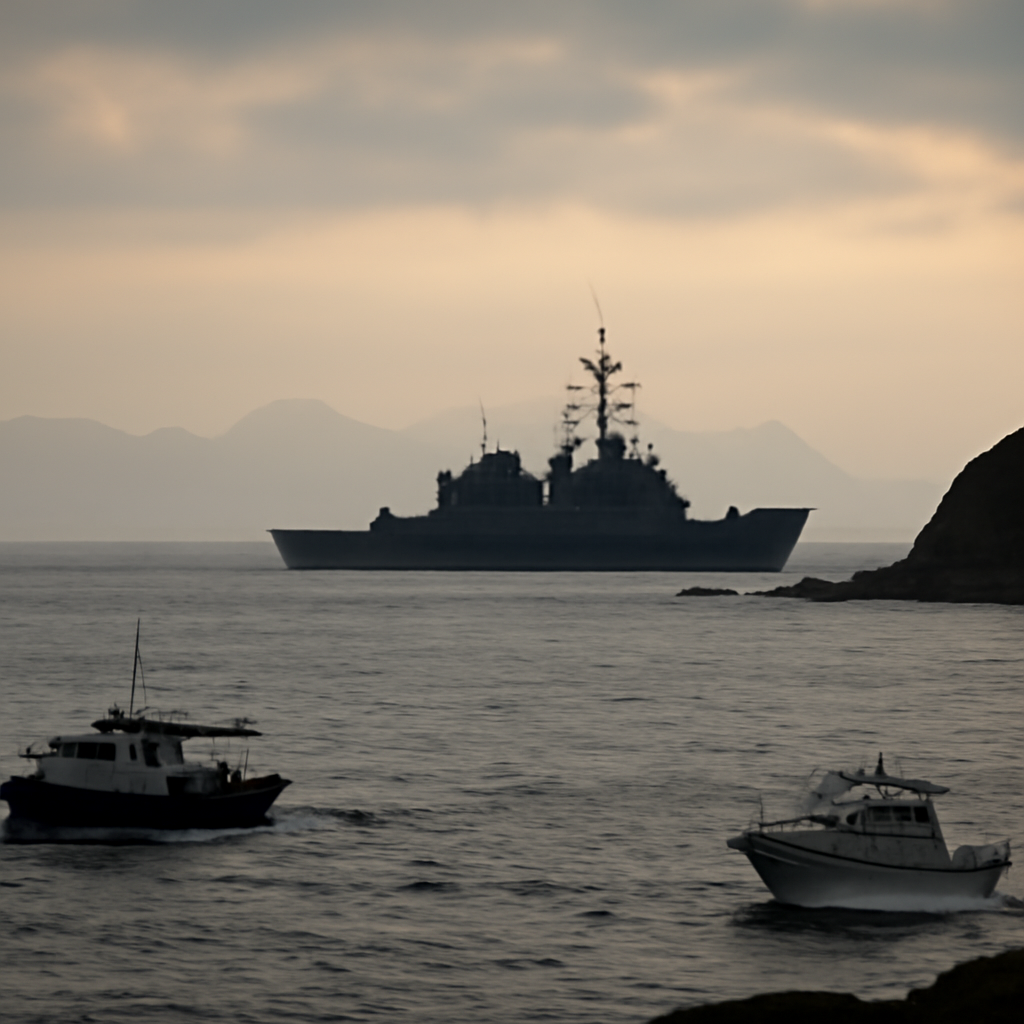
The scenario described a measure that would look routine on paper: Beijing requiring commercial vessels entering the Taiwan Strait to report to the China Coast Guard and accept escorts, ostensibly to ensure their safety. That approach would allow China to avoid a formal declaration of blockade and to present actions as ordinary maritime regulation. Coastguard and maritime-law-enforcement ships could take the lead while the Chinese army remained nearby or in the background.

The cyber insurance questionnaire just landed. Now what?
SOC 2, HIPAA, insurance renewals - someone has to own security strategy. Nubivance provides fractional CISO leadership without the full-time salary.
Get a security leadHow commercial caution could create a de facto blockade
The power of this approach would lie in its ability to exploit commercial risk aversion. Shipping companies could comply to protect crews, vessels and cargo; insurers might withdraw coverage or set prohibitive premiums; ports and logistics firms could suspend Taiwan-bound services; and energy suppliers might delay shipments to avoid entanglement in a geopolitical confrontation. Individually, each decision can be presented as commercially rational. Collectively, the source warns, they could establish effective control over access to Taiwan without an overt blockade.
Decisions facing Canberra: commerce before navies
The immediate challenge for Australia, the analysis stresses, is that its most consequential choices might concern private commerce rather than naval deployments. Specific policy questions Canberra would need to decide in advance include: Would the government advise Australian-owned or Australian-linked vessels to ignore Chinese reporting and escort demands? Would it offer financial guarantees or insurance support to companies that continue serving Taiwan? Would the boarding, diversion or detention of commercial vessels be treated as coercion meriting sanctions? The paper argues these answers cannot be improvised once a crisis begins.
Preparing: definitions, industry consultations, exercises and regional coordination
The recommendation for Canberra is a three-part preparedness agenda. First, develop a clearer policy definition of what constitutes a coercive blockade or quarantine so that Beijing’s chosen terminology does not determine Australia’s response. Second, begin structured consultations with shipping companies, port operators, energy suppliers and insurers to understand how those industries would react to Chinese instructions and what support they would need to keep operating. Third, conduct tabletop exercises that include not only defence and foreign-policy officials but also officials responsible for trade, transport, energy and finance; a quarantine would create economic, legal and diplomatic problems before it became principally a military one.
Coordination with regional partners is also presented as essential. Governments, the source recommends, should agree in advance which Chinese actions would trigger coordinated diplomatic pressure, sanctions, freedom-of-navigation operations or assistance to commercial shipping. Naval transits alone, the analysis says, will not preserve Taiwan’s commercial access; partners must have practical options for sustaining flows of energy, food and other essential goods.
What this means for shipping companies, insurers, and the Australian government
- Shipping companies: Expect dilemmas between crew safety, commercial liability and political risk; prior consultation should clarify what government support would be available.
- Insurers and energy suppliers: Their decisions on coverage and deliveries could be decisive; Canberra is advised to explore financial guarantees or insurance support mechanisms ahead of any crisis.
- The Australian government: Must articulate a policy definition of coercive blockade, set pre-agreed triggers for coordinated international responses, and rehearse multi-department crisis processes that extend beyond defence ministries to trade, transport, energy and finance.
The point of this preparation, the authors write, is not to make confrontation inevitable but to deny Beijing the assumption that ambiguity will cause paralysis. Effective deterrence, they argue, requires convincing an adversary that isolating Taiwan by maritime regulation, commercial intimidation and coastguard enforcement would meet an organised international response.
State of the Strait is available here. Governments and organisations can contact [email protected] to discuss co-funding this project and gaining access to the entire State of the Strait database.