






Your town's IT department is one person. Maybe.
Ransomware crews target small municipalities because nobody's watching. Nubivance gives Maine and New Hampshire towns a security program sized to a town budget.
Protect the town office


The FCC is taking aim at burner phones with a new proposal that would require telecom carriers to collect and store personal info on virtually all customers, effectively ending anonymity for prepaid phone users. If implemented, this rule would revolutionize how phone plans are obtained and used across the country.

China's new regulations, effective April, are tightening controls on supply-chain data, with a focus on the intent behind data collection, not just what is collected. Authorities can now scrutinize the purpose of investigations and information gathering to ensure they align with Chinese laws and regulations.

The US government has issued a directive that restricts access to Anthropic's most advanced AI models, Fable 5 and Mythos 5, citing national security concerns, forcing the company to suspend these models worldwide. This move affects not only foreign users but also Anthropic's own foreign-national employees, and has significant implications for the future of AI development and access.

The Pentagon has agreed to revamp its oversight of Special Operations Command (SOCOM) acquisitions after a Government Accountability Office (GAO) report revealed friction and inefficiencies in the current system. The GAO found that unclear policies and limited access to program data hindered the Assistant Secretary of Defense's ability to effectively oversee SOCOM's acquisition programs.

The recent AUKMIN meeting in London made one thing clear: AUKUS is no longer just a partnership deal - it's a commitment to action, with the UK and Australia leading the charge in turning strategic alignment into real-world capability. The big question is: can the partners overcome industrial and fiscal pressures to deliver on their ambitious plans?

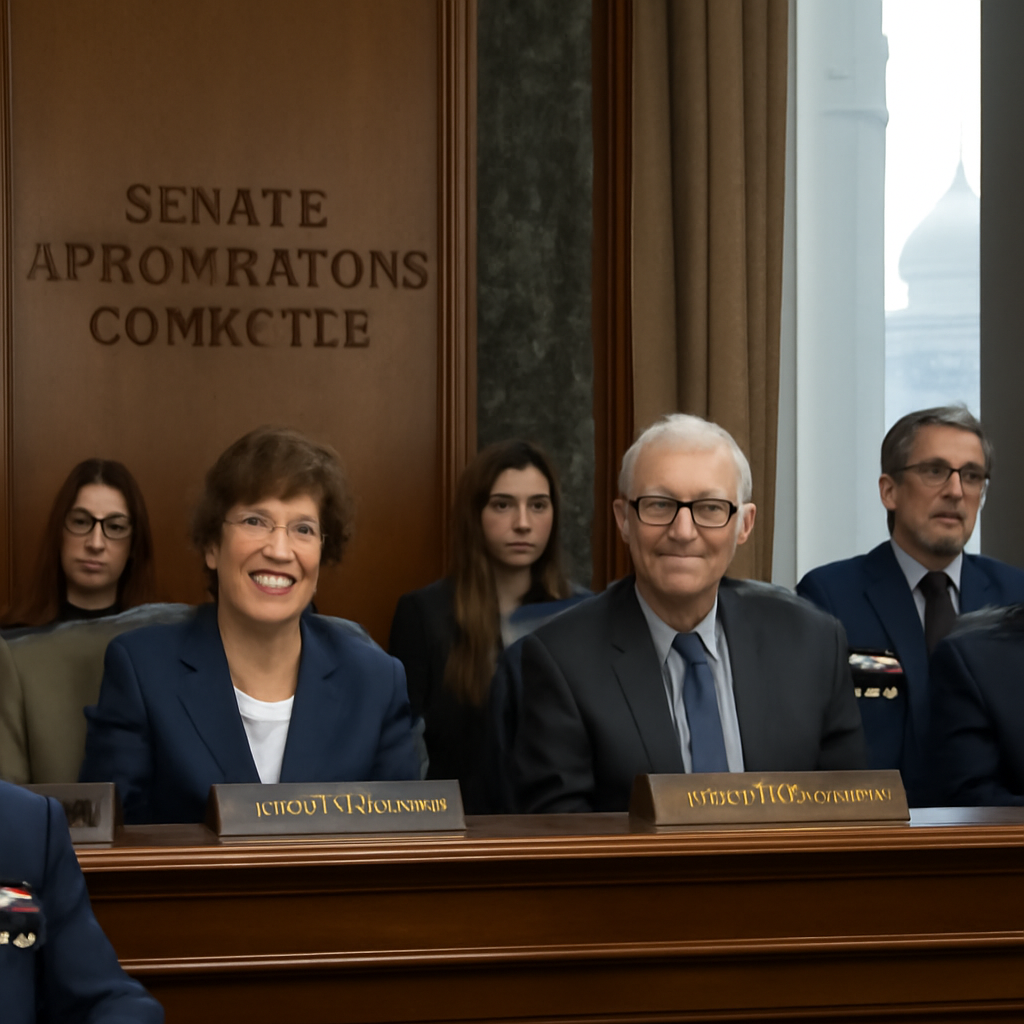
Despite a narrow setback in the Senate Armed Services Committee, supporters of a new Cyber Force remain undeterred, with Senator Kirsten Gillibrand's team vowing to continue the push for its creation. The proposed Cyber Force, which would be housed under the Army, fell just 1 vote short in a 14-13 defeat.

The UK government's digital ID project just got a watchdog boost with the formation of an advisory board tasked with keeping policymakers on their toes. This new board will challenge emerging ideas and policy decisions to ensure the digital ID system serves everyone.

The US intelligence community is on the brink of losing a crucial surveillance authority as Section 702 of the Foreign Intelligence Surveillance Act teeters on the verge of lapsing, following a 218-198 House vote against its extension. This development comes amid a dispute over the nomination of a new spy chief.

Ransomware crews target small municipalities because nobody's watching. Nubivance gives Maine and New Hampshire towns a security program sized to a town budget.
Protect the town office

In Zambia, a stark reality has emerged: China's growing influence is stifling dissenting voices, with critics like Michael Sata labeling the Chinese presence as parasitic rather than beneficial. The recent postponement of RightsCon, a human rights summit, has starkly illustrated this chilling effect.

European countries are facing a frustrating dilemma: they're being urged to boost defense spending, but when they try to purchase US arms, they're met with lengthy and uncertain delivery timelines, sometimes as far off as 2029-2030. This has led some, like Poland, to look elsewhere, such as to the Korean defense industry, for quicker solutions.

Canberra's challenge lies in sparking a sense of urgency among young Australians about national security - a crucial step in building a public mandate to defend the country. A proposed national curriculum for year 8 to 10 students aims to tackle this by educating them on Australia's global role and the real-world implications of defence and sovereignty.

The House Appropriations Committee has just unveiled a groundbreaking $1 trillion defense bill for FY27, prioritizing the production of critical munitions, cutting-edge technology, and modern warfare capabilities to equip troops for the challenges ahead. With $10.6 billion allocated for legacy munitions and $836 million for low-cost options, this bill is set to revolutionize the nation's defense strategy.

The American Federation of Government Employees is urging House lawmakers to override President Trump's executive order that strips collective bargaining rights from most federal employees, a move that would undermine the rights of workers to negotiate for better working conditions.

Relying on a third reconciliation bill to fund defense programs is a risky move that could create instability, according to Senate Appropriators, who are instead pushing for base funding through the defense appropriations bill.

President Donald Trump's reported threat to blow up Oman has raised concerns that the US may be jeopardizing a crucial diplomatic channel with Iran, one that has helped prevent escalation for decades. By pressuring Oman to cut ties with Tehran, the US risks eroding its role as a trusted mediator in the Gulf.

Defense funding is in limbo after Senate leaders, including Appropriations Chairman Susan Collins and Senator Mitch McConnell, effectively ruled out a third reconciliation bill, dashing Pentagon hopes for a boost in next year's budget. This development puts crucial defense funding in jeopardy.

Evidence in spreadsheets, controls drifting between audits, frameworks multiplying on flat headcount. Nubivance runs continuous compliance on Rapid7 Cyber GRC - SOC 2, HIPAA, ISO 27001, PCI, CMMC.
End the scramble
As Australia and Britain strengthen their historic ties through AUKUS, it's time to shift the conversation beyond submarines and explore the deeper connections that unite these nations. By embracing shared values and collective resolve, the partnership can unlock a brighter future for both countries.

In just one week, 8,000 federal workers face a major shake-up that could strip them of their civil service protections, a change that's sparked fierce opposition from unions, employees, and watchdogs. The Trump order requires agencies to reclassify these workers into a new category that leaves them vulnerable to removal without the usual safeguards.
President Trump's pick for acting director of national intelligence, Bill Pulte, is facing fierce backlash from lawmakers on both sides of the aisle, who question his qualifications for the critical role. Senator John Cornyn's scathing assessment - &No qualifications& - echoes concerns that Pulte's background is woefully underprepared for the job.

The US has greenlit a whopping $1.67 billion in military sales to boost the defense capabilities of New Zealand and South Korea, with cutting-edge helicopters, torpedoes, and precision-guided weapons on the agenda. New Zealand is set to receive five MH-60R Seahawk helicopters and advanced systems in a $1.5 billion deal, while South Korea will get a $106 million package to enhance its military arsenal.

The US is set to supercharge its AI capabilities in intelligence and warfighting domains, with a new presidential memo directing the federal government to accelerate AI adoption while prioritizing speed, security, and responsible innovation. The move aims to harness AI's potential in line with American values, with rigorous oversight to ensure safe and effective deployment.

Join a live webinar on June 24, 2026, to explore how the Pentagon's new emphasis on research security is transforming the way universities, government agencies, and institutions protect against foreign exploitation. Earn 1 CPE credit while learning how to bolster defenses for basic and applied research in a rapidly evolving security landscape.

US Secretary of Defense Pete Hegseth's recent speech at the Shangri-La Dialogue in Singapore left many wondering why he didn't seize the opportunity to reaffirm US support for Taiwan, a crucial moment to make a strong statement in the region. By choosing not to directly address Taiwan, Hegseth missed a chance to show strength and clarity in the face of growing uncertainty.

Congress is pushing the Army for a clearer roadmap to achieve its transformation goals, with Rep. Mike Rogers bluntly stating that the Army hasn't done its homework. The House Armed Services Committee has now mandated an annual report and briefing from the Army to keep lawmakers in the loop.