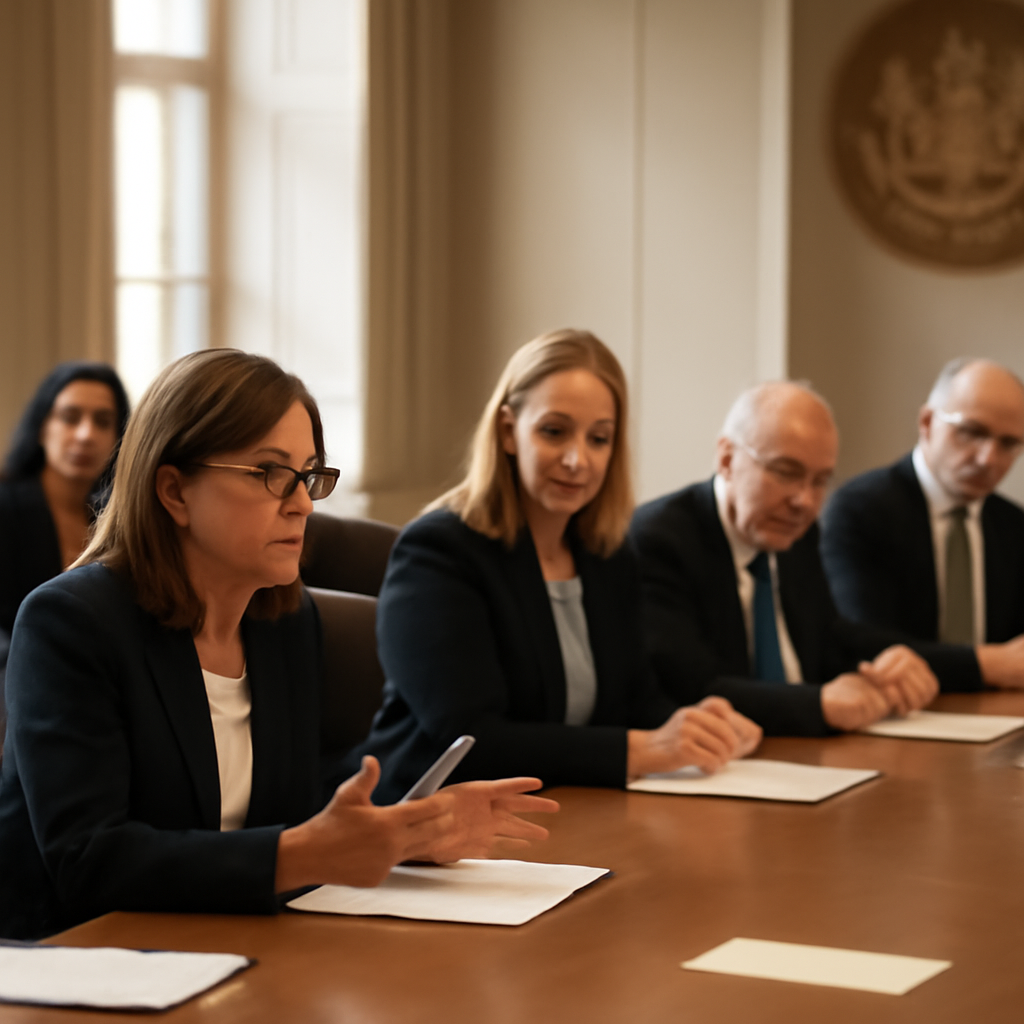
"to challenge the government on emerging ideas or policy decisions to ensure the system works for everyone," says the Cabinet Office.
Cabinet Office sets a watchdog-style advisory board
The Cabinet Office has established an advisory board for the UK government's digital ID programme with an explicit remit to "challenge the government on emerging ideas or policy decisions." The board is intended to operate for the duration of the digital ID project and will meet quarterly, the government says. Alongside the board, officials are running engagement exercises with the digital verification and financial services sectors.
David Rogers: IoT security experience and past government work
Among the board members is David Rogers, described in government material as an Internet of Things security expert and CEO of security consultancy Copper Horse. Rogers has prior experience advising government: he sat on a group formed in 2020 to consider telecoms diversification and, as chairman of the GSMA's fraud and security group, backed the Product Security and Telecommunications Infrastructure Act 2022. Rogers has provided commentary to media outlets over the years; in 2014 he discussed iPhone 6 biometric security and argued that better usability would reduce data loss because many people found PIN locks cumbersome.

Audit-ready is a season. It shouldn't be.
Evidence in spreadsheets, controls drifting between audits, frameworks multiplying on flat headcount. Nubivance runs continuous compliance on Rapid7 Cyber GRC - SOC 2, HIPAA, ISO 27001, PCI, CMMC.
End the scrambleJustine Roberts and Mumsnet: breach history and public scepticism
Justine Roberts, founder and chief executive of parenting forum Mumsnet, is also a board member. Mumsnet experienced a data breach in 2019 connected to a cloud migration that affected 46 user accounts; Roberts publicly apologised at the time. The site’s user base has shown visible scepticism about the digital ID plans: after the prime minister's October 2025 announcement of the scheme, a Mumsnet poster replied, "Honestly, who is he kidding?" and called it "Desperate stuff to justify this authoritative bs." During the government’s public consultation phase, some Mumsnet posters promoted the Sex Matters campaign, urging that people be allowed to include their sex in digital IDs.
Victor Dominello and the Service NSW digital licence record
Victor Dominello, whose experience includes launching New South Wales' digital driver's licence in 2019, is on the UK board as well. Dominello said at the time that the digital licence was more secure than its physical equivalent. That rollout has been subject to technical scrutiny: in 2022 a researcher at security company Dvuln reported numerous security flaws in the Service NSW app that hosts the licence and other government services. The state government responded that those issues did not pose a risk to customer information.
Board composition, other members, and public involvement
The advisory board also includes John Fallon, former chief executive of Pearson and the lead non-executive board member of the Cabinet Office; Anne‑Marie Imafidon, who runs social enterprise Stemettes; and digital regulation lawyer Emma Wright. The board will convene quarterly for the lifetime of the programme.
Separately, the government is running a People's Panel made up of roughly 100 to 120 participants, meeting in Birmingham and on Zoom to hear from experts and ministers before producing recommendations. Participants in the People's Panel are offered £550 in cash or vouchers for their time.
What this means for technologists, policymakers, and end users
- Technologists and security teams: past technical reviews such as the Dvuln research into the Service NSW app mean security practitioners will watch for technical scrutiny and transparency from the board, especially where vendors or operational details are discussed.
- Policymakers and regulators: the board’s explicit mandate to "challenge the government" and its mixture of industry, advocacy, and regulatory-adjacent figures will shape internal policy debate and the nature of engagement exercises with digital verification and financial services.
- End users and campaigners: public scepticism voiced on platforms like Mumsnet, and grassroots campaigns such as Sex Matters that appeared during the consultation, signal that social and identity questions will remain a live public issue as the programme develops.
The UK government has assembled a deliberately mixed group — industry veterans, civil-society figures, and people with hands-on digital-ID experience — and given it a clear critical role. How effectively that board can "challenge the government" will be visible in the coming quarterly meetings, in the outputs of the People's Panel, and in how the government responds to technical findings and public concerns such as those aired on Mumsnet and in the Dvuln report.