"Leaders come and go, but the people remain," Joseph Stalin reputedly said.
AUKMIN in London: the debate AUKUS must win
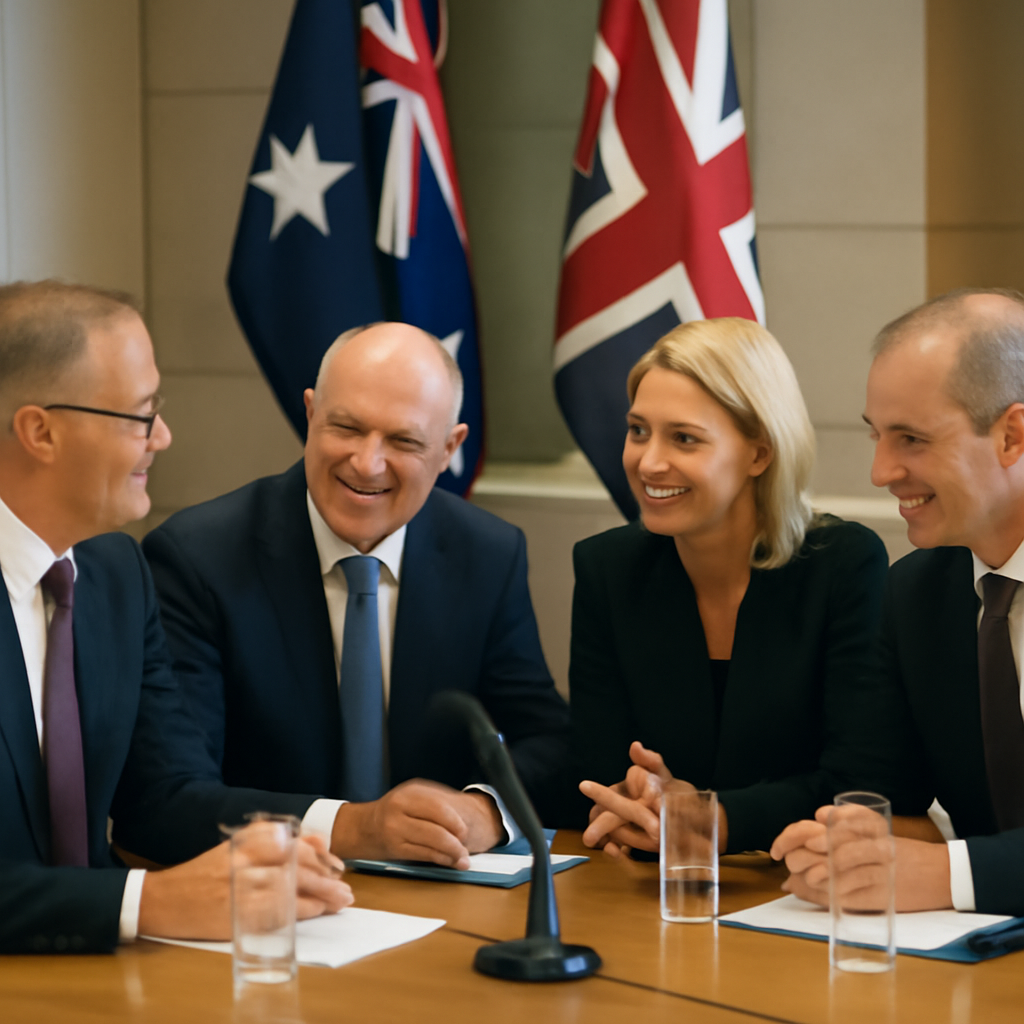
This week’s AUKMIN — the meetings between Australian and British foreign and defence ministers in London — arrives with AUKUS dominating coverage, and with public debate skewed toward technical contests. The source describes how Australia’s defence debate has been "swamped by former politicians, retired sailors and US alliance naysayers who agree on little except that they all hate AUKUS." Ministers are urged to take back the narrative: acknowledge delivery concerns, but explain the broader strategic logic behind the partnership.
More than submarines: shared values and collective resolve
According to the source, AUKUS is built on "a commitment to shared values, a vision of international community based on rules and the collective resolve to face up to bullies." The article argues that while delivering military capability is the necessary outcome, the defence partnership and the Australia–Britain relationship are centred on those values and on long‑term security, not only on an acquisition programme.

This site is the portfolio.
OSINTSights runs on Cloudflare Workers, D1, R2, and Vectorize, with an AI pipeline on Hetzner ARM. Nubivance designed, built, and operates it. We do the same for clients.
See what we buildIndustrial cooperation: the Geelong Treaty and SSN‑AUKUS
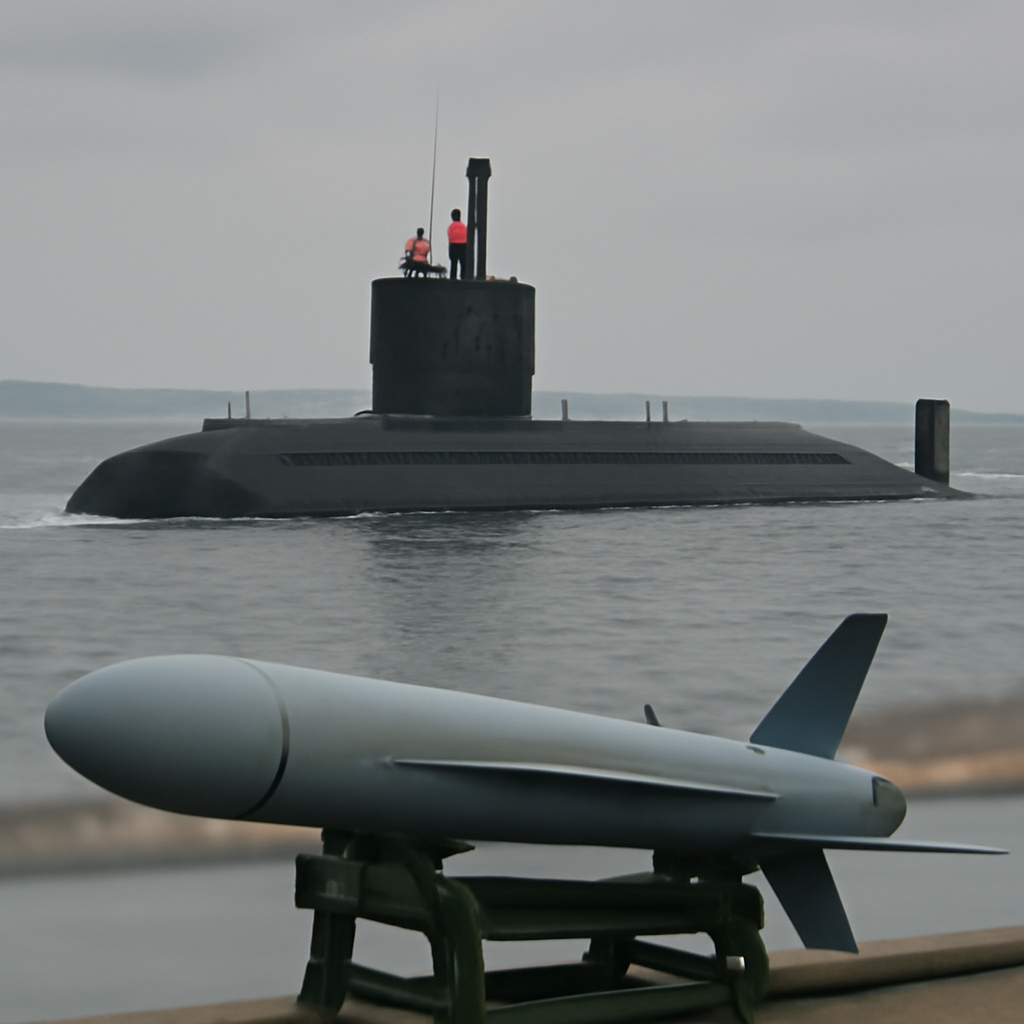
Last year’s AUKMIN produced the Geelong Treaty, which the source says "will facilitate the joint production of a new class of nuclear-powered submarine, SSN‑AUKUS." The partnership has refreshed the Australia–UK Defence Industry Dialogue and broadened cooperation into radar, uncrewed aircraft and "more integrated supply chains and sustainment." Ministers need to make clearer how AUKUS strengthens each partner’s industrial base as part of explaining delivery timeframes.
Pillar Two, payloads and Britain’s 2025 strategic commitments
Progress is cited in concrete terms: this month’s announcement of a Pillar Two "signature project" to co‑develop payloads for uncrewed submarines is singled out as an early result. Britain’s 2025 Strategic Defence Review is described in the source as having "committed to an ambitious uplift in crewed‑submarine production, which Australia will play a crucial role in delivering." The article frames these moves as evidence that AUKUS is already producing collaborative outcomes beyond headline submarine politics.
Political and funding constraints in Canberra and London
The source does not sugar‑coat risks. An April report by the House of Commons Defence Committee identified that "in Britain AUKUS would need more consistent political leadership, better public communications and funding certainty," and urged attention to those shortfalls as Britain prepares to publish its overdue defence investment plan. The article also relays suggestions for governance: Britain’s AUKUS tsar, Sir Stephen Lovegrove, told ASPI in 2025 "he’d like to have have counterparts in the United States and Australia," and the source suggests Australia may need a senior official dedicated to realising the whole‑of‑nation effort AUKUS requires.
Penny Wong, Yvette Cooper and an expanded bilateral agenda
The source urges Australia’s foreign minister Penny Wong and her British counterpart, Yvette Cooper, to use their "broader remit as foreign ministers to elevate the AUKUS debate." Cooper’s writing on foreign policy in the era of geoeconomics is said to align with Wong’s advocacy for statecraft — coordinating all arms of national power. The article points to existing groundwork: a 2024 statement of intent on critical minerals and growing cooperation on artificial intelligence. It argues the partnership should be less piecemeal and more ambitious, noting the Australia–Japan economic security declaration, signed in May, as an example of a higher bar.
Regional signalling: China, North Korea and support for fellow democracies
The piece places AUKMIN in a wider regional context. It notes that "as AUKMIN is being held, President Xi Jinping will be in North Korea plotting with its leader, Kim Jong‑un," and argues that AUKUS’s longevity as "a strategic partnership protecting liberal values over authoritarian objectives" matters beyond single capabilities. The article also records recent public diplomacy: "Just last week, Wong condemned China’s ban on four New Zealand parliamentarians who had visited Taiwan," and says AUKMIN can lead in support for Taiwan, New Zealand, the Philippines and Ukraine.
What this AUKMIN must deliver, per the source, is a clearer public case: honest about timelines and risks, but insistently framed as an intergenerational project of collective defence and economic security — one that aims to translate values into capabilities and to show voters how industry, diplomacy and strategy knit together over years, not electoral cycles.