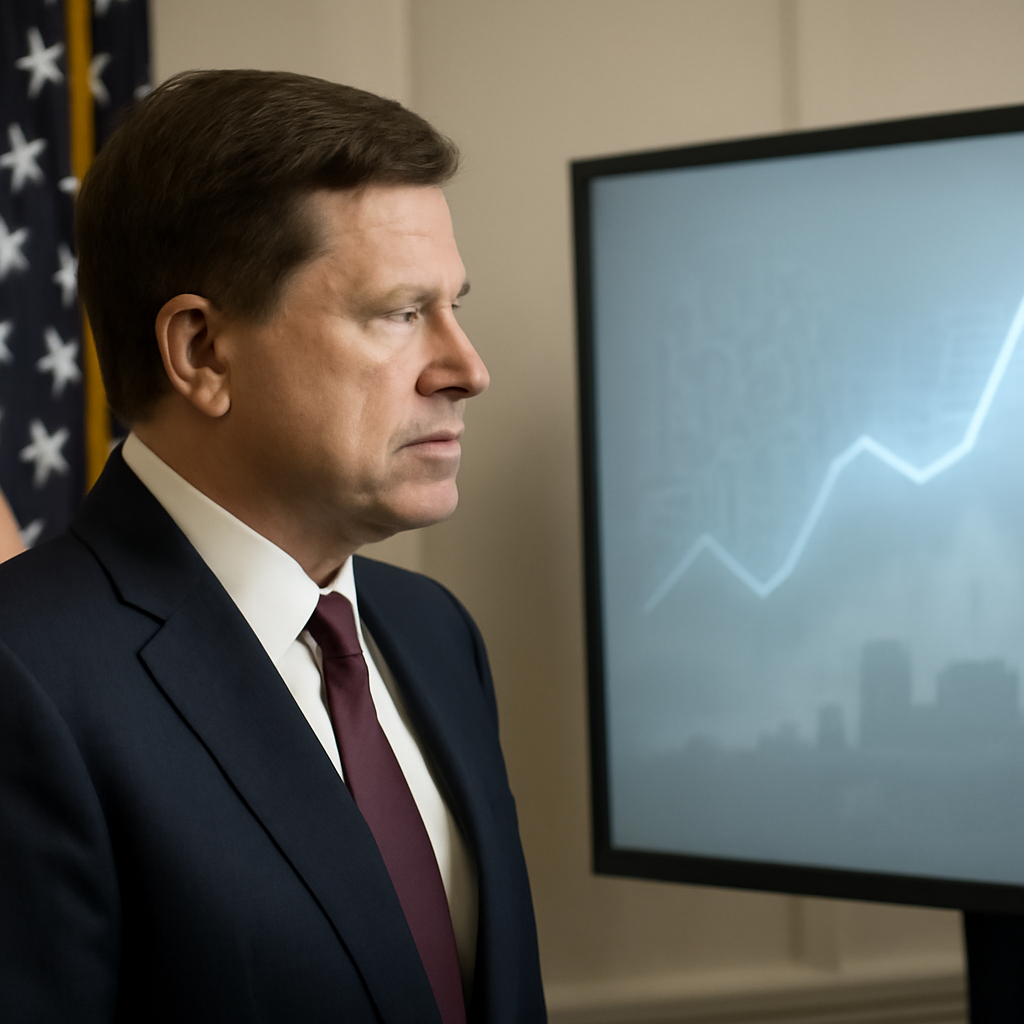
That blunt judgment captured why the announcement that President Donald Trump has chosen Bill Pulte to serve as acting director of national intelligence has stirred both partisan and bipartisan pushback. Pulte — described in the source as a Trump loyalist who currently runs the Federal Housing Finance Agency — has been called controversial because, the reporting says, his background is thin for the job. The current director, Tulsi Gabbard, is scheduled to leave the post at the end of June 2026. The original story was published Dec. 4, 2024 and has been updated to reflect Pulte’s selection.
The DNI’s central role as the president’s principal national security adviser
The director of national intelligence, known as the DNI, serves as the president’s principal adviser on intelligence. Historically, that role has included responsibility for the President’s Daily Brief and oversight of the National Intelligence Council (NIC), though the CIA director has at times been somewhat co-equal in advising the president. The source notes that most Daily Brief items are still prepared by the CIA, but a DNI or deputy has traditionally delivered the briefing — daily in most administrations, with exceptions. During the first Trump administration the briefings were given one or two times a week, and the piece says it is now unclear whether they take place at all.
The content of those briefings runs from immediate, tactical questions — for example, the situation on the ground in the wars in Iran and Ukraine, and how the Iranian regime or Russian President Vladimir Putin might respond if the United States takes particular actions — to longer-term strategic issues. The analysis function is expected to probe questions such as the implications of hypersonic missiles, the trajectory of the Russia–China relationship, China’s geostrategic objectives and the role of the Belt and Road, and whether U.S. and Israeli attacks could harden the Iranian regime or produce a “rally ’round the flag” effect.
Why the DNI position was created
The DNI office was created directly in response to coordination failures exposed by the 9/11 Commission. The source recounts that, in the run-up to 9/11, CIA and FBI officers were uncertain about what they could share: CIA personnel questioned whether FBI colleagues were cleared to hear particular information, while FBI staff feared that sharing could jeopardize ongoing cases. That lack of coordination contributed to missed opportunities. The Intelligence Reform Act of 2004 established the DNI to break the conflict that existed when the director of central intelligence also served as CIA director — a structure that panels had warned against for decades because it encouraged directors to focus on running the CIA, the agency from which they drew their personnel and resources.

The cyber insurance questionnaire just landed. Now what?
SOC 2, HIPAA, insurance renewals - someone has to own security strategy. Nubivance provides fractional CISO leadership without the full-time salary.
Get a security leadHow the National Intelligence Council works in practice
The NIC, the DNI’s interagency analytic arm, is organized like the State Department with officers for regions and functions. When a question is posed to the intelligence community, the relevant national intelligence officer convenes colleagues from other agencies for a process the author characterizes as “coordination.” Analysts contest and reconcile differing views, and the NIC records where the intelligence community disagrees. Some responses can be completed in hours; major strategic products — such as the 2022 national intelligence estimate on the implications of the COVID-19 pandemic out to 2026 — can take months.
In the author’s last year as chair of the NIC, the council produced roughly 700 analyses; about 400 of those were taskings from the national security adviser or one of that office’s deputies. National intelligence officers come from inside and outside the federal government; deputies — called the heart and soul of the NIC — are assigned from intelligence agencies. The largest single contributor of deputies has been the CIA, though the source offers concrete examples of cross-agency staffing, including a cyber analyst from the Secret Service and an analyst from the New York Police Department.
Analytic integrity and the tone set by the DNI
A central theme of the source is the intelligence community’s insistence on remaining resolutely nonpolitical. Intelligence officers, the author writes, “work for the nation, not for a political party or ideology.” They worry about “politicizing” analysis and resist producing assessments tailored to policymaker preferences. Daily briefers, for example, often sacrifice a year of their lives to produce and present briefings to senior officials; they relish being “on the team” of the person they brief but become uncomfortable when conversations turn political.
The DNI sets the tone for that nonpolitical stance and enforces it through analytic standards. As NIC chair, the author says, he received regular assessments of both the quality of analyses and the risk of politicization. While politicians and agency leaders naturally bristle when intelligence assessments judge their initiatives unwise or infeasible, the author argues that the country benefits from intelligence that resists politicization.
What this means for the president, the intelligence community, and Capitol Hill
- The president: Requires a principal intelligence adviser who can deliver both tactical updates and strategic trends, and who can credibly coordinate 17 agencies to produce unified community judgments.
- The intelligence community and the NIC: Depend on a DNI who reinforces analytic standards, preserves nonpolitical analysis, and sustains the interagency coordination that the NIC conducts through taskings and National Intelligence Estimates.
- Capitol Hill: Democrats are reported to have resisted Pulte’s selection, and some Republicans — exemplified by Sen. John Cornyn’s “No qualifications” comment — have also expressed dismay, underscoring the nomination’s contentiousness across party lines.
The facts set out in the source frame a narrow but consequential question: will the holder of the DNI slot — in this case the acting director, Bill Pulte, as the transition approaches when Tulsi Gabbard leaves at the end of June 2026 — preserve the integrative, nonpartisan functions the office was designed to perform? The record compiled in the source traces why that office exists, how it operates, and what is at stake for the president and the broader intelligence community.