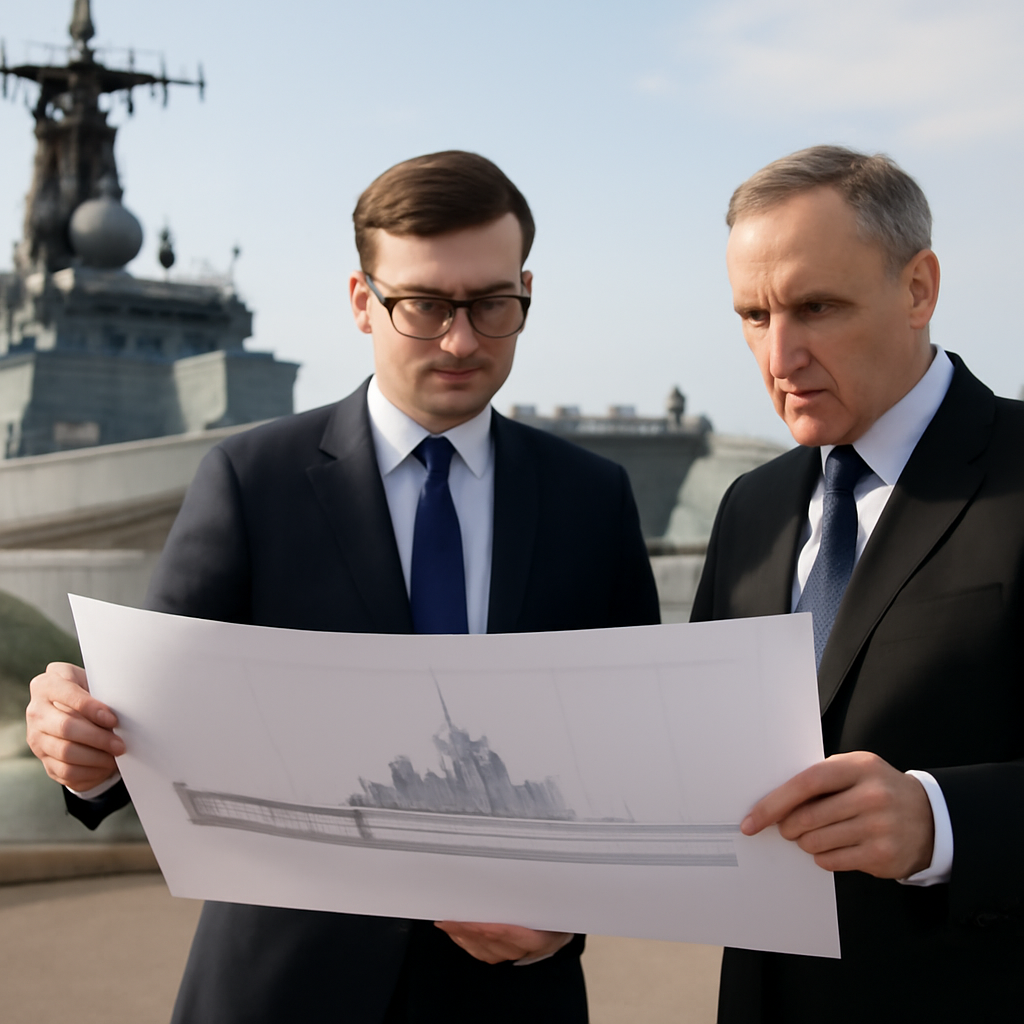
“AUKUS dominated the substance of the talks.” That was the blunt tally after AUKMIN met in London on June 10 — a meeting that made clear the partnership between the United Kingdom and Australia is being drawn ever more deeply into the hard work of turning strategic alignment into deliverable capability.
The U.K.-Australia leg is carrying more of AUKUS’s practical burden
The joint statement released after the meeting ranged widely — Ukraine, the Middle East, hybrid threats, the Indo-Pacific, economic security, critical minerals, and defense industrial cooperation — but ministers returned repeatedly to AUKUS. The Geelong Treaty, signed after last year’s AUKMIN in Australia, already gave legal form to joint production of SSN-AUKUS; this year’s record added practical evidence, citing HMS Anson’s maintenance period in Western Australia, the first such activity by a U.K. nuclear-powered submarine in Australia. For London and Canberra, near-term advances in submarine maintenance, supply-chain integration, workforce mobility and nuclear skills are concrete ways to show AUKUS is more than rhetoric.
Pillar II momentum: uncrewed undersea systems and AUKUS AI in service
Ministers highlighted progress on Pillar II technical cooperation. The first Advanced Capabilities “signature project,” announced in Singapore, centers on uncrewed undersea vehicles. The statement also referenced AUKUS-designed AI algorithms used aboard an Australian P-8A to process undersea data — concrete demonstrations that capability development, operational habits and industrial competence can precede the long timelines associated with SSN procurement.

Audit-ready is a season. It shouldn't be.
Evidence in spreadsheets, controls drifting between audits, frameworks multiplying on flat headcount. Nubivance runs continuous compliance on Rapid7 Cyber GRC - SOC 2, HIPAA, ISO 27001, PCI, CMMC.
End the scrambleU.S. dependence and industrial limits: the Virginia-class pivot
Despite U.K. and Australian advances, Canberra’s path to nuclear-powered submarines still depends on the United States in ways Britain cannot replicate. That dependence includes U.S. naval nuclear expertise, technology transfers, the U.S. Navy’s strong presence in the Indo-Pacific, and critically the Virginia-class submarines needed to train Australia’s future SSN force before SSN-AUKUS arrives. The shift from a mixed acquisition of new and in-service Virginia-class boats to three in-service submarines is presented in the statement as preserving an “Optimal Pathway,” but the pivot also exposes the limits of U.S. shipbuilding capacity — a bottle-neck that makes robustness in the AUK partnership essential.
British fiscal stress: Strategic Defense Review vs. delayed Defense Investment Plan
On paper, the U.K. has set an ambitious defense posture through the 2025 Strategic Defense Review. Translating posture into resources rests on the much-delayed Defense Investment Plan. Reporting cited in the statement says the armed forces identified an additional requirement of around £28 billion over four years, while the settlement under discussion is evidently far short. If the eventual settlement amounts to less than a 0.1 percent increase in defense spending, as Healey’s resignation letter suggests, ministers warned that consequences will touch areas crucial to AUKUS: shipyard capacity, nuclear skills, workforce pipelines and supply chains — all of which will affect the long-term prospects for SSN-AUKUS production.
Australia’s social-license challenge and the Integrated Investment Program
Australia’s Integrated Investment Program aims to give the Australian Defence Force the capabilities to practice area denial, long-range strikes and undersea warfare while improving industrial resilience. The program has strategic logic, the ministers noted, but it confronts a political and social reality: nuclear-powered submarines remain politically sensitive in Australia even outside the defense domain. The joint statement acknowledges that public consent exists but cautions it cannot be assumed to endure automatically across decades, budgets, governments, local infrastructure disputes and periodic shocks from Washington or London — a long-running social-license challenge Canberra must manage.
What this means for British defense planners, Australian policymakers, and U.S. shipbuilders
- British defense planners will watch the Defense Investment Plan closely: shortfalls relative to the roughly £28 billion need will translate into reduced shipyard throughput, weaker nuclear skills pipelines and added risk to U.K. contributions on SSN-AUKUS.
- Australian policymakers must balance the Integrated Investment Program’s ambitions with domestic political tolerance for nuclear-powered platforms, and use nearer-term Pillar II projects — uncrewed undersea vehicles, maintenance cooperation, AI processing aboard P-8As — to build public and industrial confidence.
- U.S. shipbuilders and planners are the operational linchpin for Canberra’s training timeline; limits in U.S. shipbuilding capacity and the move to acquire three in-service Virginias underscore how U.S. industrial bottlenecks shape allied choices and make allied industrial depth vital.
The AUKMIN communiqué demonstrated that the U.K. and Australia are already translating political alignment into practical activity: maintenance visits, joint industrial arrangements, and Pillar II projects offer tangible progress. Yet the ministers’ own framing makes the next test clear and narrow — not in Washington, but in the domestic seams of each capital. Can British budgets, Australian social consent and U.S. industrial capacity be managed together so that AUKUS becomes a durable producer of capability rather than a contest of constrained resources? The ministers left London with the question; the three partners will need to answer it with factories, workforce planning, and votes as much as with strategy.