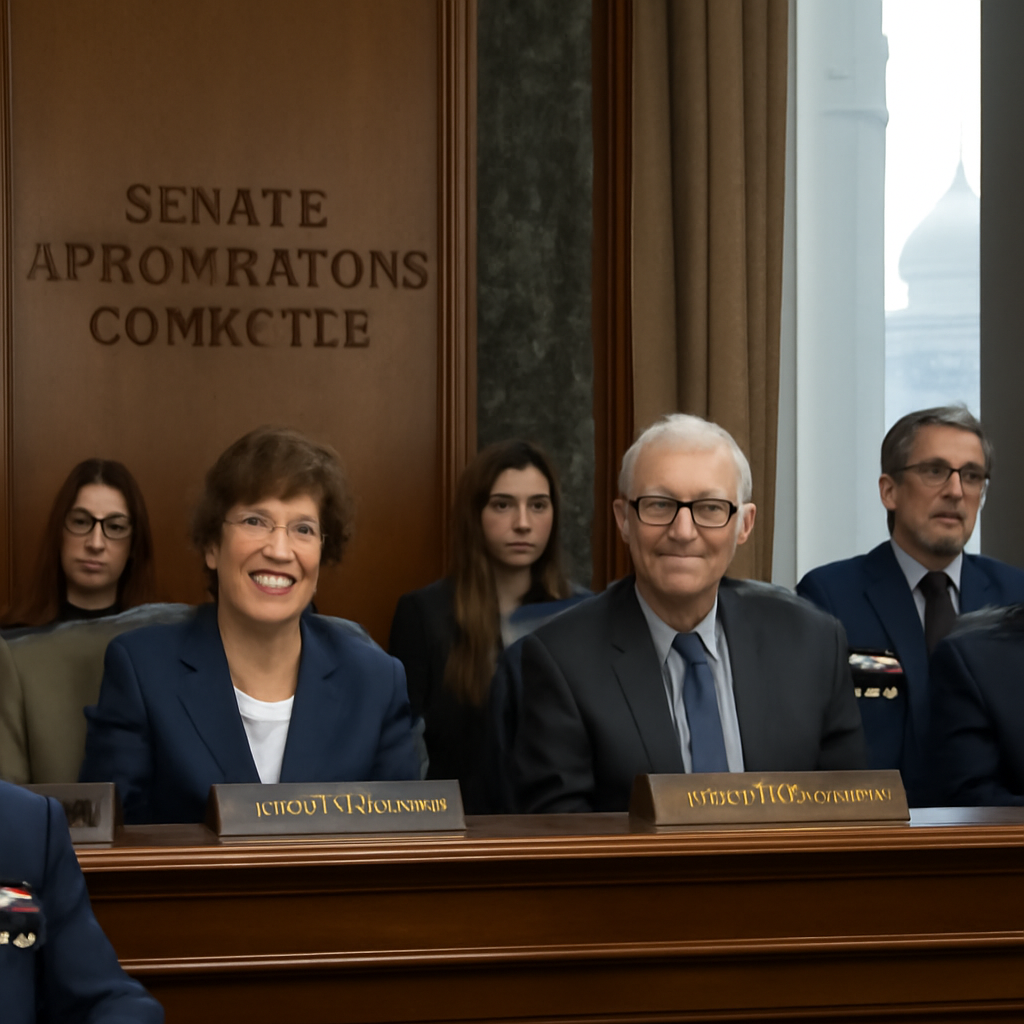
"I would just suggest that it is taking a terrible risk and creates instability when you're counting on a third reconciliation bill for the bulk of the money rather than doing base funding through the defense appropriations bill," Sen. Susan Collins, R-Maine, told Air and Space Force leaders Tuesday.
Senate appropriators close the door on a third reconciliation package
At a Senate Appropriations Committee defense hearing, senior Republican appropriators signaled that Congress is unlikely to approve a third multihundred-billion-dollar reconciliation maneuver to fund the administration's priority defense programs. Committee chair Sen. Susan Collins and defense subcommittee chair Sen. Mitch McConnell, R-Ky., both expressed skepticism that another reconciliation bill is politically viable. McConnell said, “I think it's safe to conclude there will not be another reconciliation bill. So, it's really not an option.” Collins agreed with that assessment, framing reliance on reconciliation as an unstable budgeting strategy.
The numbers behind the impasse: $1.15 trillion baseline, $350 billion ask
The Trump administration's baseline defense request submitted to Congress stands at $1.15 trillion. The White House has separately asked Congress to approve a $350 billion appropriation through reconciliation — a process that allows "mandatory" spending to move with a simple majority vote. More than $150 billion in defense spending was enacted last July 4 under the first reconciliation package, identified in the record as Trump’s One Big Beautiful Bill Act. House Republicans recently passed Reconciliation 2.0, which provides $70 billion for immigration-enforcement agencies but does not include defense funding.

The cyber insurance questionnaire just landed. Now what?
SOC 2, HIPAA, insurance renewals - someone has to own security strategy. Nubivance provides fractional CISO leadership without the full-time salary.
Get a security leadGolden Dome, shipbuilding, and munitions: priorities outside the baseline
Officials and lawmakers highlighted several top-priority defense efforts that are not in the $1.15 trillion baseline and that the administration has sought to fund through reconciliation: Golden Dome, shipbuilding, and munitions procurement. The House Armed Services Committee completed markup of its annual defense policy bill without substantially adjusting the baseline to absorb those priorities; despite that, top staffers expressed confidence that additional funding would be secured. The White House budget office projects that baseline defense budgets will grow from $1.15 trillion to $1.36 trillion over the next decade, but it has not published plans for additional reconciliation funding after 2027.
Air and Space Force readiness warnings from Secretary Meink
During the hearing, when Sen. John Hoeven, R-N.D., asked whether a supplemental bill would be crucial if reconciliation isn’t passed, Air Force Secretary Meink described it as “vital” that services receive their fully funded budget requests. Meink warned that operating under a continuing resolution would “have significant impacts on our readiness,” singling out investments aimed at countering unmanned vehicles, increasing weapons-system readiness, raising F-35 readiness, and munitions procurement as particularly vulnerable. Sen. John Kennedy, R-La., predicted the possibility of another continuing resolution and told Meink, “Well, I think you should prepare for it.”
What this means for the Air and Space Forces, Congress, and the White House budget office
- Air and Space Forces: Service leaders must plan for constrained execution if reconciliation funding is not forthcoming and if a continuing resolution limits new starts or procurement buys, consistent with Meink’s testimony that readiness and munitions procurement would be substantially impacted.
- Congress (Senate appropriators): Republican appropriators have signaled they will not rely on reconciliation as the default path for large, mandatory defense spending — increasing pressure to address priorities through the annual defense appropriations and authorization processes or via a supplemental bill.
- The White House budget office: Although it projects baseline defense budgets increasing to $1.36 trillion over the next decade, it has not put forward plans for additional reconciliation funding after 2027 and reportedly is "working on options" with the Pentagon and OMB if reconciliation is unavailable.
Lawmakers and the Pentagon are now operating under a set of concrete constraints spelled out at the hearing: the administration's request for a $350 billion reconciliation vehicle, the prior enactment of more than $150 billion through reconciliation on July 4, the House's passage of a non-defense Reconciliation 2.0, and a lack of published White House plans for further reconciliation beyond 2027. Those facts leave two clear open questions: whether Congress will move a supplemental appropriations vehicle if reconciliation fails, and how the services will sequence or prioritize programs — Golden Dome, shipbuilding, munitions, or readiness investments — if forced to choose under a constrained baseline.
Read the original Defense One report: https://www.defenseone.com/policy/2026/06/senate-appropriators-defense-reconciliation-bill/414080/