"The Chinese are infesters, not investors," Michael Sata told me during a campaign that would later bring him to the presidency.
RightsCon postponed after pressure over Taiwanese participants
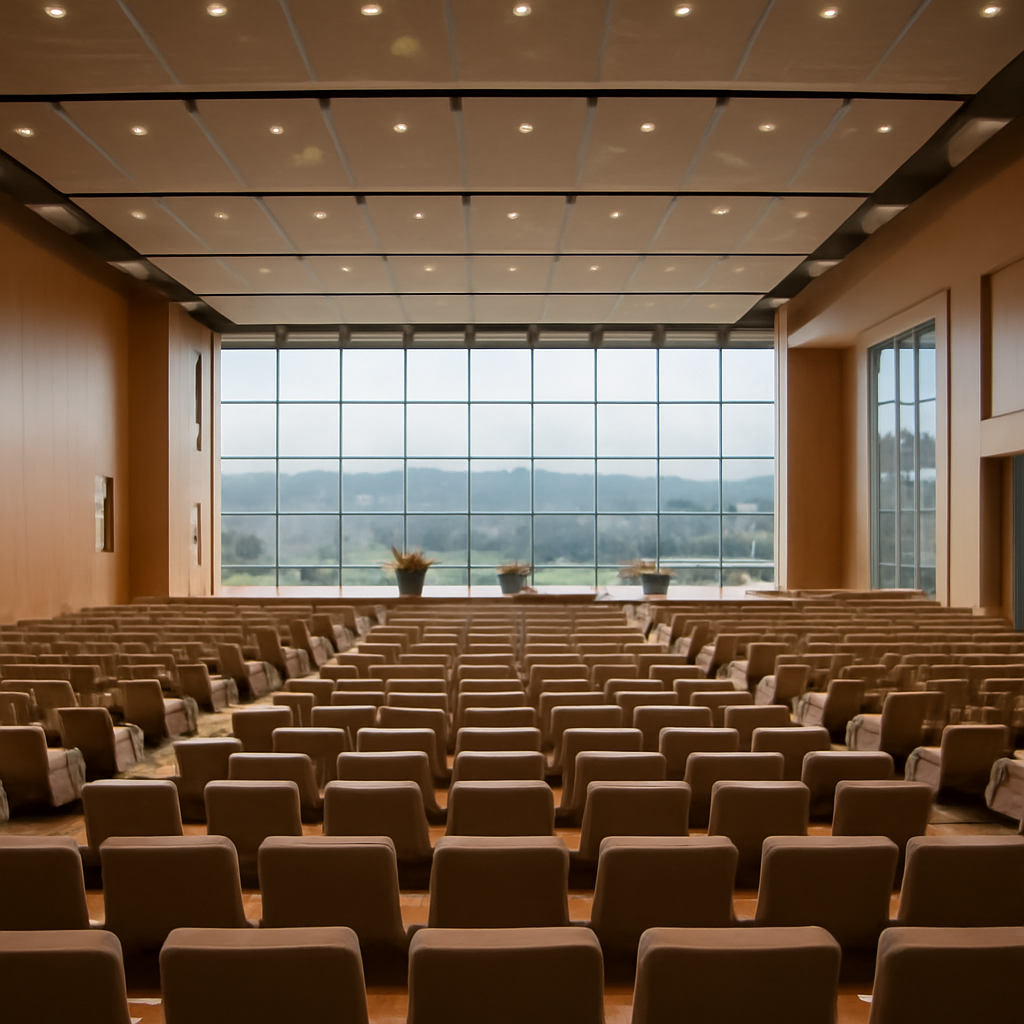
Zambia’s abrupt decision to postpone RightsCon — an annual summit on human rights in the digital age — ended with organiser Access Now cancelling the summit rather than accept conditions it described as censorship. Access Now says the Chinese government pressured Zambian officials, objecting to the inclusion of Taiwanese participants and demanding censorship of some planned discussion topics. The venue at which RightsCon was to convene, the Mulungushi International Conference Centre, had been expanded with a US$30 million grant from China; the hall that Beijing helped build remained empty when the summit was called off.
Infrastructure investments: Mulungushi, StarTimes and national broadcasting
China’s investments in Zambia extend beyond a single conference space. In 2016, Chinese media company StarTimes took a controlling 60 percent stake in a joint venture with Zambia’s state broadcaster ZNBC to manage the country’s analogue-to-digital television transition. That venture erected transmission towers, distributed set-top boxes and operated the network that carries ZNBC’s signals. As the source notes, Zambia’s national television broadcast signals now reach citizens through infrastructure a Beijing-backed company controls.

The cyber insurance questionnaire just landed. Now what?
SOC 2, HIPAA, insurance renewals - someone has to own security strategy. Nubivance provides fractional CISO leadership without the full-time salary.
Get a security leadExpanding media footprint: CCTV Africa, Xinhua and the Oriental Post
Beijing’s media push in Africa — and in Zambia in particular — combined new outlets, content influence and training. CCTV Africa launched in 2012 with the stated aim, in the words of former CCTV boss Pang Xinhua, to tell a different story of the continent: “In America, you depict Africa as a continent of poverty, conflict and disease. We will tell a different story. We will highlight the economic promise and potential of African communities, and positive aspects of their lives.”
Nan Gengxu founded the Oriental Post in Botswana in 2009 and later opened a branch in Zambia; Nan has described the Oriental Post’s mission as to “work hand in hand with the People’s Daily to tell China’s story and spread China’s voice.” Xinhua signed news cooperation and journalist-training agreements in 2023 with Zambia News and Information Services (ZANIS), state broadcaster ZNBC and Zambezi FM, and provided laptops and hard drives for Zambian journalists. In November 2025 further media agreements were signed between ZANIS and both Xinhua and China Media Group, and between the University of Zambia and China Media Group; the China Media Group sits under the Central Propaganda Department in Beijing. Cultural outreach has followed: Zambia’s first Confucius Institute opened at the University of Zambia in 2010 and has expanded to 19 teaching sites across the country.
Legal pressure and local organisations: the CCCZ lawsuit and the gag order
Soft power investments in media and culture have been accompanied by sharper, coercive moves. In 2025 the Chinese Chamber of Commerce in Zambia (CCCZ) sued the producers of a documentary titled Chinese Investment in Zambia: The Good, The Bad and The Dangerous, alleging the film sought to “disparage, demean and taint” Chinese investment. The CCCZ, launched in 2022 and led by Li Tie, also heads the Zambia Council for Promotion of Peaceful National Reunification of China — an organisation affiliated with China’s United Front system. Lusaka’s High Court issued an ex parte gag order for the film; that order was later revoked and the documentary aired last July.
Observers inside Zambia describe a visible shift in the media environment. Gregory Gondwe, assistant professor of journalism and emerging media technologies, said that alongside growing Chinese investment there has been “a paradoxical decline in critical coverage by the Zambian media,” adding that China can “become so absent” from local reporting precisely because outlets choose to avoid the topic.
What this means for Zambian journalists, international democracies, and civil-society groups
- Zambian journalists and civil society: Local reporters now operate in an environment where key transmission infrastructure, training partnerships and some distribution channels have ties to Beijing; access to equipment and formal training has come alongside closer ties to state-run Chinese media organisations.
- Democracies and international supporters of free expression: The postponement drew rebukes from Taiwan’s Ministry of Foreign Affairs, the US House Select Committee on China, the British High Commissioner to Zambia, the UN Special Rapporteur on Peaceful Assembly, and the Media Freedom Coalition (chaired by Britain and Finland). The source argues that democracies should consider advance investments — training, funding, and editorial partnerships that prioritise African editorial independence — rather than reacting after such closures occur.
- Civil society conveners and conference hosts: RightsCon’s cancellation sets a precedent, the source warns, where a powerful external government can pressure smaller or middle powers to shut down convenings it dislikes; organisers and hosts will now weigh venue choice, funding sources and diplomatic risk when planning international events.
The arc traced in Zambia — from street protests and outspoken politics to a media landscape reshaped by investment, training and legal pressure — is presented by the source as a case where influence became control. As that account concludes: Beijing “didn’t defeat opposition in Zambia so much as it succeeded in having it structurally foreclosed.” The question left by those facts is concrete: which partners will step forward with the resources and editorial safeguards that local journalists say they need, before the next gathering is silenced?
Source: From protest to silence: China’s long game in Zambia — aspistrategist.org.au



