Tag: department of defense
124 articles

Pentagon Faces 150-Program Delay as CR Halts New Military Starts
A continuing resolution is putting the brakes on over 150 military programs, forcing the Pentagon to hit pause on new initiatives just as threats continue to escalate. This delay comes at a critical time, with Space Force Gen. Douglass Schiess warning that the threat landscape isn't slowing down, but the Pentagon's progress is.

Pentagon Obligates $142B in Reconciliation Funding, Leaves Billions at Risk of Cuts
The Pentagon has already secured a whopping $142 billion from last year's reconciliation bill, but $10 billion remains at risk of being slashed by 8.3% if not quickly obligated. Time is ticking to avoid a costly cut that could derail key modernization projects.

US Agencies Accelerate 5G for Mission-Critical Operations
US agencies are revolutionizing 5G for mission-critical operations, shifting its purpose from a consumer upgrade to a robust, secure infrastructure. Top officials from the Navy, Department of War, CISA, and industry leaders shared insights on harnessing 5G's potential at the Federal Executive Forum.

Court Upholds DOD Designation of Anthropic as Supply-Chain Risk
A federal appellate court has upheld the Pentagon's designation of Anthropic as a supply-chain risk, allowing the Defense Department to ban its products from being used for official business. This decision comes after a panel of judges reviewed the case and ruled in favor of the Pentagon's designation.

US Military Exposes $38 Billion Tab for Iran Conflict
The US military's ongoing conflict with Iran has already racked up a staggering $38.1 billion price tag, with monthly costs expected to continue at a whopping $2-3 billion. Rebuilding depleted inventories of crucial interceptors could take a lengthy five years.

Pentagon Shifts Cybersecurity Focus to Leverage Emerging Tech
The Pentagon is shaking up its cybersecurity strategy, recognizing that technology - not just personnel - holds the key to defending its vast digital landscape. Department of Defense CIO Kirsten Davies calls it a complex puzzle that requires a tech-savvy solution, leveraging cutting-edge tools like automation, machine learning, and AI.

Pentagon Picks Indiana Base to Host Nuclear Microreactor
The Pentagon has chosen Crane Naval Surface Warfare Center in Indiana to host a cutting-edge nuclear microreactor, a decision driven by the need to meet a tight 2028 deadline to deploy the first military reactor. This strategic move aims to accelerate the development of this game-changing technology.

Pentagon Prepares to Realign FY27 Priorities Amid Funding Uncertainty
The Pentagon is gearing up to adjust its FY27 priorities due to funding uncertainty, with Comptroller Jules Hurst hinting that the department may revisit its requests with appropriators if the $350 billion reconciliation package isn't passed. This potential shift could impact high-priority programs like Golden Dome, munitions buys, and Defense Autonomy.

US Air Force Accelerates Innovation with Modernization-as-a-Service
Meet the Kessel Run team, the US Air Force's elite unit tasked with delivering cutting-edge operational air power to protect and defend the nation. Led by Col. Richard Lopez, this innovative team is revolutionizing the way the Air Force approaches modernization with a bold, modern approach.

Pentagon Unveils Secure Space Network to Expand SCIF Access
The Pentagon is breaking down barriers for innovative companies to contribute to national security by launching a Secure Space Network that expands access to classified work. This game-changing initiative will deploy around 50 Sensitive Compartmented Information Facilities (SCIFs) nationwide, making it easier for capable businesses to collaborate on critical projects.

Pentagon Scrambles to Offset Mounting FY26 Operational Costs
Rep. Rosa DeLauro slammed the Pentagon for a secretive attempt to divert NIH funds meant for lifesaving medical research, sparking a heated debate over the true intentions behind the proposed interagency agreement. The disputed deal would have transferred NIH dollars to the Defense Department, but ultimately no funds were transferred.

Counter-UAS System Proves Effectiveness in Series of Defense Exercises
In a series of Defense Department field exercises, the Halo_Shield counter-UAS system proved its effectiveness with a remarkable launch-to-detection time of under one minute. This impressive metric was achieved across three events in 2025-2026, solidifying Halo_Shield's status as a demonstrably operational system.

Pentagon Deploys ChatGPT for Secure Unclassified Work
The Pentagon is shaking things up with the deployment of ChatGPT Mil on its GenAI.mil portal, streamlining unclassified work and giving personnel more time to focus on their core mission. This customized version of ChatGPT is set to revolutionize efficiency, freeing up valuable resources for the Department of Defense.

CMMC Pause Doesn't Halt Compliance Imperative
The pause on CMMC Phase 2.0 doesn't let you off the compliance hook - you still need to prioritize protecting controlled unclassified information (CUI) within your environment. Keep moving forward with necessary security measures to ensure CUI protection, as requirements remain in place despite validation delays.

Pentagon Contract Fiasco Exposes Failures in Arms Production
A $533 million experiment turned into an unmitigated disaster, with a former official bluntly describing it as an absolute catastrophe - and it's no wonder, given that not a single usable 155 mm artillery shell was produced. Chaos reigned at the General Dynamics facility in Mesquite, Texas, where robots malfunctioned, caught fire, and smashed into equipment, bringing production to a grinding halt.

Pentagon Fortifies SM-3 Production with Framework Deals
The Pentagon is bolstering its defenses with framework deals with Boeing and RTX to ramp up production of the SM-3 missile, a crucial component of the US and its allies' air and missile defense systems. This move strengthens the backbone of US sea-based missile defense, both at home and abroad.

Golden Dome Missile Defense Shield Faces Funding Impasse
The Golden Dome missile defense shield is at a crossroads, with Gen. Michael Guetlein warning that without a resolved funding pathway, the program simply won't exist. Its future hinges on securing a topline appropriation, as a continuing resolution won't suffice.

DoD Accelerates Zero Trust Push Beyond Users, Devices
The Pentagon is making swift strides in implementing Zero Trust principles for its IT systems, focusing on users and devices, and is now poised to take this momentum to the next level. A upcoming webinar will assess progress and explore the future of Zero Trust across the Department of Defense.

Congress Targets UTS Threat to US Troops' Digital Security
The threat of ubiquitous technical surveillance, or UTS, is a pressing concern for US troops' digital security, with top officials warning it gives adversaries a significant advantage. A unified response from the Department of Defense is now needed to counter this growing danger.

Pentagon Disrupts Acquisition Process with Shark Tank-Style Event
The Pentagon is shaking up its acquisition process with a Shark Tank-style event, marking a bold step in acquisition reform and a new era of innovation. This game-changing approach aims to pioneer solutions for Special Operations Forces and blaze a trail for the entire department.

Unions Challenge Pentagon's Abrupt End to Collective Bargaining
Two federal employee unions are taking a stand against the Pentagon's sudden move to scrap collective bargaining agreements, asking a judge to restore their rights and hold the Department of Defense accountable to a fair process. The American Federation of Government Employees and the National Federation of Federal Employees argue that Secretary Pete Hegseth's April decision was made without justification or transparency.
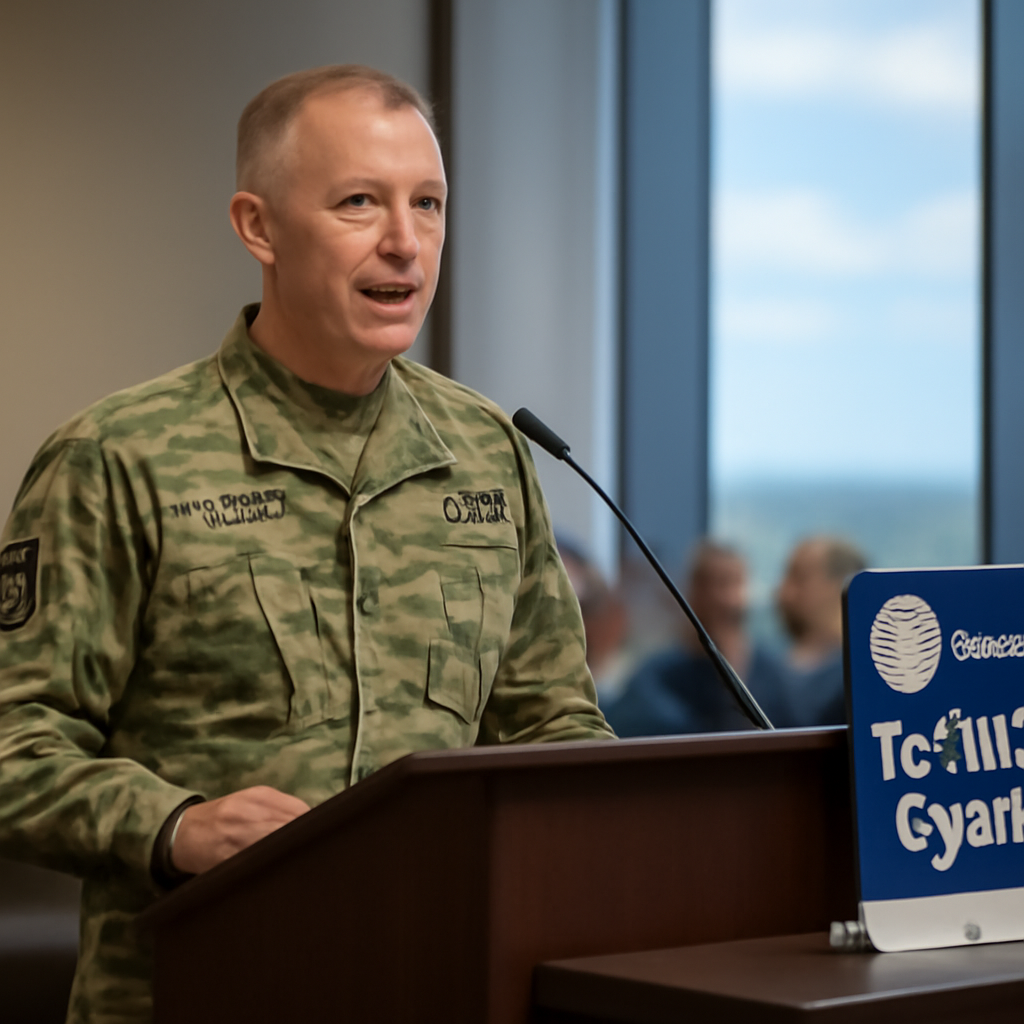
US Defense Pushes Post-Quantum Cryptography Amid AI Adoption Drive
The US Defense Department is rallying the troops - literally - to tackle the challenges of modernization, with Lt. Gen. Paul Stanton calling for a united front between government and industry to safeguard the nation's digital future. It's a call to action that's resonating loud and clear, with collaboration and platforms taking center stage over isolated solutions.

Pentagon Networks Face AI-Driven Threats
The Pentagon faces a daunting cyber threat landscape, with dozens of interconnected networks across the services vulnerable to AI-enabled attacks. This complex web of connections multiplies the risk, making it a pressing challenge for cyber planners to defend against increasingly sophisticated threats.

Pentagon Lacks Unified Hypersonic Missile Strategy, GAO Warns
The Pentagon is missing a crucial unified strategy for its hypersonic missile programs, with the Navy and Army making separate investment decisions that could lead to costly delays and inefficiencies. This fragmented approach risks wasting over $50 billion in taxpayer funds.