"I will tell you that if they don’t figure it out, there is no Golden Dome because there is no funding," Gen. Michael Guetlein said today, laying out a simple but stark condition for the future of the Golden Dome missile defense shield.
Gen. Michael Guetlein’s budget warning
Gen. Michael Guetlein, the director of Golden Dome, told attendees at the 2026 Space & Missile Defense Symposium in Huntsville that the program’s continuity hinges on resolving a specific funding pathway. Golden Dome has been funded outside the Department of Defense’s base budget through reconciliation-style, mandatory funding, Guetlein said, and a continuing resolution (CR) will not substitute for a topline appropriation. "I’m in what they call mandatory funding, which is another reconciliation-type funding bill," he explained, adding that the President’s FY27 topline did not include Golden Dome in the base budget.
Schedule, claims of progress, and test results
Operational elements of the new architecture are scheduled to begin coming online in mid‑2028, Guetlein said, noting that the program "started at 175 billion dollars, and we added 10 more billion [dollars]" to reach the current stated budget of $185 billion. He said Golden Dome has had two tests that he "can’t talk about" but described as "phenomenally successful," and that the Missile Defense Agency executed a highly complex test at White Sands Missile Range after a January challenge from his office. "It was the most complex test with the most threats in the air in the history of WSMR," Guetlein said, and he promised an even more complex event in 2027.

Audit-ready is a season. It shouldn't be.
Evidence in spreadsheets, controls drifting between audits, frameworks multiplying on flat headcount. Nubivance runs continuous compliance on Rapid7 Cyber GRC - SOC 2, HIPAA, ISO 27001, PCI, CMMC.
End the scrambleContracts and architecture components Guetlein enumerated
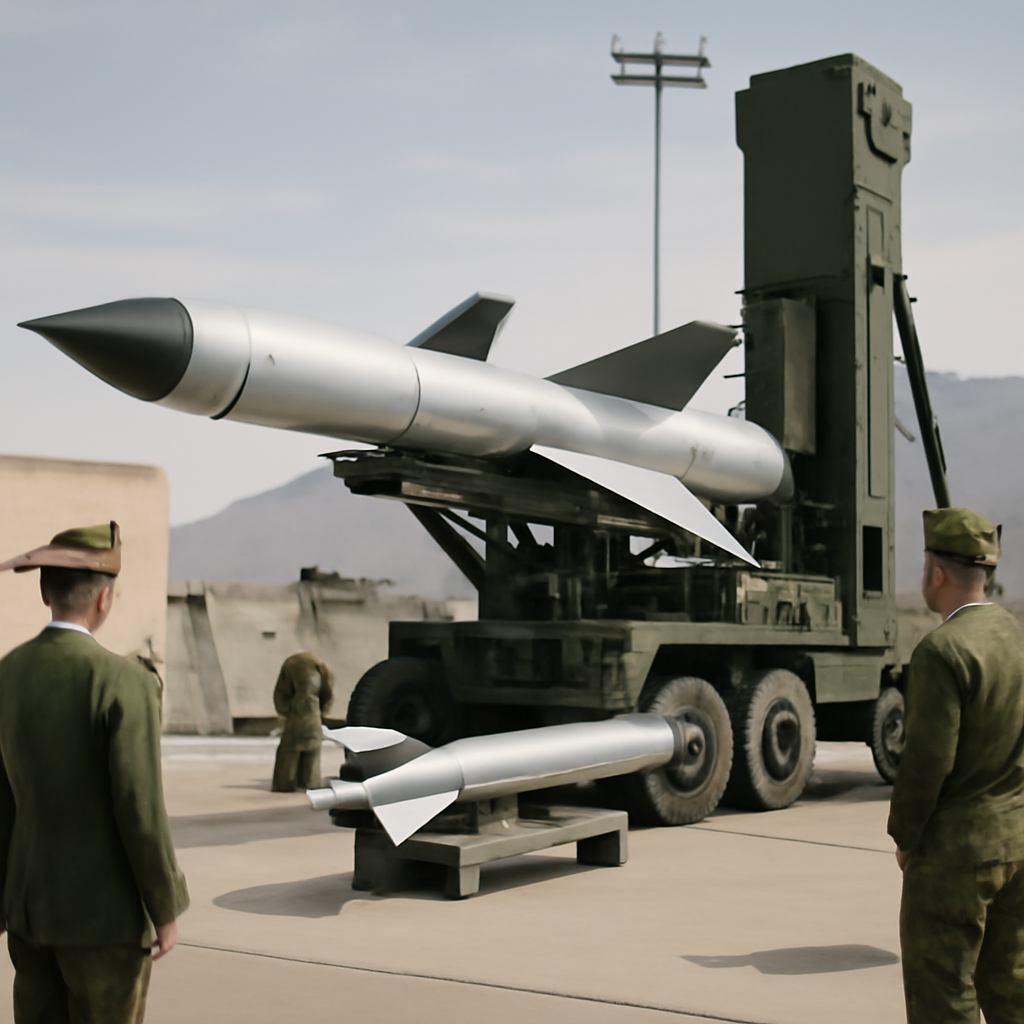
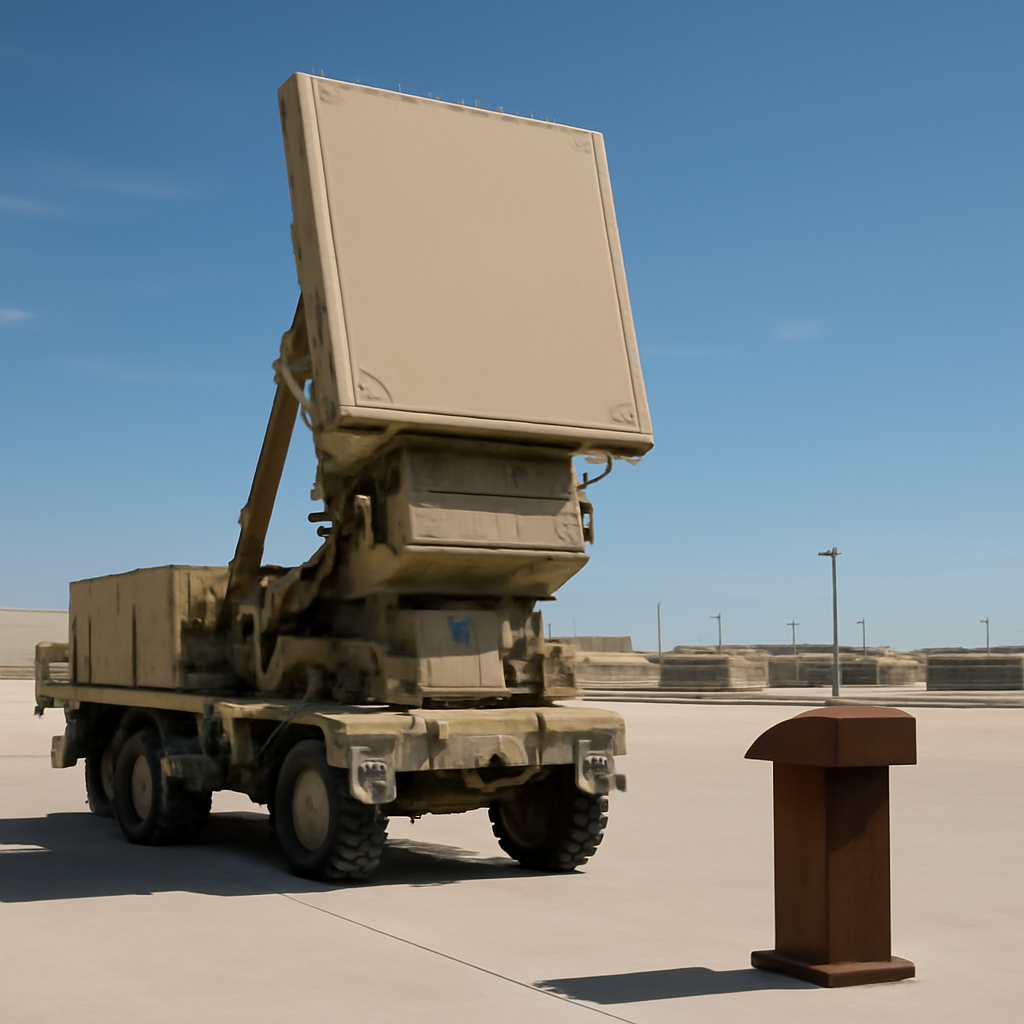
Guetlein listed specific elements he says are under contract: radars, launchers, space‑based interceptors, a hypersonic ballistic tracking system, a space data network, and construction contracts. He affirmed that the program is "moving out with haste" to meet the President’s charge to deliver capabilities in the summer of 2028. The director also referenced a Northrop Grumman video showing a space‑based interceptor engaging a target outside the atmosphere, starting at 0:13 in the clip.
Cost estimates: $185 billion versus independent projections
Guetlein reiterated that Golden Dome’s price to the nation is $185 billion. He acknowledged other independent cost estimates are "exceptionally larger" but argued they are not estimating what his team is building. The Congressional Budget Office has produced two publicly cited figures: a May 2025 estimate that the full architecture could cost up to $542 billion over 20 years, and a May 2026 estimate that it might approach $1.2 trillion over the same period. The CBO also said its analysis was hampered by a lack of publicly available information about the initiative’s "objective architecture." The CBO’s higher estimate rests in part on an assumed need for 7,800 space‑based interceptors to maintain the architecture as modeled.
Funding mechanics: reconciliation, the FY27 topline, and the CR
Guetlein laid out how Golden Dome has been financed so far: $22.5 billion has been appropriated, and he said 95 percent of that money is already committed. The program’s anticipated additional funding was placed in mandatory resources via reconciliation rather than the DoD base budget; the administration’s FY27 defense topline he cited totaled $1.5 trillion, broken into a $1.1 trillion base and $350 billion in additional mandatory resources through reconciliation. A CR, he warned, "doesn’t help me under Golden Dome because I don’t have a top line to fall back to to get that percentage of the continuing resolution."
What this means for the Space Force, the Missile Defense Agency, and Congress
- Space Force: Guetlein said several space capabilities Golden Dome is investing in "are also being invested in by the Space Force." He suggested the Space Force could choose to continue investments if Golden Dome funding lapses, but he emphasized no pathway decisions have been made.
- Missile Defense Agency and test partners: MDA, White Sands Missile Range, SMDC, PAE Fires, Fort Bliss and other agencies delivered the complex 2026 test in a six‑month effort, meeting the director’s test objectives; future test complexity — and associated schedule risk — depends on sustainment of funding.
- Congress and appropriators: The Senate recently passed a continuing resolution that omitted some White House sought defense provisions, including $1 billion for the "Trump class" battleship program; reconciliation remains the mechanism Golden Dome currently depends on, and Senator Mitch McConnell said in June, "I think it’s safe to conclude there will not be another reconciliation bill."
The program now stands at a crossroads. Gen. Guetlein insists Golden Dome can deliver its planned capabilities within the $185 billion construct and points to contracts and tests as evidence the architecture is taking shape. Yet independent, public cost estimates place the price far higher, and the funding mechanism Golden Dome uses is explicitly vulnerable to broader budget politics: without a reconciliation vehicle or a new appropriation in the FY27 topline, "there is no Golden Dome" as Guetlein put it. The immediate questions are concrete and procedural — will Congress supply an alternative funding path, will the Space Force absorb elements to keep momentum, or will commitments and test schedules be deferred while appropriations are settled?