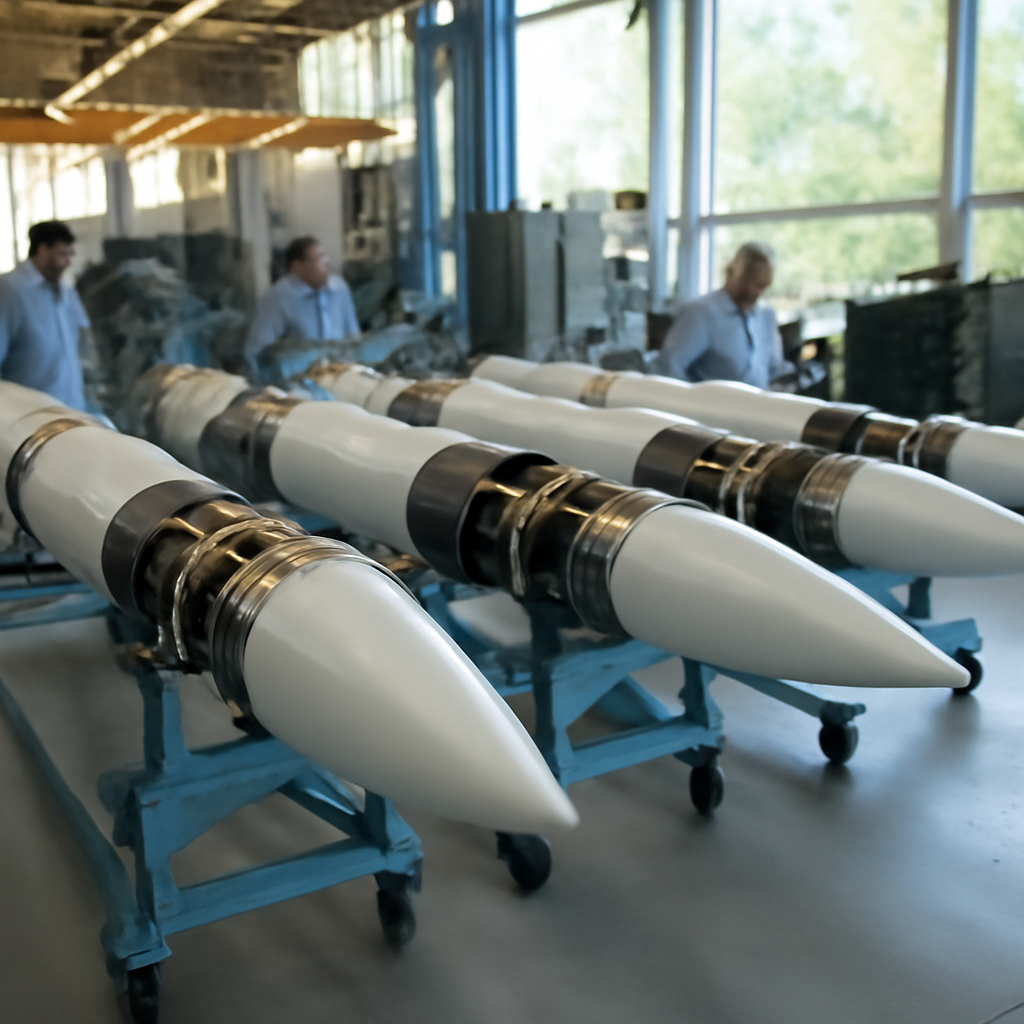
Department of Defense framework agreements with Boeing and RTX
The Department of Defense announced today that it has signed framework agreements with Boeing and RTX aimed at scaling production of hardware for the Standard Missile‑3 (SM‑3) family. DoD said the agreements “will strengthen production of the series of critical ship‑fired surface‑to‑air interceptors that underpin the Aegis Ballistic Missile Defense System and form the backbone of U.S. sea‑based missile defense at home and abroad.” The Pentagon’s announcement provided limited operational detail; spokespeople did not immediately respond to Breaking Defense’s request for additional information.
Boeing’s seven‑year framework for avionics and ejector assemblies (SM‑3 Block IB, Block IIA)
In its own release, Boeing described the arrangements as “seven‑year framework agreements” under which the company will “boost output of avionics and ejector assemblies for the SM‑3 Block IB and Block IIA variants.” Boeing framed the work as enabling “increased production of the interceptors that form the backbone of U.S. sea‑based missile defense at home and abroad.” The company also said it will supply these critical components to primary contractor Raytheon, noted in the announcement as a subsidiary of RTX.

Audit-ready is a season. It shouldn't be.
Evidence in spreadsheets, controls drifting between audits, frameworks multiplying on flat headcount. Nubivance runs continuous compliance on Rapid7 Cyber GRC - SOC 2, HIPAA, ISO 27001, PCI, CMMC.
End the scrambleRTX acknowledgement and February framework linking multiple missile lines
RTX acknowledged the framework agreement in a post on X, saying it is “advancing the framework agreements RTX signed earlier this year.” That earlier deal, inked in February, was described by the source as a framework with the Pentagon intended to boost production not only of SM‑3 variants but also of Tomahawk, AMRAAM and SM‑6 missiles. In the current cycle, RTX is the named company advancing the arrangements; Boeing is named as the supplier of avionics and ejector assemblies to Raytheon.
Framework agreements as a demand signal while Congress weighs multiyear production
The Pentagon and the two firms characterized these arrangements as framework agreements rather than firm contracts. The source states the purpose is to give the companies “added assurance as the government gets congressional approval to ink multi‑year production deals and hammers out the terms.” Michael Duffey, under secretary of Defense for Acquisition and Sustainment, framed the approach in blunt, operational terms: “These agreements ensure our Warfighters get the munitions they need to win,” and said the effort is “stabilizing our supply chains, expanding munitions production and putting our entire defense industrial base on a wartime footing.”
The source places the move in an environment where the Pentagon has announced a flurry of similar framework deals for other interceptors and strike munitions — specifically PAC‑3 and THAAD interceptors and the Precision Strike Missile (PrSM) — at the same time scrutiny has increased over “dwindling stockpile numbers as the Iran conflict drags on.” The source also notes that, while key Pentagon leaders have refuted claims of inadequate stocks, DoD leaders are actively seeking ways to increase production quickly.
How warfighters, Congress, and U.S. allies are likely to respond
- Warfighters: DoD leadership presented the frameworks as a way to “stabilize our supply chains” and “expand munitions production,” signaling an operational priority to secure higher interceptor output levels and reassure units that rely on SM‑3 capability.
- Congress: Lawmakers will retain the decisive role; the source specifies that the frameworks are intended to clear a path while the government seeks “congressional approval to ink multi‑year production deals,” meaning formal procurement action depends on legislative sign‑off and appropriation or authorization decisions.
- U.S. allies: The Pentagon’s language links SM‑3 production to protection “at home and abroad,” suggesting allies that rely on sea‑based layered defenses are a stated audience for increased SM‑3 availability and for the assurances the frameworks are meant to provide.
The Pentagon’s framework approach, as described in the announcement, is a deliberate intermediate step: it signals demand to suppliers, secures industrial planning for key components like avionics and ejector assemblies, and buys time while multiyear contracts and congressional approvals are negotiated. What remains explicit in the record is what the agreements are intended to do — accelerate and stabilize production — and what they are not: they are not yet multi‑year production contracts. The next, concrete milestone named by the source is congressional action to permit those longer‑term production deals and the formal terms those deals will embody.