$1.2 billion in conditional loans from the Pentagon’s Office of Strategic Capital landed this week in the U.S. rare earths sector: $725 million to Energy Fuels and $500 million to Phoenix Tailings, moves the department says are intended to shore up domestic processing and magnet production.
Energy Fuels: $725 million for separation, metallization and White Mesa Mill
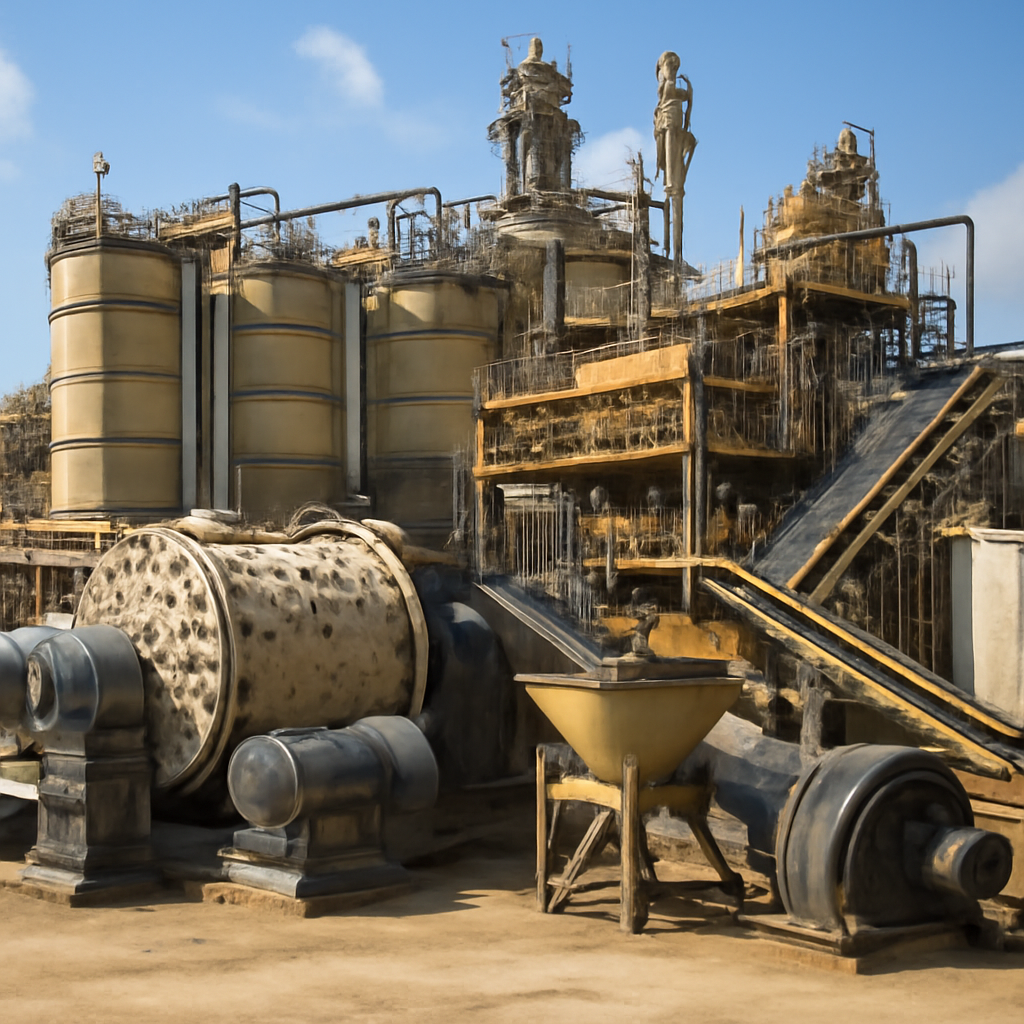
The Department of Defense announced a $725 million conditional loan with Denver-based Energy Fuels to support construction of a new U.S.-based rare earth separation and metallization facility and to bolster processing at the company’s White Mesa Mill in Utah. The department said in its release that the company “increased production will directly support permanent magnet facilities across the broader US industrial base and improve supply chains for other specialty defense and industrial products.”
Energy Fuels, which the department describes as a company specializing in uranium production, told the department it plans to use the funds both to support current processing capabilities at White Mesa and to build the new rare earth metals and alloy facility at an undisclosed location. The company also said it has 20 years to repay the loan.
Phoenix Tailings: $500 million for a “Freedom Facility” and a 2028 timeline
Separately, the department signed a $500 million conditional loan with Phoenix Tailings to support a new “Freedom Facility” intended to serve the mine-to-magnet supply chain. Phoenix Tailings said the goal is to open the new facility by 2028 and to process both “light and heavy” rare earth minerals.
As with the Energy Fuels agreement, the DoD’s announcement specified customary additional steps the companies must take to proceed toward financial close, including fulfilling financial, legal, technical and other due diligence requirements.

Audit-ready is a season. It shouldn't be.
Evidence in spreadsheets, controls drifting between audits, frameworks multiplying on flat headcount. Nubivance runs continuous compliance on Rapid7 Cyber GRC - SOC 2, HIPAA, ISO 27001, PCI, CMMC.
End the scrambleDoD rationale: scaling production to match weapons ambitions
At a Center for a New American Security event, Michael Cadenazzi, the Assistant Secretary of Defense for Industrial Base Policy, framed the moves as part of a broader industrial push, saying the administration is doing it “because we have to.” Cadenazzi warned that plans to scale weapons production would be hollow without critical materials, naming germanium, gallium, and rare earths in his remarks: “You can dream all day long about scaling [weapons production but] if you don’t have germanium, gallium, and rare earths, it is a pipe dream.”
He added that the commitment extends “from the White House on down” and contrasted the administration’s current approach to its “previous work in minerals.” These statements situate the OSC loans as elements of an explicit industrial-base effort to accelerate domestic magnet and materials capacity.
Congressional scrutiny: legality, financial terms and strategic rationale
Not all lawmakers welcomed the transactions. The source reports that some Senate Democrats raised concerns in February about the legality and future competition implications of Pentagon funding decisions, citing in particular the Department’s equity deal with MP Materials announced in July 2025. That prior agreement established a 10-year public-private partnership in which the DoD agreed to purchase $400 million of a newly created series of stock and MP Materials agreed to accelerate an end-to-end magnet supply chain.
“I have questions about the legal basis, financial terms and strategic rationale for these transactions,” the top Democrat on the Senate Armed Services Committee, Sen. Jack Reed, said during a February hearing, specifically citing the Antideficiency Act.
What this means for permanent magnet facilities, Defense industrial base planners, and Congress
- Permanent magnet facilities: The department says Energy Fuels’ increased production will directly support permanent magnet facilities across the U.S. industrial base, signaling potential downstream increases in supply for magnet manufacturers.
- Defense industrial base planners: With Phoenix Tailings targeting 2028 for a facility that handles both light and heavy rare earths, planners will be watching whether the companies meet the DoD’s due diligence conditions and timeline milestones tied to scaling weapons production demands.
- Congress and oversight bodies: Senators who questioned the administration’s earlier equity deal with MP Materials — and who cited legal concerns such as the Antideficiency Act — are likely to scrutinize the OSC’s conditional loans for their legal basis, financial terms, and impact on future competition.
The loans mark a clear, department-level push to deepen U.S. capacity for rare earth separation and magnet-related metals, pairing multi-hundred-million-dollar conditional financing with explicit deadlines and due-diligence steps. Whether the agreements accelerate domestic mine-to-magnet supply chains as envisioned will hinge on companies meeting financial and technical requirements, Phoenix Tailings’ ability to reach the 2028 opening target, Energy Fuels’ buildout timeline for an undisclosed facility, and how Congress chooses to probe the legal and strategic framework behind these investments.