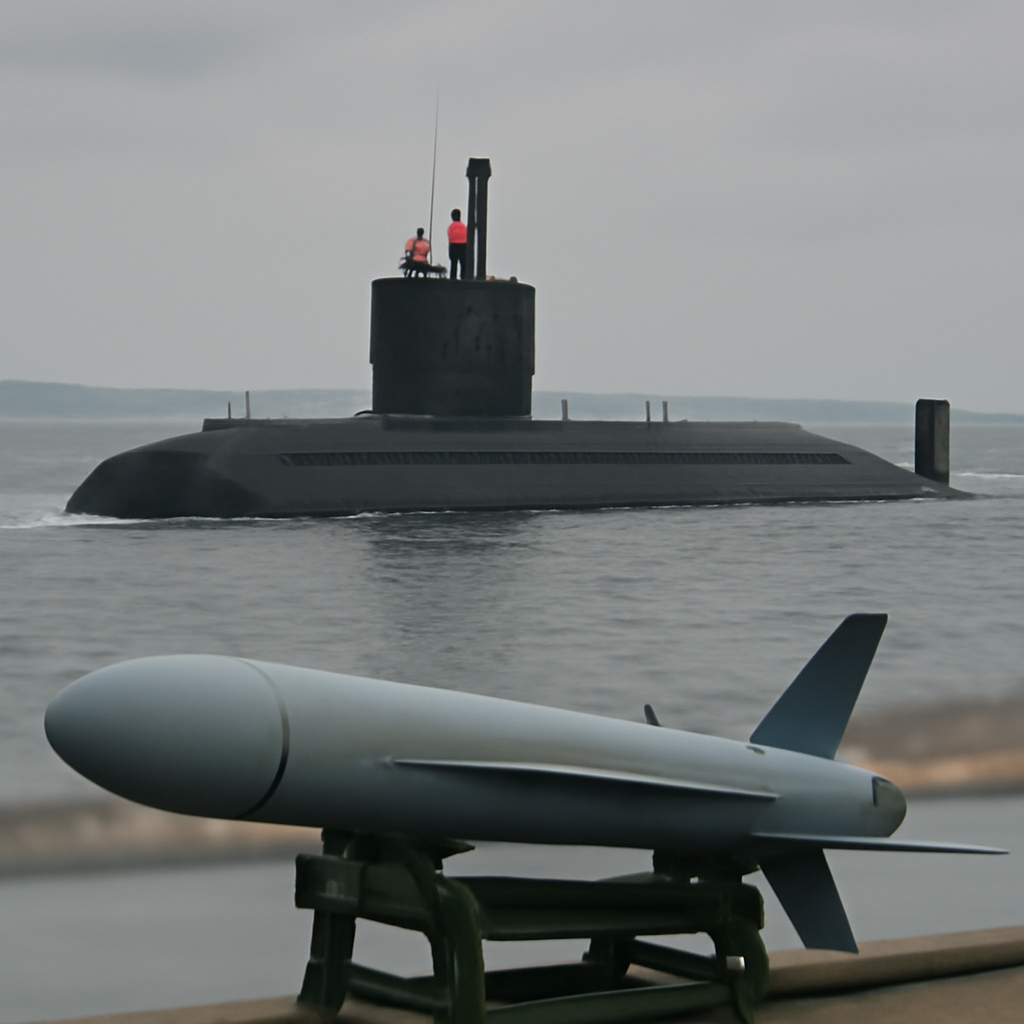
"While Navy and Army officials told GAO that they coordinate with each other, the services largely manage investment decisions for these programs separately, which contributes to inefficiencies and delays," the Government Accountability Office wrote.
GAO: a portfolio gap risks money and time
The GAO warned that the Department of Defense lacks a unified strategy for investing in Conventional Prompt Strike (CPS) capability across the Navy and the Army, and that absence could produce "additional delay and inefficient use of taxpayer funds." The services are separately pursuing what the Navy calls CPS while collectively aiming to invest more than $50 billion in the hypersonic effort.
Zumwalt-class modernizations: work behind schedule
The Navy is updating its three Zumwalt-class destroyers with a vertical launch system to accommodate CPS missiles and plans to include the system on some Virginia-class submarines. GAO found the Navy is facing roughly a two-year delay on modernizing the three Zumwalt ships. The initial ship, USS Zumwalt, was 94 percent complete with updates as of January 2026 but is still falling behind schedule because of "unplanned work."
Flight testing for CPS on the Zumwalt-class was originally scheduled for 2025 but is now postponed until 2027, a slippage GAO attributes to "funding and testing challenges." The CPS program is also running into quality and production problems that undermine the program's stated production goal of 12 missile rounds annually.

Audit-ready is a season. It shouldn't be.
Evidence in spreadsheets, controls drifting between audits, frameworks multiplying on flat headcount. Nubivance runs continuous compliance on Rapid7 Cyber GRC - SOC 2, HIPAA, ISO 27001, PCI, CMMC.
End the scrambleArmy's Long-Range Hypersonic Weapon (Dark Eagle) and production role
The Army is pursuing its own Long-Range Hypersonic Weapon, also called Dark Eagle, a ground-launched system. The Army is also responsible for producing the missile glide body that both services will use, creating a production interdependence: the Navy oversees the missile body production line, but the Army buys missiles and manages key aspects of production.
GAO emphasised that because the Army and Navy both buy missiles and manage overlapping pieces of production, the Navy "cannot make decisions in isolation" and portfolio-level coordination is necessary to identify production-throughput challenges across services.
Lockheed Martin production constraints and industry response
GAO found that the prime contractor, Lockheed Martin, is facing production challenges building CPS missiles "at anticipated rates and costs," and currently has capacity to build a maximum of six to seven rounds annually—well below the program goal. Each missile in the envisioned 224-missile stockpile is estimated to cost tens of millions of dollars, the report said.
Lockheed did not immediately respond to a request for comment from Breaking Defense, but the company told DefenseScoop that it is "working to bolster production and manufacturing processes." The firm added, "We’re confident in the quality of our capabilities and are working across the industrial base to strengthen supply chain resilience," and said, unusually, that "Specific questions regarding the Long-Range Hypersonic Weapon system should be directed to the Office of the Secretary of War."
What this means for the secretary of defense, the Navy, and the Army
- Secretary of Defense: GAO recommended that the secretary ensure the under secretary of defense for acquisition works with the secretaries of the Navy and the Army to develop a "comprehensive strategy that outlines how all programs involved with delivering CPS portfolio capability should coordinate and regularly review investment decisions." The Department of Defense agreed with this recommendation without further comment.
- Navy: Faces schedule slips on Zumwalt modernizations, postponed flight testing to 2027, and must reconcile program-by-program investment decisions with a portfolio perspective while overseeing the missile body production line.
- Army: Continues to produce the missile glide body and procure its own missiles (Dark Eagle), meaning any production bottlenecks under Army responsibility will affect the Navy's timetable and stockpile goals.
- Lockheed Martin: Has acknowledged efforts to strengthen production and supply chains but, according to GAO, currently cannot meet the program's planned production rate.
A concrete next step and a pointed risk
GAO's prescription is clear and procedural: mandate a cross-service, acquisition-led comprehensive strategy to align investments, production planning, and regular reviews. The Department of Defense's agreement with GAO moves that prescription into a formal next step, but the report's findings leave a pointed risk on the table: without portfolio-level coordination, the services could confront further delays, shortfalls against a 224-missile stockpile, and continued spending on programs that are not synchronized across buyers and producers.
Original story: https://breakingdefense.com/2026/07/navy-army-risk-wasting-money-time-without-unified-hypersonic-missile-strategy-gao/