"This award reflects our shared vision with the Department of War to strengthen America’s Arsenal of Freedom through a transformational shift to multiyear procurement," Lockheed Martin executive Tim Cahill said in a company release — language attached to a contract that could reshape U.S. interceptor production.
The $35 billion undefined contract action to quadruple THAAD production
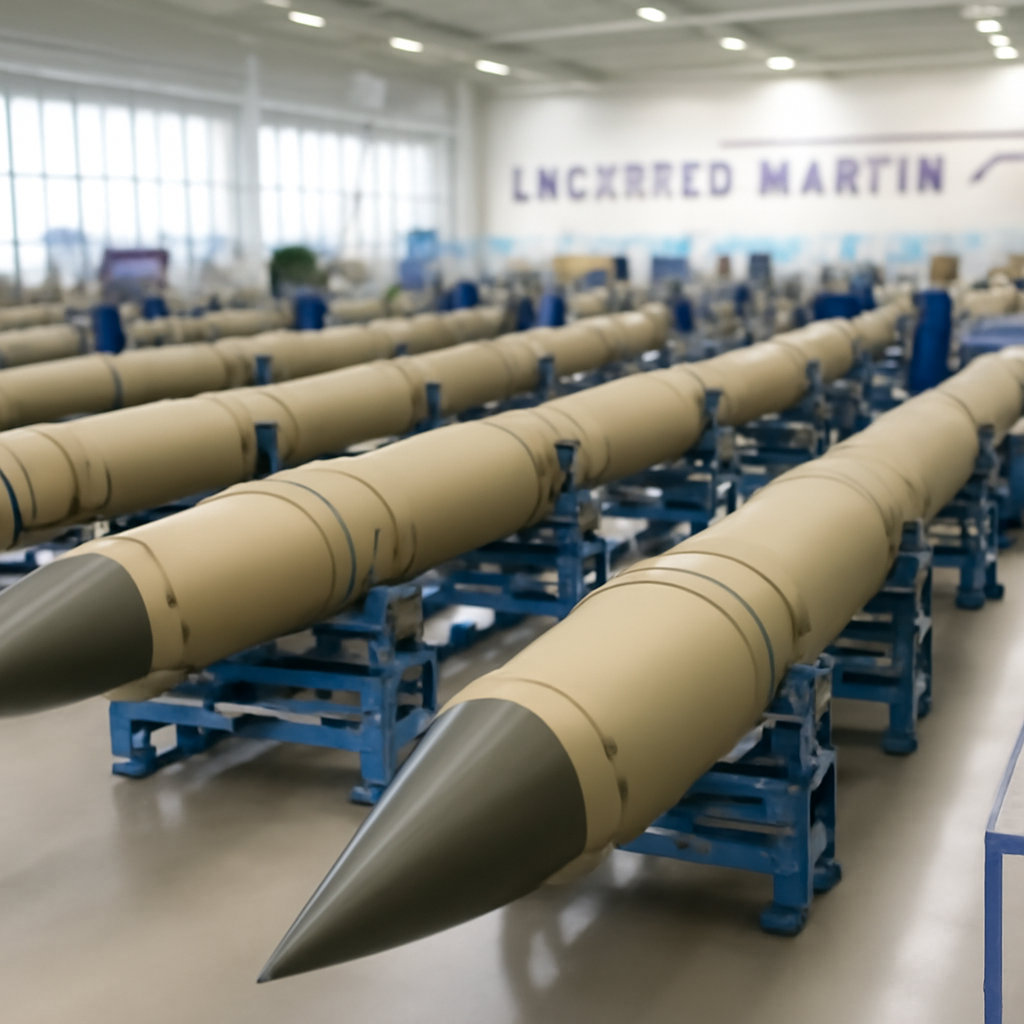
The Missile Defense Agency awarded Lockheed Martin a $35 billion undefined contract action (UCA) to expand production of Terminal High Altitude Area Defense (THAAD) interceptors over a seven‑year period, the company and the Defense Department announced. The award is explicitly tied to a plan to increase throughput dramatically: as previously reported by Breaking Defense and referenced by the company, the framework allows production to grow from the current rate of 96 missiles per year to an annual pace of 400 interceptors.
Lockheed’s January framework and the company's public rationale
Lockheed said the new UCA “puts in action” the THAAD framework agreement the company signed with the Department of Defense in January. Tim Cahill, president of Lockheed Martin Missiles and Fire Control, framed the contract as part of a move to multiyear procurement and to “strengthen the defense industrial base, expand production and deliver capabilities to the American warfighter at unprecedented speed and scale.” The company positioned the award as a continuation of recent, larger-scale production agreements.

Audit-ready is a season. It shouldn't be.
Evidence in spreadsheets, controls drifting between audits, frameworks multiplying on flat headcount. Nubivance runs continuous compliance on Rapid7 Cyber GRC - SOC 2, HIPAA, ISO 27001, PCI, CMMC.
End the scrambleWhere the work will be performed: Dallas, Sunnyvale, Troy, and Camden
According to the Department of Defense, work under the THAAD contract will be performed in Dallas, Texas; Sunnyvale, California; Troy, Alabama; and Camden, Arkansas. Lockheed broke ground less than a month ago on its Troy facility, described as an 87,000‑square‑foot production plant carrying the name “Building 47,” a name the company noted in public materials and the reporting the company cited.
Related munitions procurement moves: PAC‑3 MSE and PrSM ramp-ups
The THAAD award follows other recent Lockheed‑linked UCAs intended to boost missile production. In April, the Department of Defense awarded a $4.7 billion UCA tied to increased capacity for the PAC‑3 MSE, and in March the company reached a separate deal to ramp up the Precision Strike Missile (PrSM). Those actions form a sequence of procurement steps the company and the DoD have pursued to expand missile output across multiple systems.
How the Defense Department, Lockheed Martin, and munitions suppliers are positioned
- The Department of Defense: The DoD has structured multiple UCAs to accelerate munitions output and identified production locations for THAAD work; senior Pentagon officials have discussed use of industrial policy tools to refill stockpiles following operations against Iran.
- Lockheed Martin: The company has used the January framework to secure the $35 billion UCA and is expanding facilities, including the new Building 47 in Troy, Alabama, as part of an effort it frames as a shift to multiyear procurement and scaled delivery to the “American warfighter.”
- Munitions suppliers and the industrial base: The Trump administration has been exploring ways to boost munitions production broadly, including invoking the Defense Production Act to help suppliers ramp up output, Michael Cadenazzi, the Assistant Secretary of Defense for Industrial Base Policy, told reporters last week — a policy context that underpins the recent UCAs.
The sequence of announcements — a January framework, a $35 billion THAAD UCA, an April $4.7 billion PAC‑3 MSE UCA, and a March ramp‑up for PrSM — establishes a clear production tempo and a set of geographic production nodes. The Pentagon has publicly identified where work will be performed and companies have already begun facility investments, including the recent ground‑breaking in Troy.
What remains concrete in the record is the scale and timeline the DoD and Lockheed have committed to: a seven‑year production expansion intended to move annual THAAD interceptor output from dozens to hundreds, supported by new and upgraded production capacity and backed by broader industrial‑policy measures such as invocation of the Defense Production Act. The next measurable milestones will be the physical ramp of manufacturing lines in the named facilities and the execution of the multiyear procurement that the companies and the DoD have announced.
Source: https://breakingdefense.com/2026/06/lockheed-inks-massive-thaad-deal-worth-up-to-35b/