At TechNet Cyber in Baltimore, Breaking Defense spoke directly with Leidos about a simple, stark reality: the Pentagon does not defend a single network but dozens — all interconnected, all at risk, and all increasingly targeted by AI-enabled adversaries.
The Pentagon’s dozen-plus battlefield of networks
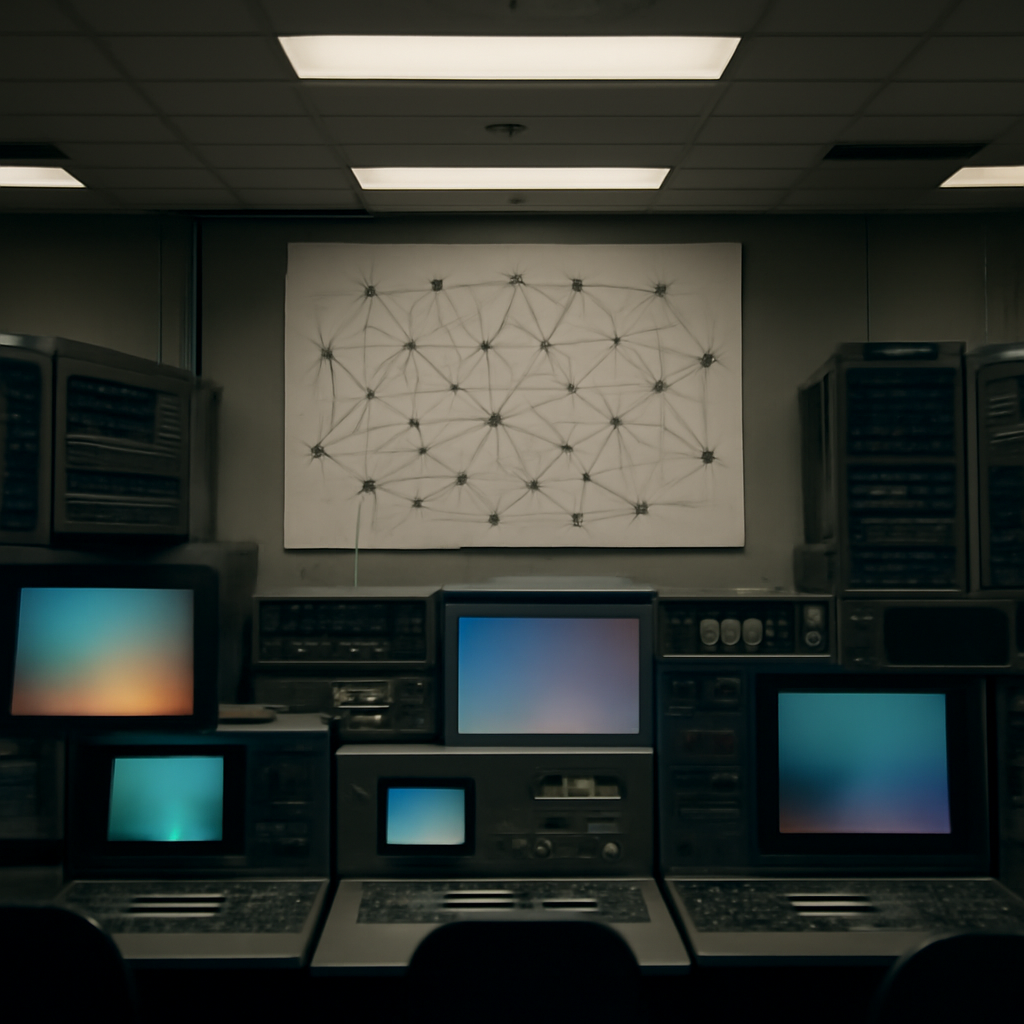
The central fact, as reported at TechNet Cyber, is blunt and structural: the Department of Defense is responsible for dozens of networks that span the services. They are not isolated islands. The networks are "all connected," which the report identifies as a defining characteristic of the defense environment facing cyber planners today. That connectivity—by design or necessity—makes the problem multiplicative rather than singular.
Connectedness as compound risk
The source material frames connected networks as a compound vulnerability: when dozens of systems are linked, a failure or exploitation in one can propagate. The story emphasizes that these multiple, linked systems are "all at risk," a phrase that compresses both the scale and the nature of the exposure facing those responsible for defense. That description implies that countermeasures aimed at any single network will have to account for cross-network relationships.

This site is the portfolio.
OSINTSights runs on Cloudflare Workers, D1, R2, and Vectorize, with an AI pipeline on Hetzner ARM. Nubivance designed, built, and operates it. We do the same for clients.
See what we buildAI-enabled adversaries as an escalating threat vector
The report identifies a specific and growing pressure point: adversaries that employ artificial intelligence to target defense networks. The words used are unambiguous — networks are "increasingly targeted by AI-enabled adversaries." That phrase frames AI not as a hypothetical future danger but as an active element of the threat environment discussed at TechNet Cyber.
Leidos’ role in the conversation at TechNet Cyber in Baltimore
Breaking Defense’s presence at TechNet Cyber in Baltimore was specifically to discuss this interconnected challenge with Leidos. The engagement positions Leidos as a participant in, and interlocutor on, the problem set: dozens of connected networks and an uptick in AI-enabled targeting. The event provided a forum where those two facts—network multiplicity and AI-driven targeting—were discussed together, underlining the operational scale and the technological vector at issue.
What this means for the Pentagon, Leidos, and the services
- The Pentagon: Must manage defense across dozens of interconnected networks rather than a single perimeter, a fact that changes the calculus of risk mitigation and resource allocation.
- Leidos: Is engaged publicly in discussions about the scale and nature of the challenge at industry gatherings such as TechNet Cyber in Baltimore, indicating its role as a conversational and technical partner on defense cyber problems.
- The services (the individual military branches): Operate networks that are functionally connected to one another and therefore share exposure to the same AI-enabled targeting behaviors described at the event.
The report delivered at TechNet Cyber reduces the problem to three intertwined facts: dozens of networks, persistent connectivity, and an active, AI-enabled adversary set. Those facts were presented together in conversation with Leidos in Baltimore, the precise locus where practitioners and vendors meet to translate threat descriptions into operational priorities.
That confluence — multiplicity of networks, systemic connectivity, and adversaries wielding AI — is the story’s through line. It imposes a straightforward journalistic conclusion: defending the Department of Defense’s cyber posture is not a matter of fixing a single system or shoring up a single perimeter. It is a coordinated problem that was laid bare in Baltimore and was the subject of direct discussion between Breaking Defense and Leidos.
The record from TechNet Cyber is concise but pointed: the scale of defense responsibilities and the character of the adversary are both changing, and those two changes overlap. The discussion in Baltimore focused attention on that overlap and on what it means for those tasked with defending the nation’s many connected defense networks.
Original reporting: How to protect dozens of connected networks that are at risk and targeted by AI