Tag: defense industrial base
25 articles

Army Plans 'Manufacturing Rodeo' to Stress-Test Supply Chains
Get ready for the Army's "Manufacturing Rodeo" in 2027 - a bold experiment that will deliberately push the defense industrial base to its limits, revealing weaknesses in supply chains and manufacturing processes. By stress-testing the system, the Army aims to identify areas for improvement and rope in innovative solutions to build a more resilient and agile industrial base.

Army's FUZE Innovation Hub Targets Bigger Acquisition Challenges
The Army's FUZE innovation hub is taking aim at the military's toughest acquisition challenges, leveraging commercial and startup tech to drive real change. After a speedy first year, FUZE is now tackling bigger problems, helping to bridge the gap between prototype and procurement.

SAPA Transmission Targets US Defense Industrial Base Revitalization with Advanced Military Vehicle Tech
SAPA is revolutionizing the US defense industry with cutting-edge military vehicle tech, including a massive 200,000-square-foot manufacturing center that will create over 200 jobs. By addressing legacy transmission gaps, they're tackling a critical issue that's held back military vehicle performance for decades.
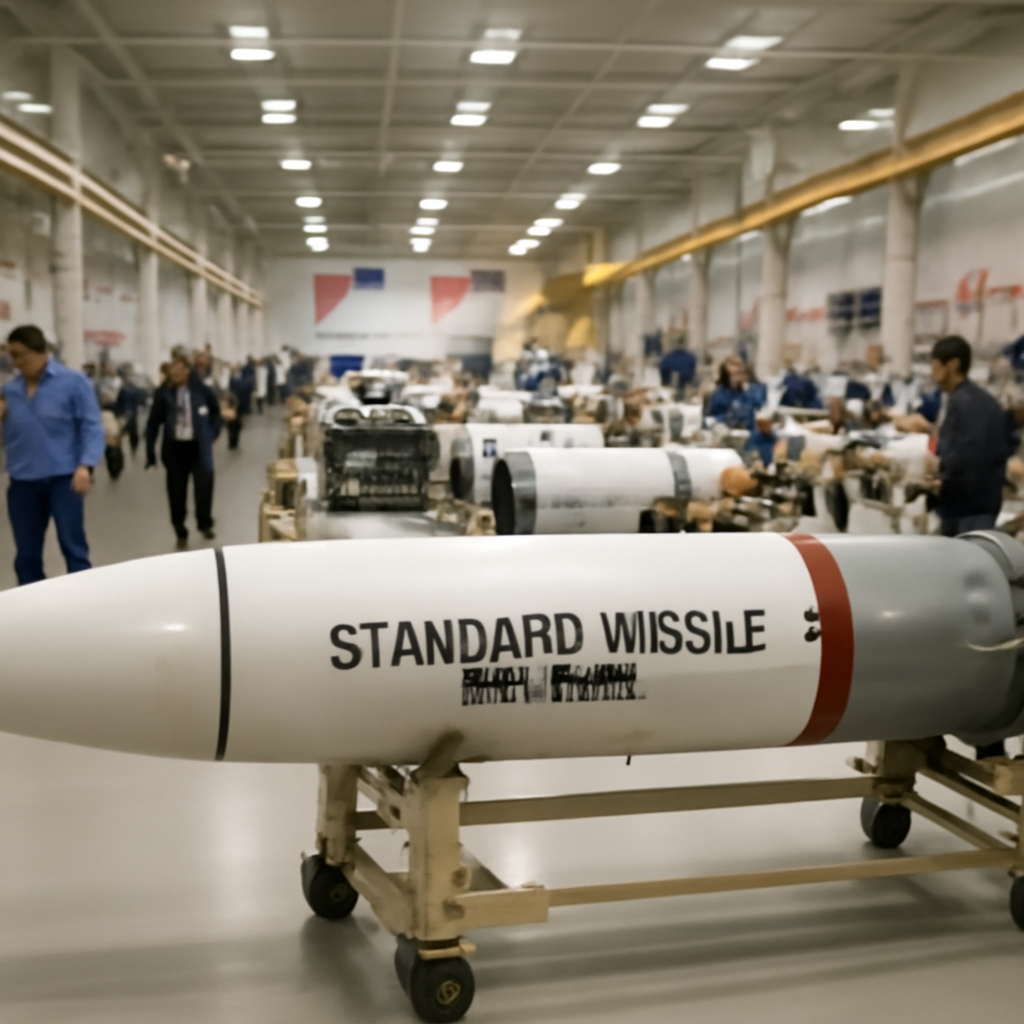
Pentagon Awards Raytheon $6.3 Billion Contract for SM-3 IB Missiles
The Pentagon has awarded Raytheon a whopping $6.3 billion contract to produce SM-3 IB Missiles, securing a steady supply of these crucial interceptors to protect US fleets and combatant commands. This multi-year deal not only boosts production but also breaks down manufacturing bottlenecks, ensuring the military has the edge it needs to dominate the battlefield.

US Navy Seals $24.4B Deal with Raytheon to Accelerate SM-6 Production
The US Navy has sealed a massive $24.4 billion deal with Raytheon to supercharge production of the Standard Missile-6 (SM-6), a powerful Navy missile, with plans to deliver faster and more efficient manufacturing. This game-changing agreement is set to drive significant cost savings and boost production over the next five years, with two extra years of options.

Court Upholds Pentagon Ban on Anthropic AI
In a major win for national security, a US court has upheld the Pentagon's ban on Anthropic AI, deeming it a supply chain risk to the defense industrial base. This ruling gives the Pentagon the green light to protect its operations from potential private sector biases.

Pentagon's Industrial Base Sputters on Qualification Bottleneck
The real bottleneck in the Pentagon's industrial base isn't a lack of funds, but a shortage of qualified suppliers - it can take months or even years to turn a shop into a certified producer of parts that meet program standards. This qualification process is a major hidden hurdle that's slowing down the defense industry's ability to mobilize and deliver.

Pentagon Procurement Chief Warns of Industrial Base Strains
The Pentagon's top procurement officer, Air Force Gen. Dale R. White, is sounding the alarm on strains in the US defense industrial base, warning that capacity concerns are widespread and affecting multiple platforms. These worries aren't limited to specific programs like the F-35 or F/A-XX, but are a broader issue that demands attention.

Pratt Licenses Hermeus to Produce F100 Fighter Jet Engine
Pratt & Whitney is teaming up with aircraft startup Hermeus to produce the F100-PW-229 turbofan, a powerful engine that has been propelling some F-15 and F-16 fighter jets since 1992. This marks Pratt's first-ever license agreement of its kind with a fellow American company, aiming to strengthen the defense industrial base.

AI Targets Defense Industrial Base's Supply Chain Woes
The traditional military platform development process, which can take years or even a decade, is a strategic liability in today's fast-paced operational landscape. To stay ahead, we need to redesign workflows with humans in the lead, leveraging AI-powered operations and secure, real-time data to drive faster and more effective decision-making.

Pentagon Targets Critical Minerals with $5 Billion Investment Push
The Pentagon is putting $5 billion on the table to tackle the critical minerals crisis, a pressing concern for national security and the defense industrial base. Kyle Bass of Rochefort Asset Management is taking a strategic approach, investing $450 million in established critical minerals companies with proven products and revenue.

Navy Launches Office to Bolster Defense Industrial Base
The Navy has launched a new Office of the Defense Industrial Base, led by Andrew Magliochetti, to supercharge its manufacturing ecosystem, safeguard supply chains, and inject cutting-edge commercial tech into its operations. This bold move aims to turbocharge the Navy-Marine Corps team's lethality and competitiveness.

CMMC Pause Doesn't Halt Compliance Imperative
The pause on CMMC Phase 2.0 doesn't let you off the compliance hook - you still need to prioritize protecting controlled unclassified information (CUI) within your environment. Keep moving forward with necessary security measures to ensure CUI protection, as requirements remain in place despite validation delays.

Defense Contractors Question Accuracy of Rising Cybersecurity Scores
Defense contractors are reporting their highest cybersecurity scores in five years, but there's a catch: they're also losing confidence in the accuracy of those scores. The average SPRS score has soared to +51 in 2026, up from +33 in 2025, sparking questions about what's behind the sudden surge.

Medusa Ransomware Targets Over 500 US Critical Infrastructure Orgs
The Medusa ransomware gang has struck a staggering 500+ US critical infrastructure organizations across multiple sectors, including healthcare, defense, and finance, since June 2021. This alarming surge in attacks has prompted a joint warning from top US agencies, highlighting the urgent need for heightened cybersecurity measures.

Pentagon Awards Palantir $244M in No-Bid Contracts
The Pentagon has just awarded Palantir $244M in no-bid contracts, further solidifying the company's role in boosting efficiency within the defense industrial base with its software. Deputy Defense Secretary Steve Feinberg has directed DOD departments to explore even more ways to utilize Palantir's products through 2028.

AIA Chief Fanning Assesses US Defense Industry Health
At the Farnborough Airshow, Eric Fanning, AIA Chief, offered a candid assessment of the US defense industry's health, sharing his insights on the budget and its impact on America's defense landscape. With the roar of jets and aerial demos as a backdrop, Fanning's conversation with Breaking Defense Editor-in-Chief Aaron Mehta provided a unique glimpse into the sector's current state.

Pentagon Hits Pause on Cybersecurity Certification Requirements
The Pentagon has hit pause on its cybersecurity certification requirements, citing prohibitive compliance costs and bureaucratic burdens that could stifle innovation in the US defense industrial base. This 60-day suspension sparks a review that may reshape enforcement and acquisition rules for defense contractors.

Russian Hackers Target Network Devices With Exploits
Russian hackers, linked to the Federal Security Service's Center 16, have been actively targeting critical US and foreign networks across multiple sectors, including defense, energy, and healthcare, for over a decade. This ongoing threat has compromised networks in various industries, posing significant risks to national security and global stability.

AWS Launches Secret Cloud for Classified Workloads
AWS has launched a game-changing cloud solution, AWS Secret Cloud, designed to empower America's defense industrial base with top-secret capabilities, enabling them to accelerate mission-critical work like never before. This innovative platform allows contractors to run classified workloads securely in the cloud, slashing provisioning time from months to just days.

Threats Expose Gaps in US Air-and-Missile-Defense Industrial Base
The US air-and-missile-defense system is struggling to keep up with today's threats, revealing gaps in real time, because its industrial base was designed for a bygone era. It's clear that we need a new approach, with more innovators and fresh ways to design, build, and deploy critical technologies like munitions and hypersonics.

House Panel Targets Defense Industrial Base in $1.15T Policy Bill
The House Armed Services Committee's draft defense policy bill aims to bolster the Defense Industrial Base, driven by a stark reality: the US no longer has the capacity to rapidly produce war-fighting capabilities at scale. A $1.15 trillion spending plan is on the table, but a separate $350 billion request remains a crucial wildcard.

Nation-State Hackers Target Small Defense Firms' Network Gaps
Small defense firms are leaving themselves exposed to nation-state hackers, who exploited over 14 zero-day vulnerabilities in edge devices like routers and firewalls in 2025 to gain a foothold in the US defense industrial base. These stealthy cyber espionage groups are investing heavily in reconnaissance and pre-positioning operations to infiltrate and linger in their targets' networks.

Australia Bolsters Guided Weapons Program with $26 Billion Boost
Australia is supercharging its Guided Weapons Program with a whopping $26 billion boost, solidifying its national security and forging stronger global supply chains through diverse international partnerships. This massive investment surge is set to bolster the country's defense industry and pave the way for a more robust and resilient future.