"This contract provides production certainty to our defense industrial base, breaks sub-tier manufacturing bottlenecks, and ensures that our fleets and combatant commands have the interceptors required to dominate the battle space — air, sea or land," Under Secretary of Defense for Acquisition and Sustainment Michael Duffey said in a DoD release.
Contract terms and financial scale
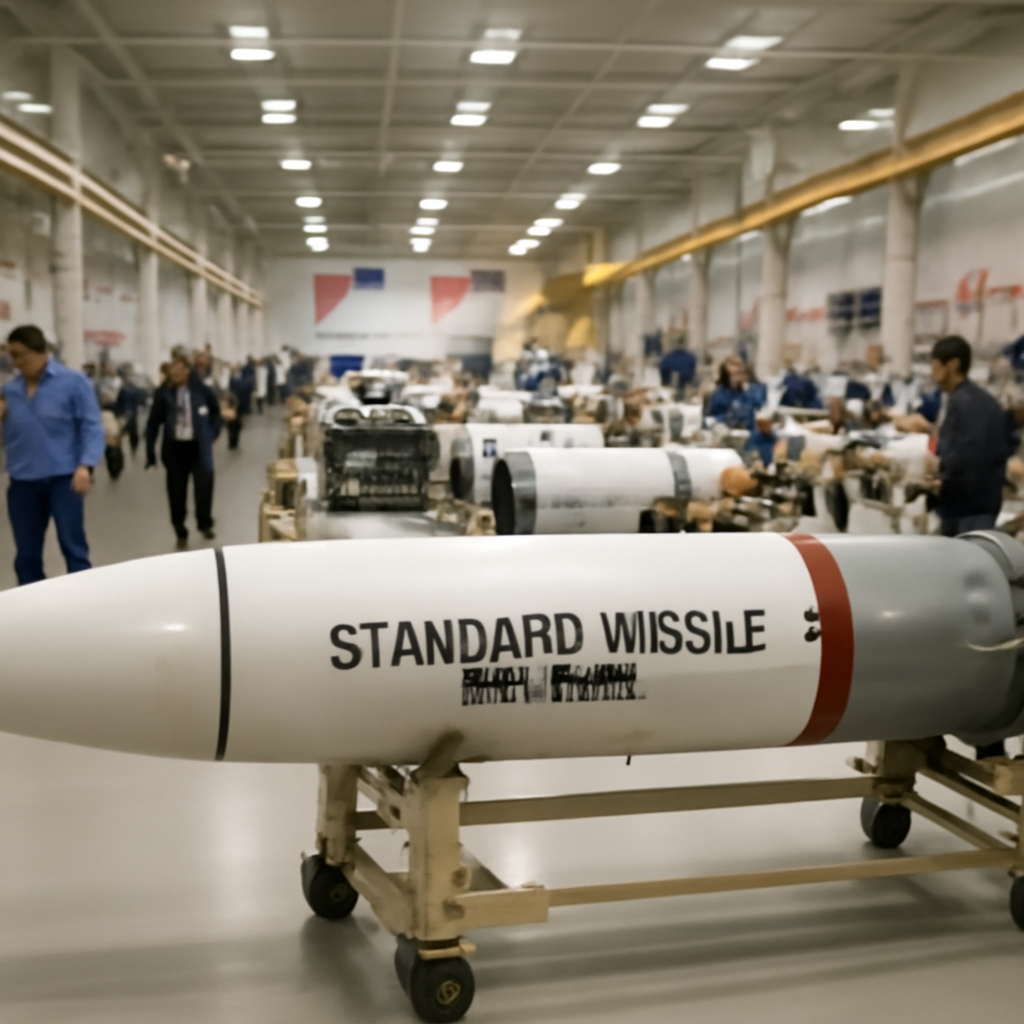
The Pentagon announced a multi-year production contract with Raytheon for Standard Missile-3 Block IB weapons valued at up to $6.3 billion. The award carries a five-year base value of $4.4 billion, with options that could add nearly $2 billion of procurement authority over an additional two years. The announcement did not state how many missiles are included under the contract.
Missile capabilities and operational role
Raytheon describes the SM-3 Block IB as a weapon that "can be fired from both ships and land to intercept short‑ to intermediate‑range ballistic missiles during the midcourse flight phase." The Pentagon has listed the SM-3 Block IB among the critical munitions it is trying to scale as quickly as possible.

Audit-ready is a season. It shouldn't be.
Evidence in spreadsheets, controls drifting between audits, frameworks multiplying on flat headcount. Nubivance runs continuous compliance on Rapid7 Cyber GRC - SOC 2, HIPAA, ISO 27001, PCI, CMMC.
End the scrambleMissile Defense Agency as contracting authority
The Missile Defense Agency (MDA) served as the contracting agency for this award, according to the Pentagon announcement. Raytheon framed the deal as a way to "replenish inventories and keep pace with the evolving threats the U.S. Navy, MDA [Missile Defense Agency] and their partners face around the world," Raytheon President Phil Jasper said in a company release.
How the deal fits into a wider production push with Raytheon/RTX
Today’s multi-year SM-3 Block IB award arrives amid a string of large production contracts between the U.S. government and the RTX subsidiary that produces these munitions. In recent weeks the government and the RTX subsidiary finalized: a $24.4 billion agreement to accelerate production of the Standard Missile-6; a $22.9 billion contract intended to ramp Tomahawk cruise missile output to 1,000 rounds a year; and a deal worth up to nearly $20.7 billion for Advanced Medium-Range Air-to-Air Missile (AMRAAM) production. DoD and Raytheon earlier established a framework agreement in February to pave the way for the multi-year SM-3 deal.
What this means for the U.S. Navy, the Missile Defense Agency, and the defense industrial base
- U.S. Navy and combatant commands: The contract is presented as a means to ensure they have the interceptors required to operate across domains — "air, sea or land" — by replenishing stocks and sustaining available launch platforms.
- Missile Defense Agency (MDA): As the contracting agency, MDA will oversee production delivery tied to the agency’s role in fielding sea- and land-based interceptors for midcourse missile defense.
- Defense industrial base and sub-tier manufacturers: The Pentagon framed the award as providing production certainty and addressing sub-tier manufacturing bottlenecks, with the intent of stabilizing supply chains that support SM-3 production.
The contract clarifies the U.S. government's continued emphasis on scaling a range of defensive munitions and aligns SM-3 Block IB procurement with a broader, high-dollar push to expand inventories across several missile families. It also leaves a concrete, quantifiable detail unreported in the announcement: the specific number of interceptors covered by the award. That omission will be one practical metric to watch as deliveries and option exercises unfold under the five-year base period and the potential two-year extension.