"We no longer have the capacity to build the capability for the war fighter at scale and speed. In some cases, manufacturing capacity just doesn’t exist," said a senior majority committee staffer, summarizing the argument that underpins the House Armed Services Committee’s draft fiscal 2027 defense policy bill.
House Armed Services Committee’s $1.15 trillion authorization and the missing $350 billion
The committee’s chairman’s mark authorizes $1.15 trillion in discretionary defense spending for FY27 — the amount the president requested — but it does not incorporate the Pentagon’s separate $350 billion mandatory funding request that would raise national security spending to $1.5 trillion. Whether that mandatory tranche appears in the final budget hinges on a separate reconciliation process that Republican lawmakers would need to complete; the committee noted that Republicans are still wrestling with a different reconciliation package centered on immigration enforcement. HASC will mark up the bill on June 4.
Multiyear buys: munitions, fighters, and warships
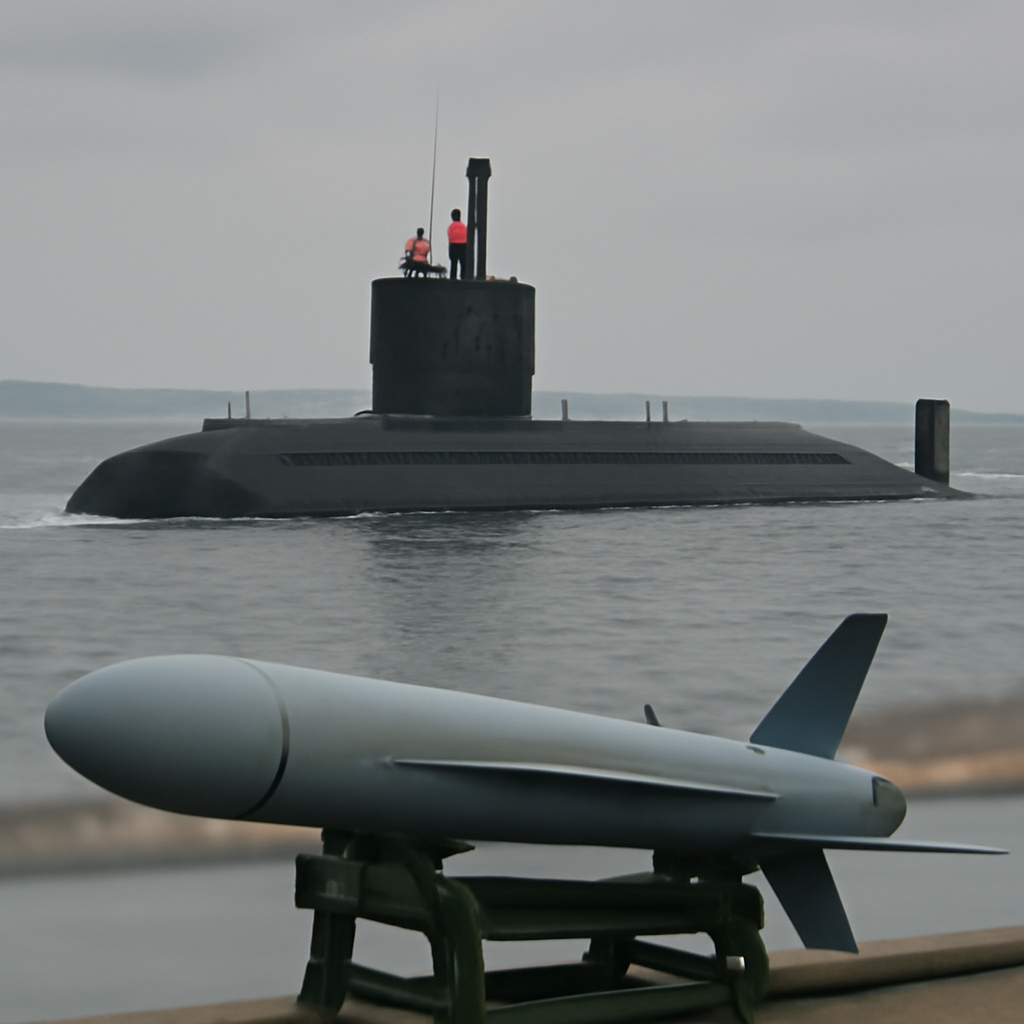
The draft NDAA would give the Pentagon multiyear procurement authority on a slate of items intended to lock in production at scale. Congress would enable multiyear buys for 13 critical munitions — including Patriot PAC-3 interceptors, THAAD interceptors, AMRAAM air‑to‑air missiles, Tomahawk cruise missiles and several Standard Missile variants — and multiyear authority for the F-15EX, F-35 Joint Strike Fighters, Arleigh Burke‑class destroyers and oilers. The committee framed these authorities as a way to solidify framework agreements already announced between the department and contractors over the last year.

Audit-ready is a season. It shouldn't be.
Evidence in spreadsheets, controls drifting between audits, frameworks multiplying on flat headcount. Nubivance runs continuous compliance on Rapid7 Cyber GRC - SOC 2, HIPAA, ISO 27001, PCI, CMMC.
End the scrambleShoring up solid rocket motor production and new industrial tools
Recognizing solid rocket motor (SRM) production as a fragile node in the munitions supply chain, the bill would establish an SRM qualification working group and require that certain munitions have more than one SRM supplier. The draft also expands the Defense Industrial Base Fund to cover private‑sector drydock and ship repair infrastructure, adds workforce development initiatives for domestic critical minerals production, and would stop the Pentagon from reducing or suspending progress payments to companies unless specific criteria are met. HASC would also force the DoD to update inflation thresholds every three years instead of every five.
To guard against adversary influence as the industrial base grows, the bill mandates an office within the Office of Industrial Base Policy to review and mitigate adversary capital inside the defense industrial base and creates an Economic Security Risk Assurance tool to deliver risk analysis and data visualization for department officials.
Program‑level checks: battleship, aircraft buys, and space office eliminations
The draft imposes programmatic conditions in several high‑profile areas. It would bar the Navy from entering a contract that includes construction for the first Trump‑class battleship until the secretary of the Navy certifies that the ship’s intended weapons systems are at a sufficiently mature technology readiness level. The Navy asked for about $1 billion in advance procurement and roughly $837 million in R&D for the battleship in FY27, and plans to request roughly $17 billion in procurement for the lead ship in FY28 — figures cited by the committee and questioned by members. Rep. Joe Courtney, D‑Conn., told a subcommittee the funding request “defies logic” given the lack of design readiness.
On aircraft, HASC restored force structure and buys the department’s budget had cut: it added $250 million for six additional UH‑60M Black Hawks and $381 million for seven CH‑47 Chinooks, reversing part of the administration’s reduced procurement request. The committee also proposed adding $176 million to the Paladin program, bringing it to $260 million, while proposing elimination of $70 million for the Army’s Indirect Fire Protection Capability Inc 2 and shifting $127 million in FLRAA procurement back into RDT&E — raising FLRAA RDT&E from $2.14 billion to $2.27 billion.
In space, the chairman’s mark would eliminate the Space Development Agency (SDA) and the Space Rapid Capabilities Office (Space RCO), two congressionally created semi‑independent offices that had special acquisition authorities. The bill would also create a DoD czar reporting to the deputy defense secretary to oversee positioning, navigation and timing (PNT) programs and require annual certification that all service PNT user equipment and ground system programs are fully funded in the DoD budget request.
How the Pentagon, defense firms, and European force posture will react
- Pentagon acquisition and budget officials: They will need to reconcile multiyear procurement authorities, SRM requirements, the new industrial risk office and PNT czar reporting with existing acquisition plans and the department’s separate push for mandatory funding — and respond to multiple reporting and certification requirements the bill imposes.
- Prime contractors and startups: Congress signaled support for scaling production but also expressed concern about the Pentagon’s $1 billion direct equity investment in L3Harris’s missile solutions spinoff. HASC staffers worried that a direct investment where new entrants are also seeking capital could disadvantage startups, and the bill’s new review office and risk tool aim to scrutinize foreign capital flows into firms working for DoD.
- U.S. European Command and NATO planners: The draft extends FY26 funding restrictions tied to a 76,000‑person EUCOM troop threshold and requires a Pentagon policy‑chief report on the analytical basis for European force posture decisions plus an EUCOM commander‑signed report on NATO defense planning and eastern‑flank posture — signals that lawmakers will continue to press on force presence in Europe.
The chairman’s mark sets a clear committee agenda: expand production, harden fragile supply chains, and add guardrails for both funding and program maturity. The draft leaves major choices unresolved — from whether mandatory funding will be secured through reconciliation to how appropriators will allocate dollars — and it opens the June 4 markup as the next decisive moment for amendments that could reshape both procurement and posture decisions, including possible Ukraine‑related changes.