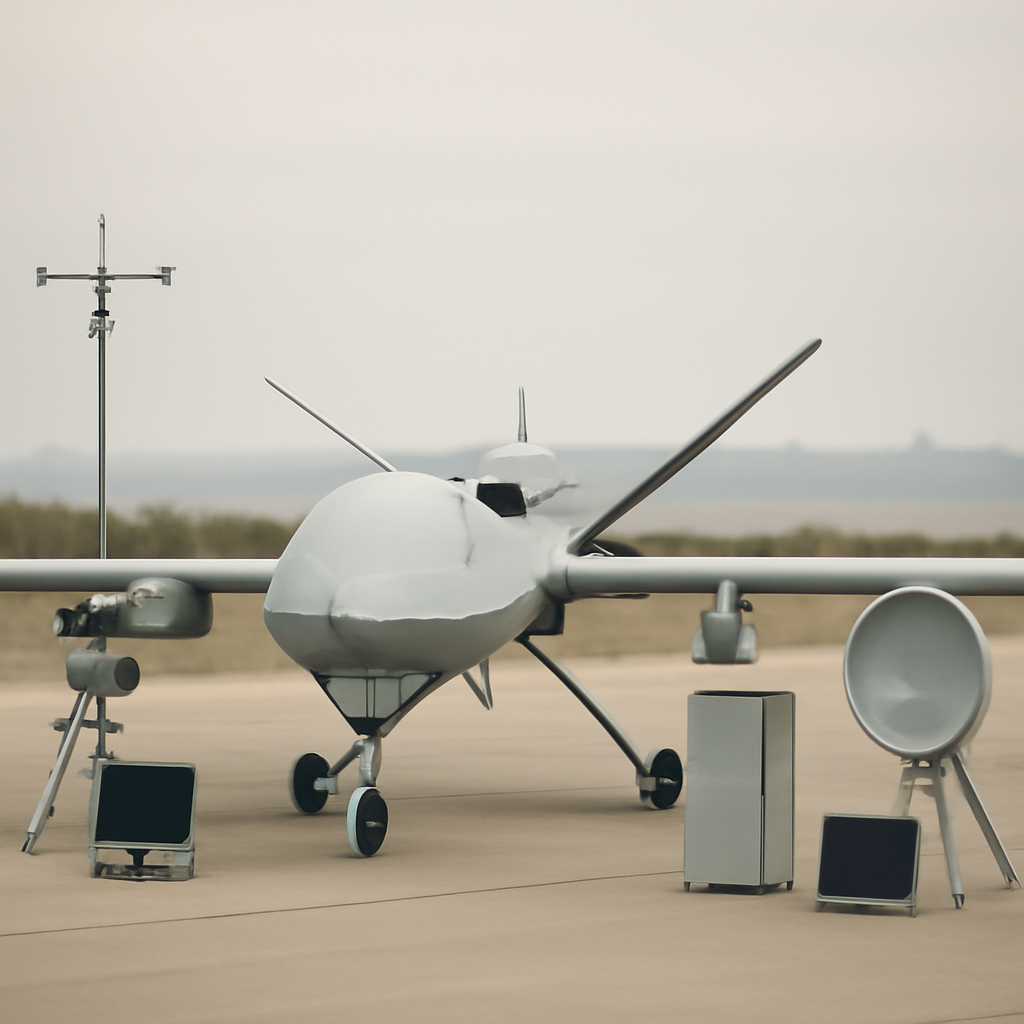
One year after its creation, the Army's FUZE innovation hub has moved fast to turn commercial and startup technology into fielded military capability. Now FUZE is shifting from rapid prototype adaptation toward tackling larger, more traditional acquisition challenges — while trying to make sure promising work does not stall in the familiar "valley of death" between prototype and procurement.
FUZE's mission, origin, and funding
Established in September 2025 by then-Army Secretary Dan Driscoll, FUZE sits inside the Army’s Pathway for Innovation and Technology (PIT) portfolio, which is facilitated by the Assistant Secretary of the Army for Acquisition, Logistics and Technology office. The program is described by its director as the service’s "flagship venture-capital innovation engine," designed to accelerate deployment of new technologies using pre-existing acquisition mechanisms.
FUZE is allocated $750 million in annual, "non-dilutive" research, development, test and evaluation (RDT&E) funds. That sum is pulled together from four existing innovation efforts: xTech, the Small Business Innovation Research/Small Business Technology Transfer (SBIR/STTR) Programs, the Technology Maturation Initiative (TMI), and the Army Manufacturing Technology (ManTech) Program.
How the FUZE venture-capital style pipeline operates
FUZE intentionally chains four funding streams into a single pipeline to give companies clearer continuity across stages of development. The sequence starts with Army xTech competitions: companies demonstrate capabilities and the top contenders win a cash prize. SBIR then provides follow-on funding to develop initial prototypes, TMI helps scale those prototypes, and ManTech focuses on reducing manufacturing costs.
Once a vendor has advanced through those steps, FUZE’s network of venture and private capital partners can "inject" outside funding so companies can scale and pursue contracts with the Army’s Portfolio Acquisition Executives (PAEs). FUZE frames this approach as signaling defense priorities to private markets rather than expecting startups to rely solely on government R&D.

Audit-ready is a season. It shouldn't be.
Evidence in spreadsheets, controls drifting between audits, frameworks multiplying on flat headcount. Nubivance runs continuous compliance on Rapid7 Cyber GRC - SOC 2, HIPAA, ISO 27001, PCI, CMMC.
End the scrambleFY26 results: 16 xTech competitions and rapid fielding
In fiscal 2026 FUZE ran roughly 16 xTech competitions focused largely on drones, counter-drone systems, electronic warfare (EW) and energy resiliency. Willis said the office "exceeded" its goal of getting capabilities into the field within 60 to 75 days of posting a solicitation; in some cases FUZE went from solicitation to contracts in under five days.
All four capability areas have been delivered to the field in some capacity, either as permanent issue to a unit or as part of a soldier experimentation event. Industry response varied: drones and counter-drone technologies drew the strongest vendor interest because the commercial sector is already producing platforms at high volume, while EW attracted less industry participation because it "has the least overlap with commercial applications." Energy resiliency has produced some fielded solutions but is described as "definitely the latest push."
xTech Disrupt Fires, IFPC Increment 2, and the low-cost interceptor effort
FUZE is moving into a more ambitious acquisition arena with a push for low-cost interceptors. Willis said such interceptors are not yet widely commercially available or inexpensive at the system level, but can be built from off-the-shelf, inexpensive components.
To catalyze work, FUZE launched the xTech Disrupt Fires competition to search for a second low-cost interceptor for the Army’s Indirect Fire Protection Capability (IFPC) Increment 2 program, which is meant to engage low-flying and supersonic targets. At the annual AUSA conference this year FUZE will award up to four companies a $1 million cash prize each to "jumpstart capability development for the second interceptor."
FUZE makes clear the competition is a smaller, parallel effort: the FUZE prize pool is "far smaller" than the funding required to build the IFPC Inc 2 interceptors now being developed. Lockheed Martin and a Boeing-Anduril team were recently selected to move onto the second phase of the initial IFPC Inc 2 competition. Willis said FUZE’s effort is being executed "in parallel" and that, if successful, there would be an opportunity to integrate FUZE-originated approaches into the broader program of record.
What this means for PAEs, vendors, and warfighting units
- PAEs: FUZE plans to engage PAEs earlier and more deliberately to create clearer procurement paths for successful prototypes. That early buy-in is intended to reduce the chance that work ends up as a box of unused prototypes.
- Vendors and private investors: FUZE is signaling defense priorities to private markets and layering government seed and scaling funds with venture and private capital. Vendors should expect fast solicitation-to-contract timelines in some competitions but also modest prize pools compared with program-of-record contracts.
- Warfighting units: FUZE is building a mandate that all project investments include buy-in from a warfighting unit, with the goal that fielded capabilities move beyond experimentation into permanent use.
FUZE’s first year shows both the potential and the limits of a venture-style playbook inside a large defense bureaucracy: rapid competitions and unusually fast paths to fielding on one hand, and the perennial problem of translating prototypes into contracted, scalable systems on the other. As FUZE pivots toward "bigger Army acquisition problems" in FY27, the test will be whether earlier PAE engagement and the chained funding model can reliably carry novel approaches—like low-cost interceptors—into sustained acquisition paths and, ultimately, into service with units in the field.