"Diverse international industrial partnerships support Australia’s national security, more robust and resilient global supply chains and the overall health and commercial viability of businesses within Australia’s sovereign defense industrial base," the 2026 National Defence Strategy states.
GWEO funding and the 2026 Integrated Investment Program
The 2026 Integrated Investment Program (IIP) elevates Guided Weapons and Explosive Ordnance (GWEO) to a clear spending priority and shows a marked increase in authorised investment. Approved GWEO investment in the IIP has risen to more than A$6 billion, up from A$820 million in the 2024 IIP. Planned 10-year spending on GWEO has increased from a 2024 range of A$16–21 billion to a new 2026 range of A$26–36 billion.
That rise is partly explicit: the 2026 IIP now refers to acquisition of the AIM-260A air-to-air missile. In March, the US Congress cleared the sale of up to 450 AIM-260A missiles valued at more than A$4 billion. The IIP also counts some spending on long-range strike and expeditionary air operations in the GWEO table, suggesting that the wider build-up of strike munitions across sea, land and air domains is being folded into the GWEO total.
But the government has placed all GWEO spending into a single line in the IIP, leaving the composition of that larger figure unclear. The strategy notes the possibility of securing alternative financing and raises the prospect of co-investment by suppliers or investors outside defence—explicitly citing superannuation funds—because the government is designing Australian industry for exports. An updated GWEO plan due this year may provide further breakdown.
Domestic production: Lockheed Martin assembling GMLRS, Kongsberg moving to local manufacture
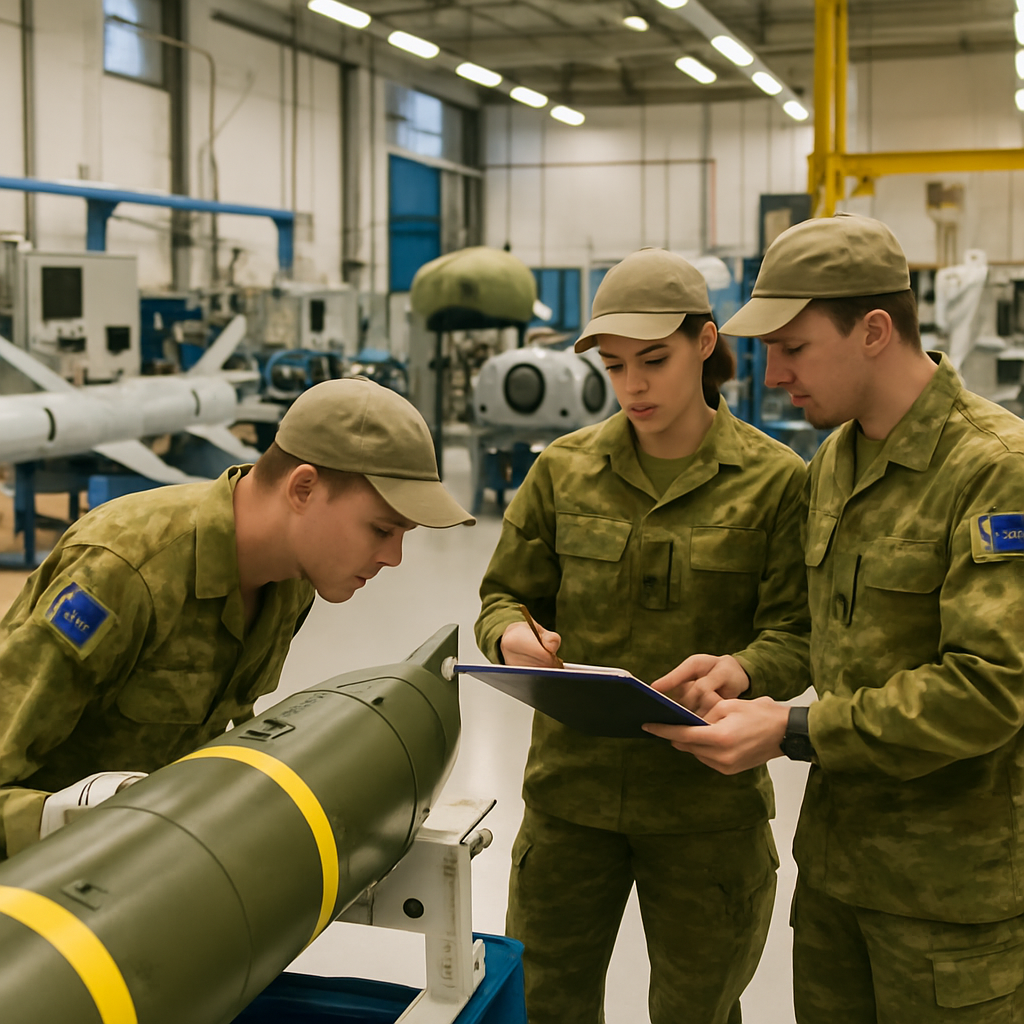
Operational progress is evident. Lockheed Martin is already assembling Guided Multiple Launch Rocket System (GMLRS) rounds in South Australia and continues work on PrSM ballistic strike missiles. Norwegian firm Kongsberg is progressing toward domestic manufacture of JSM and NSM cruise strike missiles. Planning and construction of facilities for making rocket motors are proceeding according to the 2024 GWEO plan.
These developments show movement from program initiation toward capability delivery: in two years GWEO has matured "from initiation to delivery," the source notes, while also underlining remaining gaps in sustainment and component manufacturing.

This site is the portfolio.
OSINTSights runs on Cloudflare Workers, D1, R2, and Vectorize, with an AI pipeline on Hetzner ARM. Nubivance designed, built, and operates it. We do the same for clients.
See what we buildPartnerships and persistent dependence on the United States
The 2026 NDS explicitly prioritises self-reliance while acknowledging the advantages of diversification. Yet the IIP’s GWEO section does not signal a broad shift away from existing suppliers: Australia remains almost wholly dependent on the United States for guided weapons, with the main exception being acquisitions of JSM and NSM.
The sourcing constraint is practical as well as political. US makers are described as "not coping with demand," with delivery times on key munitions stretching into years rather than months, and the US government restricting technology transfer. That combination—strained production timelines and limits on transfer—helps explain why the IIP emphasises local sustainment and component manufacture as priorities.
Testing, maintenance and sustainment: new attention in the IIP
The 2026 IIP gives more attention than before to testing and maintenance facilities and to priority component manufacturing. A concrete step came at an Australian–US ministerial meeting in 2025, which agreed two years of work to further local sustainment of US-built air-to-air missiles—an outcome the source characterises as "an important step toward Australian self-reliance."
At the same time, the IIP’s single-line presentation of GWEO spending makes it hard to track how much of the new funding is dedicated to stocks of munitions, how much to infrastructure for sustainment and manufacture, and how much to external procurement. The updated GWEO plan promised for this year is the document most likely to offer those details.
What this means for procurement leaders, Australian industry, and policymakers
- Procurement leaders will need to reconcile a larger GWEO budget with opaque line-item reporting: they must plan for expanded stocks (including AIM-260A) while waiting for the GWEO plan to delineate spending on sustainment and facilities.
- Australian defence industry will watch for concrete pathways to local manufacture and component supply—Lockheed Martin’s GMLRS assembly in South Australia and Kongsberg’s progress on JSM/NSM offer demonstrable precedents, but gaps in component manufacturing and sustainment remain.
- Policymakers face a trade-off: the NDS calls for both self-reliance and diverse partnerships, yet current procurement remains heavily US-dependent. Decisions on co-investment, including potential involvement from superannuation funds, will shape how quickly industry can scale for exports and domestic resilience.
Two years of program momentum — new factories for rocket motors, domestic assembly of GMLRS, the authorized AIM-260A sale — have moved GWEO from concept to capacity. The unanswered question the documents leave is pace: how many weapons, how much local industrial content, and on what timetable. The updated GWEO plan due this year is the next concrete test of whether the announced increases in spending translate into the self-reliant supply chains the 2026 NDS says it wants.
Source: NDS 2026 – GWEO gets priority, with little published detail (The Strategist)