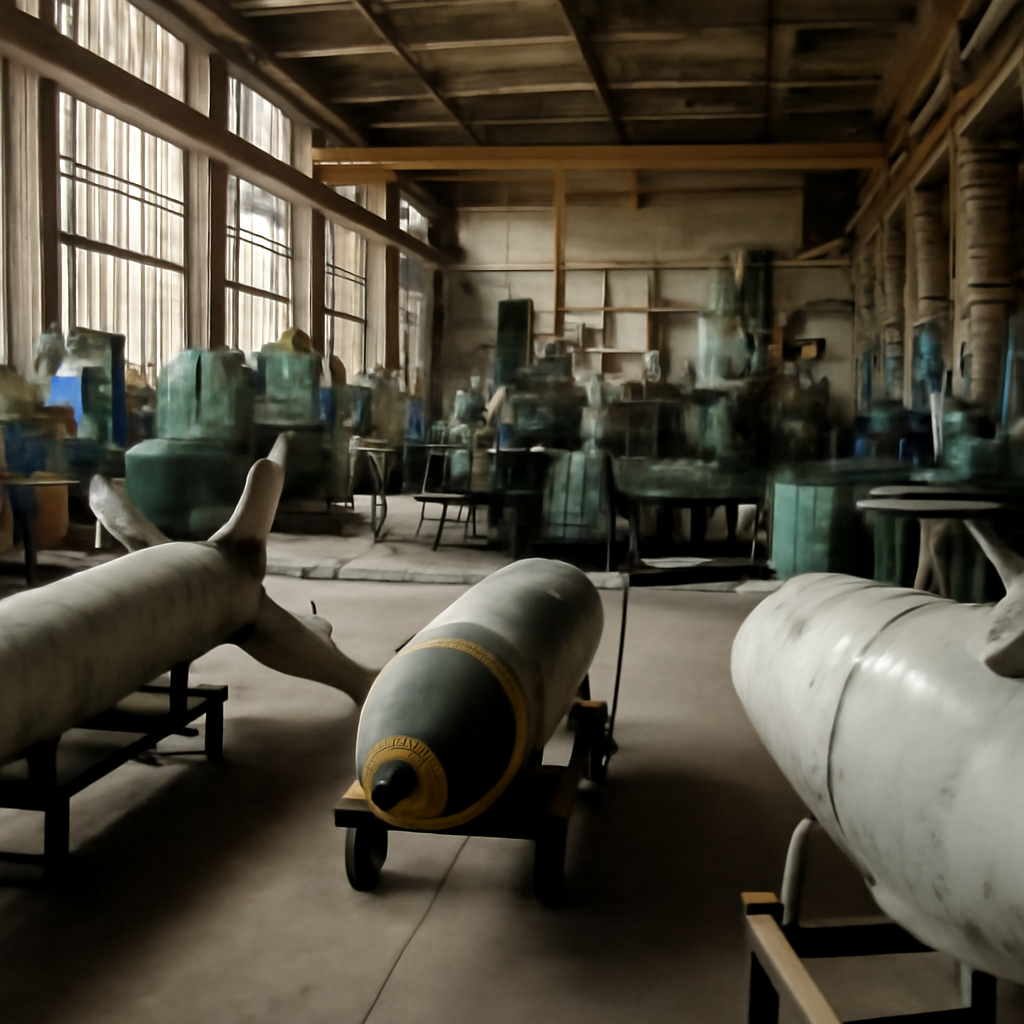
"Our air-and-missile-defense industrial base was built for another era — and today’s threats are exposing gaps in real time," Ursa Major CEO Chris Spagnoletti told reporters, arguing that the system "needs more builders" and that there are new ways to design, build, and field munitions and hypersonics.
Chris Spagnoletti’s diagnosis: an industrial base out of step with today’s threats
In blunt terms, the industrial capacity that underpins air-and-missile-defense, Spagnoletti says, reflects an earlier strategic and technological era. That assessment — that the industrial base was "built for another era" — is paired in the source with a second, urgent observation: contemporary threats are revealing shortcomings "in real time." Those two linked claims form the central premise of his remarks as reported: structural mismatch on one hand, operational exposure on the other.
“Needs more builders”: capacity and capability as a single problem
The source frames the shortfall not only as a matter of capability design but also as a question of workforce and industrial capacity. The phrase "needs more builders" encapsulates that dual problem: if the industrial base was built for a different set of requirements, then scaling or adapting it to new demands requires more people, factories, or firms capable of producing the systems and munitions now in demand. That is the narrow but consequential claim at the heart of Spagnoletti’s comments.

Audit-ready is a season. It shouldn't be.
Evidence in spreadsheets, controls drifting between audits, frameworks multiplying on flat headcount. Nubivance runs continuous compliance on Rapid7 Cyber GRC - SOC 2, HIPAA, ISO 27001, PCI, CMMC.
End the scrambleNew ways to design, build, and field munitions and hypersonics
According to the source, Spagnoletti "tells us about new ways to design, build, and field munitions and hypersonics." The account does not catalogue those techniques or specific technologies, but it places emphasis on process: design, production, and fielding. In other words, rather than focusing solely on a single technological breakthrough, the reported message centers on changing how munitions and hypersonics are developed and transitioned into operational use.
How policymakers, procurement leaders, and technologists are implicated
- Policymakers and regulators: They are named implicitly by the problem statement — a legacy industrial base and threats exposing gaps — and therefore are the actors who must consider whether existing authorities and priorities align with the need for more builders and different development approaches.
- Procurement leaders and acquisition officials: Spagnoletti’s emphasis on "design, build, and field" signals that procurement decisions and acquisition processes are central to closing the gaps; these leaders will be asked to consider new approaches to fielding munitions and hypersonics.
- Technologists and defense manufacturers: The source situates them at the intersection of design and production. The reported comments suggest they will be key to translating whatever "new ways" are being advocated into tangible munitions and hypersonic systems.
What the claim of "real time" exposure implies for operational readiness
By stating that today’s threats are "exposing gaps in real time," the source conveys a sense of immediacy. That phrasing implies that shortfalls are not theoretical or solely long-term planning problems but are becoming visible in current operational contexts. The report pairs that immediacy with a proposed remedy — expanding the pool of builders and adopting new development and fielding methods — rather than with incremental or purely doctrinal fixes.
Conclusion: a compact argument, a clear question
The source presents a compact argument: an air-and-missile-defense industrial base constructed for a previous era faces real-time exposure to contemporary threats, and the solution, as urged by Ursa Major CEO Chris Spagnoletti, involves recruiting "more builders" and embracing "new ways to design, build, and field munitions and hypersonics." The facts offered leave a concrete question in their wake: whether the proposed shift in how munitions and hypersonics are developed and produced can be scaled quickly enough to close the gaps that, according to Spagnoletti, are already showing themselves in real time.
Original story: https://breakingdefense.com/2026/06/built-for-another-era-our-air-and-missile-defense-industrial-base-needs-more-builders/