



Geopolitics & Defense

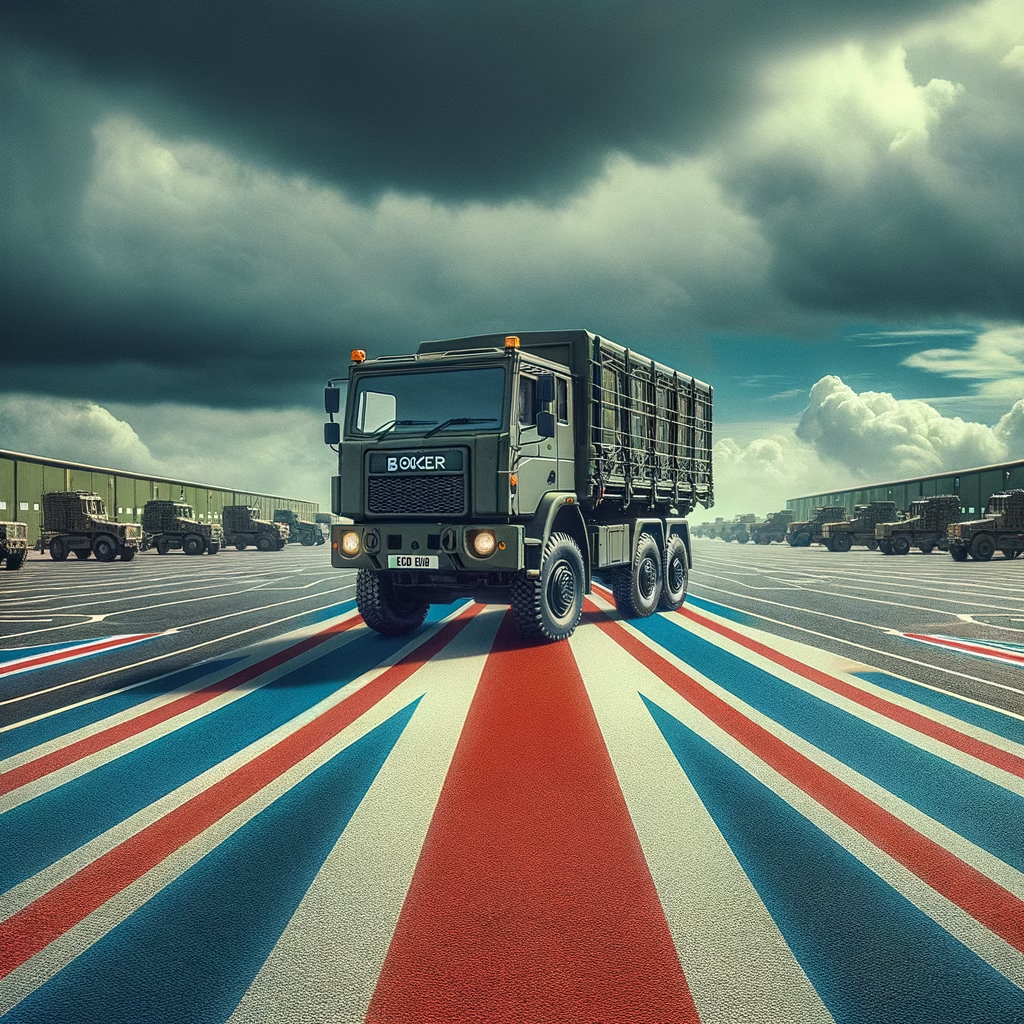
first Boxer produced: Stunning, Best Defence Milestone

first Boxer produced: Stunning, Best Defence Milestone

Britain has just rolled out its first Boxer armoured vehicle built in Telford—an upbeat milestone that promises stronger protection for troops, local jobs and a modern, modular fleet. Whether domestic production will deliver better value and long-term operational advantage than buying off-the-shelf remains to be seen as the programme moves into service and sustainment.

Analyst 207
vehicle-mounted laser: Must-Have or Risky Breakthrough

vehicle-mounted laser: Must-Have or Risky Breakthrough

After years of demonstrations, the Army is poised to move vehicle-mounted high-energy lasers from prototype to production—2026 could be the year directed energy shifts from lab novelty to frontline air defense. But real impact will depend on solving power, environmental, logistics and cost challenges so these systems are reliable and practical for soldiers in combat.

Analyst 207
high-energy lasers: Stunning, Game-Changing Breakthrough

high-energy lasers: Stunning, Game-Changing Breakthrough

Could lasers really replace missiles on Army vehicles by 2026? If the Pentagon’s push pays off, high-energy beams could give soldiers a cheaper, quieter way to stop drones and rockets — but only if engineers conquer persistent power, cooling, and weather challenges that separate dazzling demos from reliable battlefield gear.

Analyst 207
vehicle-mounted directed-energy system: Best Must-Have

vehicle-mounted directed-energy system: Best Must-Have

Imagine armored vehicles with lasers that can stop drones, rockets and mortars almost instantly, giving commanders virtually unlimited “magazines” powered by electricity — but the real test now is whether that promise can be made rugged, maintainable and seamlessly integrated for sustained combat as the Army moves toward production.

Analyst 207
airspace management Must-Have: Best AI for Battle

airspace management Must-Have: Best AI for Battle

The Army is racing to put AI into battlefield air-traffic control to stop the sky from becoming a deadly traffic jam, asking industry for near-term “fight tonight” fixes and longer-term, explainable systems that keep commanders safe and sane. Done right, AI could untangle crowded airspace and free leaders to focus on strategy; done wrong, it could make the sky the battlefield’s greatest danger.

Analyst 207
expeditionary foundry: Stunning Resilient Advantage

expeditionary foundry: Stunning Resilient Advantage

INDOPACOM’s “expeditionary foundry” is turning compact 3D‑printing toolkits into a frontline superpower—able to churn out drone frames, replacement howitzer parts, and other mission‑critical gear in hours instead of weeks. It promises huge gains in resilience and agility across the vast Indo‑Pacific, but also raises tough questions about quality, security, and how to govern a future where designs travel as easily as parts.

Analyst 207
missile-intercept satellite: Stunning but Risky Breakthrough

missile-intercept satellite: Stunning but Risky Breakthrough

Lockheed Martin plans to test a Golden Dome missile‑intercept satellite by 2028 — a bold experiment that could boost missile defense from orbit while raising tricky technical, diplomatic and escalation questions.

Analyst 207
MQ-25 Stingray Must-Have: Risky Delay Threatens

MQ-25 Stingray Must-Have: Risky Delay Threatens

The Navy’s MQ-25 Stingray — the unmanned tanker meant to stretch carrier air wings’ reach — has slipped to a 2027 IOC, leaving planners juggling shorter-range operations and awkward logistics until it arrives. Giving engineers more time may sting now, but could mean a safer, more reliable system when the fleet finally gets the capability it’s been counting on.

Analyst 207
inertial measurement units: Must-Have for Best Ops

inertial measurement units: Must-Have for Best Ops

Imagine the sky goes dark—300,000 IMUs already in the field show how these tiny motion sensors become the military’s lifeline, keeping vehicles, drones, and weapons on course when GPS is jammed or lost.

Analyst 207
self-contained hydrogen generator: Must-Have Naval Edge

self-contained hydrogen generator: Must-Have Naval Edge

Imagine warships that run cool and quiet: onboard hydrogen generators and fuel cells promise stealthier, longer-endurance vessels without bulky cryogenic tanks. The payoff could reshape tactics from manned ships to unmanned swarms — if navies can solve the safety, logistics, and engineering challenges first.

Analyst 207
X-37B Exclusive: Stunning Tech, Risky Secrecy

X-37B Exclusive: Stunning Tech, Risky Secrecy

Boeing’s secretive X-37B returns to orbit this August as a reusable testbed pushing tech faster than policy can keep up. Engineers love the rapid prototyping; diplomats worry its opacity could fuel mistrust — proving small missions can have huge geopolitical impact.

Analyst 207
manned-unmanned teaming: Must-Have Best for Pacific Defense

manned-unmanned teaming: Must-Have Best for Pacific Defense

What used to be science fiction—soldiers teaming with drones, robots, and autonomous sensors—is becoming a near-term reality in the Pacific, forcing commanders to rethink planning, logistics, and doctrine now rather than later. With experiments accelerating and deployments planned within years, the Army must balance rapid innovation with training, resilience, and ethical safeguards to turn advantage into lasting deterrence, not new vulnerability.

Analyst 207
Integrated Battle Command System: Stunning Best Defense Aid

Integrated Battle Command System: Stunning Best Defense Aid

Northrop Grumman says its IBCS upgrade can stitch sensors and shooters into one smart brain—cutting expensive, wasteful anti-missile salvos and stretching logistics while keeping soldiers safer. But that efficiency brings hard choices: centralizing decisions can save billions and improve defenses, yet also creates new cyber, trust and sovereignty risks that allies and commanders must reckon with.

Analyst 207
Integrated Battle Command System: Must-Have, Best Saver

Integrated Battle Command System: Must-Have, Best Saver

What if the answer to missile saturation isn’t more interceptors but a smarter brain that makes each shot count? Northrop Grumman’s Integrated Battle Command System fuses sensors and shooters into one coherent picture to cut wasted launches, stretch magazines, and lower costs—if the network is hardened and trusted under fire.

Analyst 207
Futuristic missile launcher on rugged coastline with massive wave crashing in foreground at dusk.

Typhon launcher: Stunning, Risky Maritime Gamechanger

This summer the U.S. Army surprised many by using its new Typhon launcher to strike a maritime target in the Pacific—an operational shot at Talisman Sabre that signals a bold shift toward land‑based fires shaping outcomes at sea and forcing rivals to rethink how they defend maritime space.

Analyst 207
Futuristic missile launcher stands alone on rugged cliffside edge overlooking serene moonlit ocean at dusk.

Typhon launcher: Stunning Strategic Shift, Risky Edge

In a Pacific first, the Army’s new Typhon launcher fired on a ship during Talisman Sabre, signaling that land-based long-range fires are now a real maritime threat. That milestone could reshape how allies coordinate, deter adversaries, and manage the risks of shared strike capabilities at sea.

Analyst 207
attack drones: Must-Have School for U.S. Dominance

attack drones: Must-Have School for U.S. Dominance

Think Top Gun—but for cheap, nimble attack drones: the Pentagon is creating a hands-on school to turn Ukraine’s gritty drone tactics into formal doctrine, training, and interoperable tools for U.S. and allied forces.

Analyst 207
Ukraine-style attack drones: Must-Have, Risky Advantage

Ukraine-style attack drones: Must-Have, Risky Advantage

The Pentagon wants to turn Ukraine’s gritty, make-do drone tactics into a repeatable advantage with a “Top Gun” style school teaching pilots, maintenance crews and commanders how to field small attack drones—yet translating battlefield improvisation into doctrine will demand fixes to policy, logistics and ethics as much as curriculum.

Analyst 207
head-mounted displays: Must-Have Best Warfighter Tech

head-mounted displays: Must-Have Best Warfighter Tech

On the battlefield, the best head‑mounted displays don’t win by flash alone — they must deliver clear, timely, and secure information that helps soldiers survive and decide under fire. Demand real-world performance, interoperability, cyber hardening, and user-centered sustainment, because a helmet is only as good as the system behind it.

Analyst 207
space rush: Exclusive Risky Stakes

space rush: Exclusive Risky Stakes

Commerce is rocketing into orbit faster than rules can keep pace—Defense One Radio Ep. 187 brings you the Tech Summits urgent conversations about the space rush and the wrenching trade‑offs between innovation, safety, and national security.

Analyst 207
space rush: Exclusive Guide to Risky Future

space rush: Exclusive Guide to Risky Future

As private rockets and tiny satellites flood low Earth orbit, Episode 187 of Defense One Radio gathers builders, strategists, and policymakers to explore the exhilarating opportunities—and growing systemic risks—of the new space age. Tune in for candid, practical ideas on how to balance rapid innovation with the rules, norms, and tech needed to keep space safe and resilient.

Analyst 207
modern C2 centers: Must-Have Resilience for Victory

modern C2 centers: Must-Have Resilience for Victory

As battlefields blur and speed trumps certainty, modern C2 centers face three urgent hurdles: turning overwhelming, messy data into rapid, trustworthy decisions; staying resilient when networks and sensors are jammed or hacked; and knitting multinational, misaligned systems into a single, trusted command. Solving them will mean smarter tech, tougher doctrine, and real-world drills that bind militaries, industry and allies together.

Analyst 207
C2 centers: Must-Have Resilience for Best Survival

C2 centers: Must-Have Resilience for Best Survival

When the map is incomplete, radios go quiet, and drones, jammers and deception probe your nerve centers, modern C2 centers face three linked challenges—information overload and trust, contested communications, and coalition interoperability—that will decide whether commanders can see, decide and act faster than the enemy. The Ukraine war shows we must prioritize explainable data fusion, layered resilient comms, and federated interoperability now, or risk losing the advantage on tomorrow’s battlefields.

Analyst 207
Joint Simulation Environment Exclusive: SPARTA Best Boost

Joint Simulation Environment Exclusive: SPARTA Best Boost

Collins Aerospace’s SPARTA will bring a deployable, high-fidelity E-2D trainer into the Joint Simulation Environment in summer 2025, letting crews rehearse carrier-based command-and-control missions ashore or afloat with realistic sensor, datalink and EW effects. That scalable, repeatable capability boosts readiness and trims flight hours—so long as model fidelity, secure networks and tough injects keep training honest.

Analyst 207