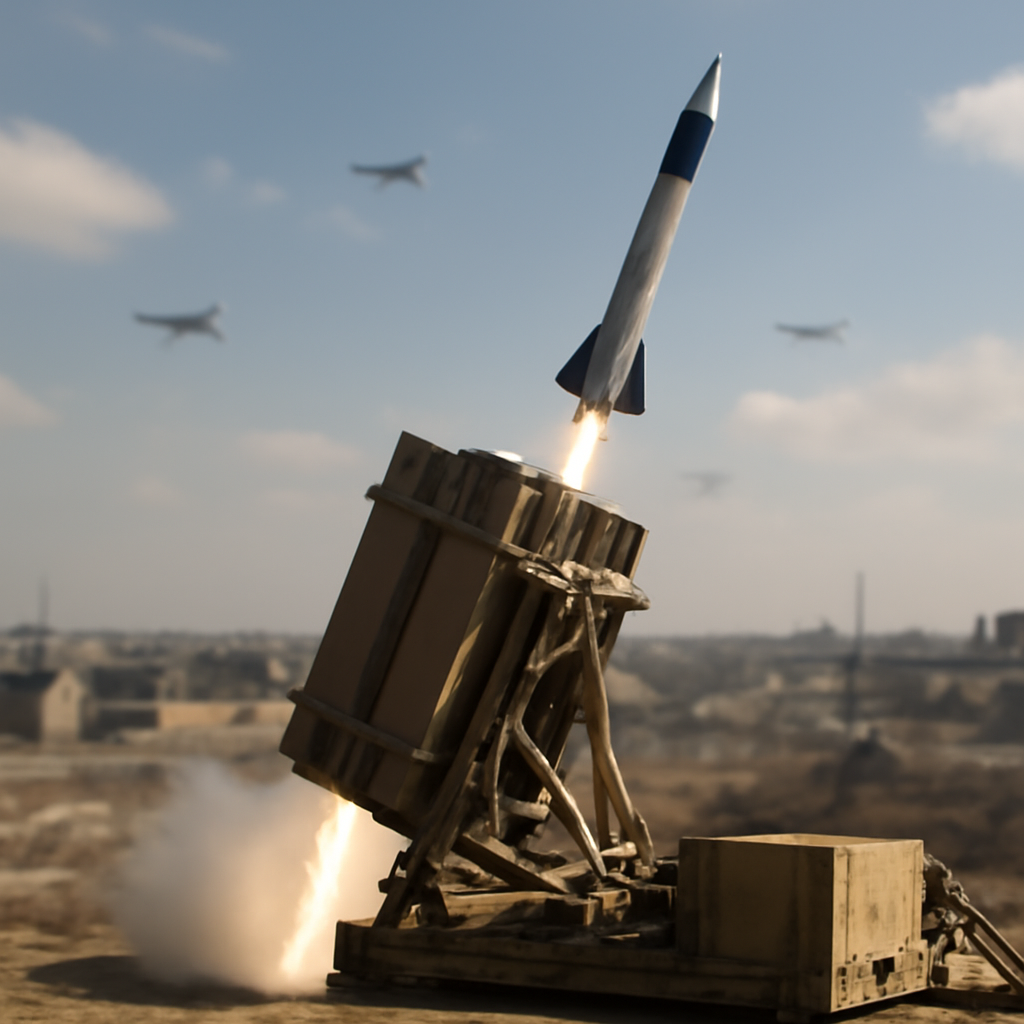
Can a satellite be the final shield against a missile launched from a hostile shore—or does putting a shooter in orbit simply raise the stakes it’s meant to lower? Lockheed Martin aims to probe that question by testing a missile-intercept satellite by 2028, part of a broader “Golden Dome” concept that blends proven missile-defense technologies with emerging space capabilities. The company frames the planned demonstration as an experimental proof of concept rather than an immediate operational deployment, a step intended to inform U.S. defense planners and lawmakers about technical feasibility, cost, doctrine, and allied and adversary responses.
What Lockheed Martin proposes with a missile-intercept satellite
For decades, U.S. missile defense has relied on layered terrestrial and naval systems: ground-based interceptors for long-range engagements, shipborne Aegis and SM-3 for midcourse defense, and THAAD and Patriot batteries for terminal intercepts. A missile-intercept satellite would add a new geometry to this architecture: sensors and interceptors positioned above the atmosphere could detect and engage threats earlier in their trajectory, provide broader coverage, and reduce warning time for incoming threats on certain attack vectors. Lockheed’s Golden Dome concept reportedly combines mature elements—hit-to-kill guidance, advanced discrimination sensors, resilient communications—with newer ideas such as modular kill vehicles, autonomous targeting aids, and distributed sensor fusion across a space layer.
Lockheed describes the 2028 activity as an experimental test rather than a deployment timeline. The demonstration is intended to show whether current engineering, software, and integration can deliver a credible capability that would justify subsequent policy and procurement decisions.
The technical promise—and its pitfalls
Advocates emphasize several advantages of a missile-intercept satellite. Orbiting sensors can detect launches quickly and track boost- and early-midcourse phases when missiles are more visible and slower. Stationed over key regions, space-based interceptors could fill coverage gaps that ground sensors and sea-based assets cannot reach easily. Advances in autonomy, sensor fusion, and resilient crosslinks could allow satellites to coordinate intercepts and reduce latency in decision-making.
But engineering challenges are stark. Achieving reliable hit-to-kill intercepts in the vacuum and dynamics of space imposes exacting mechanical and guidance requirements. Launch costs, satellite survivability in radiation and debris-rich environments, and long-term sustainment are expensive. Space systems are vulnerable to cyberattacks, jamming, spoofing, and physical countermeasures, and a single high-value satellite could become a tempting target. Scaling to a resilient constellation—if that’s the chosen path—multiplies cost and complexity.

Audit-ready is a season. It shouldn't be.
Evidence in spreadsheets, controls drifting between audits, frameworks multiplying on flat headcount. Nubivance runs continuous compliance on Rapid7 Cyber GRC - SOC 2, HIPAA, ISO 27001, PCI, CMMC.
End the scramblePolicy, diplomacy, and military integration
Beyond engineering, the missile-intercept satellite raises significant legal and diplomatic considerations. The Outer Space Treaty forbids nuclear weapons in orbit but is silent on conventional space-based interceptors; nonetheless, nations tend to view novel weaponization of space with deep concern. Even defensive tests can fuel arms-control anxiety and prompt adversaries to pursue countermeasures—more sophisticated decoys, faster burn stages, dispersal tactics, or antisatellite capabilities—that can erode stability.
Within Washington, reactions will vary. Some policymakers see value in an additional layer to protect homeland and allied territories; others question the political appetite and budgetary tradeoffs for an expensive and potentially destabilizing program. Military commanders could welcome extra coverage and faster engagement options, but integrating space interceptors into existing command-and-control networks, rules of engagement, and allied architectures will demand heavy investment in doctrine, secure data links, and joint training.
Strategic consequences and adversary responses
If a missile-intercept satellite proves feasible, states whose deterrence depends on missile force credibility could view orbital interceptors as destabilizing. Even when framed as defensive, such systems may incentivize adversaries to develop asymmetric tactics or capabilities—saturation attacks, advanced decoys, or antisatellite means—that complicate defense and raise the risk of broader escalation. History shows that defensive innovations can alter offensive doctrines in unforeseen ways; the introduction of a space-based interception layer might shift strategic calculations across regions and alliances.
Cost, sustainability, and operational trade-offs
Decisions will hinge on whether a few high-capacity satellites or a dispersed constellation of cheaper defensive nodes best serves U.S. security goals. Space systems must survive launch stresses, radiation, and the increasing risk of on-orbit collision. If initial tests reveal fragility to jamming, spoofing, or physical attack, the return on investment drops dramatically. Policymakers must weigh life-cycle costs, insurance against attrition, and the diplomatic cost of visibly weaponizing orbit against the operational benefits of tighter, earlier interception windows.
Conclusion: what the 2028 test will show about missile-intercept satellite prospects
The planned 2028 test is less a single engineering milestone than a political and strategic litmus test. It will reveal how far current technology can be pushed, whether the Pentagon and Congress are ready to fund follow-on capabilities, and how international audiences react to moving defensive firepower into space. A successful demonstration could justify accelerated investment and new doctrine; a problematic test could underscore vulnerabilities and fuel calls for arms control. Ultimately, Lockheed Martin’s Golden Dome illuminates a deeper tension: the desire for stronger defensive shields colliding with the risks of militarizing a finite and contested commons. If we build a sky that can shoot down missiles, the lingering question remains—will it deter conflict or make it more tangled and dangerous?