How do you prevent the sky above a battlefield from turning into a chaotic traffic jam of friendly, hostile and uncontrolled aircraft? That urgent question is driving a new Army push to insert artificial intelligence into the air-traffic control of combat zones — with an emphasis on solutions that work for the “fight tonight.” Airspace management is the thread tying together tactical safety, operational tempo and the broader ethical and legal questions posed by autonomous systems.
Airspace management: solving a three-dimensional puzzle
The U.S. Army’s recent request for information (RFI) asks industry and academia for both near-term, operationally ready tools and longer-term architectures to help commanders govern increasingly congested airspace. The solicitation explicitly seeks “fight tonight” capabilities alongside concepts that would reduce the cognitive and logistical burdens on leaders who must deconflict—and exploit—air activity spanning helicopters, manned fixed-wing, persistent sensors and swarming unmanned aerial systems (UAS).
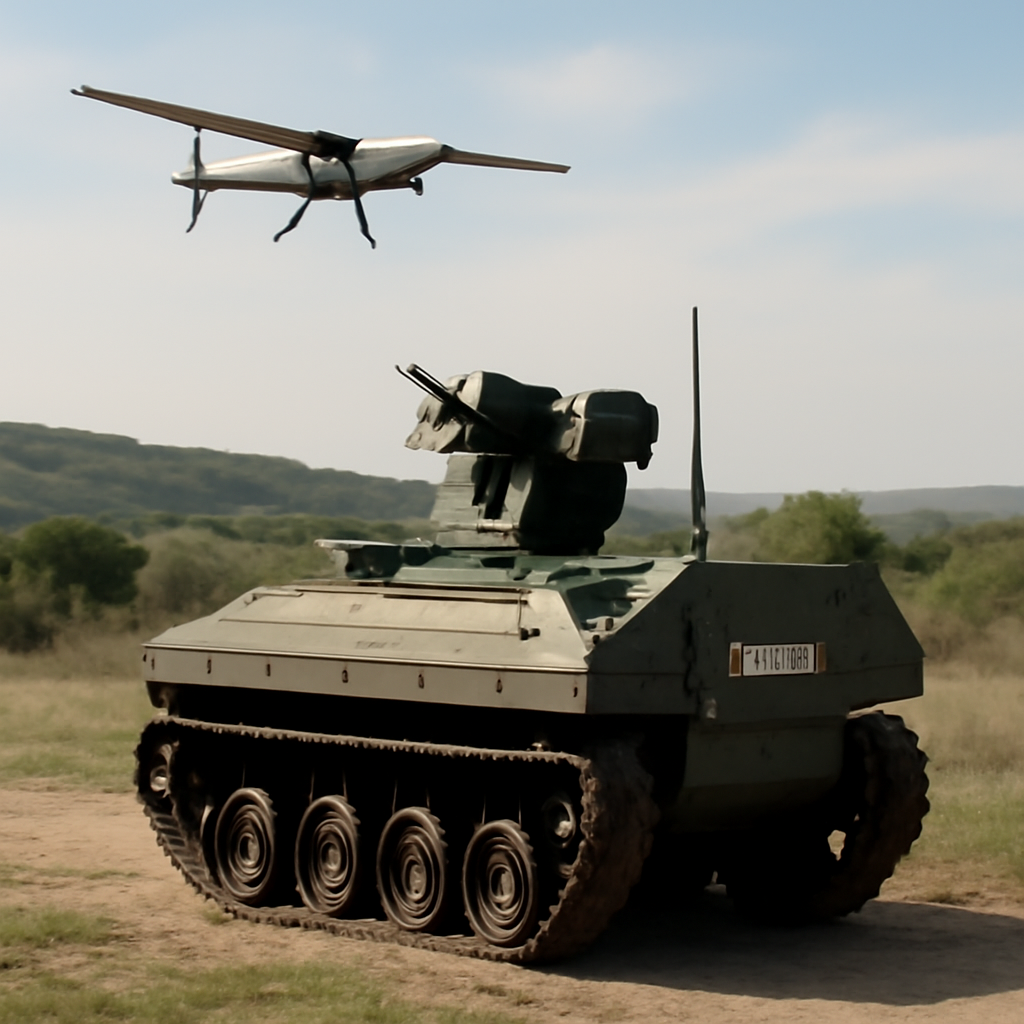
Modern battlefields are fast becoming three-dimensional mosaics of sensors, remotely piloted systems and autonomous aircraft. That proliferation promises unmatched situational awareness and lethality, but it also raises severe risks: midair collisions, fratricide, missed targeting opportunities and decision paralysis if humans are overloaded. The RFI signals an Army that views AI as a force multiplier for command-and-control and as a means to ease the tactical workload on commanders navigating contested skies.
Traditionally, military airspace management relied on painstaking manual processes: airspace control orders, restrictive corridors, airborne coordinators and air-traffic controllers pushing and enforcing rules. Those procedures were designed for sparser skies. The rapid arrival of small, inexpensive drones that can be fielded en masse, together with networked munitions and electronic warfare, has rendered manual approaches brittle and slow.
What the Army wants are AI tools that can prioritize traffic, dynamically reassign air corridors, automate deconfliction and alert commanders to rapidly changing threats and opportunities. Respondents were asked to describe prototypes for immediate fielding and system architectures that could evolve over years to integrate sensor inputs, policy constraints and human judgment.
Technical and human hurdles
The technological challenge is inherently multidisciplinary. Effective AI for airspace management must deliver:
– Robust sensor fusion to combine radar, EO/IR, cooperative identification and civil air-traffic feeds
– Low-latency decision-making for time-critical deconfliction and proportional responses
– Transparent, auditable AI models so commanders can understand and override machine recommendations
– Resilient communications and cyber defenses to operate in contested electromagnetic environments
– Interoperable standards for coordination across services, allies and civil aviation authorities
Crucially, a useful system must do more than compute safe flight paths: it must explain trade-offs in a way a commander can trust. That means conveying uncertainty, stating why a particular course of action was recommended and offering simple override mechanisms. Autonomy without understandable accountability will not win battlefield credibility.
Research promise—and limits
Technologists see the RFI as permission to push autonomy and human-machine teaming farther. Techniques such as reinforcement learning, graph-based planning and federated learning could reduce bandwidth needs and enable distributed decision-making. Yet researchers caution that many academic breakthroughs falter outside controlled testbeds. Real battlefields present adversarial inputs, degraded sensors and intentional deception that can confound immature algorithms.
Policy and legal questions
Policy-makers face thorny decisions. Rapidly fielding AI-enabled airspace managers raises legal, ethical and command-responsibility questions. Who bears accountability if an automated deconfliction decision contributes to civilian harm? How do rules of engagement and international airspace law constrain automated reallocation of corridors? The RFI couples near-term requirements with longer-term architectural thinking so policy, acquisition and operational communities can co-evolve standards instead of retrofitting them after technologies mature.
Operational users — brigade and division commanders, aviation brigades, air-traffic controllers and UAS operators — are the ultimate customers. Many welcome automation that trims routine workload and highlights novel threats. But they demand reliability under duress, graceful degradation when communications fail and intuitive interfaces that align with current workflows. Systems that overpromise and underdeliver will face inevitable pushback.
Adversarial risks and resilience
An AI-based airspace manager also creates new attack surfaces: spoofed sensor inputs could force unfavorable deconfliction, jamming could sever command links, and reverse-engineering AI behavior might enable manipulation of airspace. The Army’s RFI explicitly asks respondents to address cyber resilience and adversarial robustness, reflecting awareness that defensive measures must be baked into designs.
Emerging operational concepts
Several operational concepts are already under discussion. One is a tactical Unmanned Traffic Management (UTM) system tuned for contested environments: a federated, secure mesh that provides local deconfliction while leaving human leaders in the loop. Another envisions a hierarchy of AI assistants handling low-level routing and collision avoidance while escalating high-level trade-offs—such as allocating scarce platforms for strike, intelligence or casualty evacuation—to commanders. Both concepts rely on edge computing, automated negotiation protocols and standardized metadata that declare platform intent and applicable rules of engagement.
Acquisition, testing and coalition implications
Budget and acquisition realities will determine what gets fielded. The RFI is an early-stage, low-risk tool to gather ideas, but moving to deployment requires clear requirements, experimentation ranges and testbeds that replicate electromagnetic and multi-domain threats. Congress and Pentagon acquisition authorities must balance speed and oversight, particularly where autonomy approaches lethal functions.
Allied interoperability and civil-military coordination add layers of complexity. Coalition operations demand agreed data standards and trust frameworks; domestic or humanitarian missions require seamless coordination with civil aviation authorities. Without those agreements, AI-driven airspace management risks creating jurisdictional confusion and safety hazards in noncombat environments.
Conclusion
The Army’s RFI is not a silver bullet, but it is a clear admission: commanders’ patience for manual, brittle airspace control is waning. If done right, AI-enabled airspace management could turn congested skies into an operational advantage—accelerating decisions, preventing collisions and freeing leaders to focus on strategy. If mishandled, it could amplify errors, be exploited by adversaries or erode human accountability when stakes are highest. The core test will be whether humans can trust, understand and control these systems under pressure. Building solutions that are fast, robust, explainable and secure — and aligning policy to match — will determine if AI helps make the sky an asset rather than the battlefield’s greatest hazard.