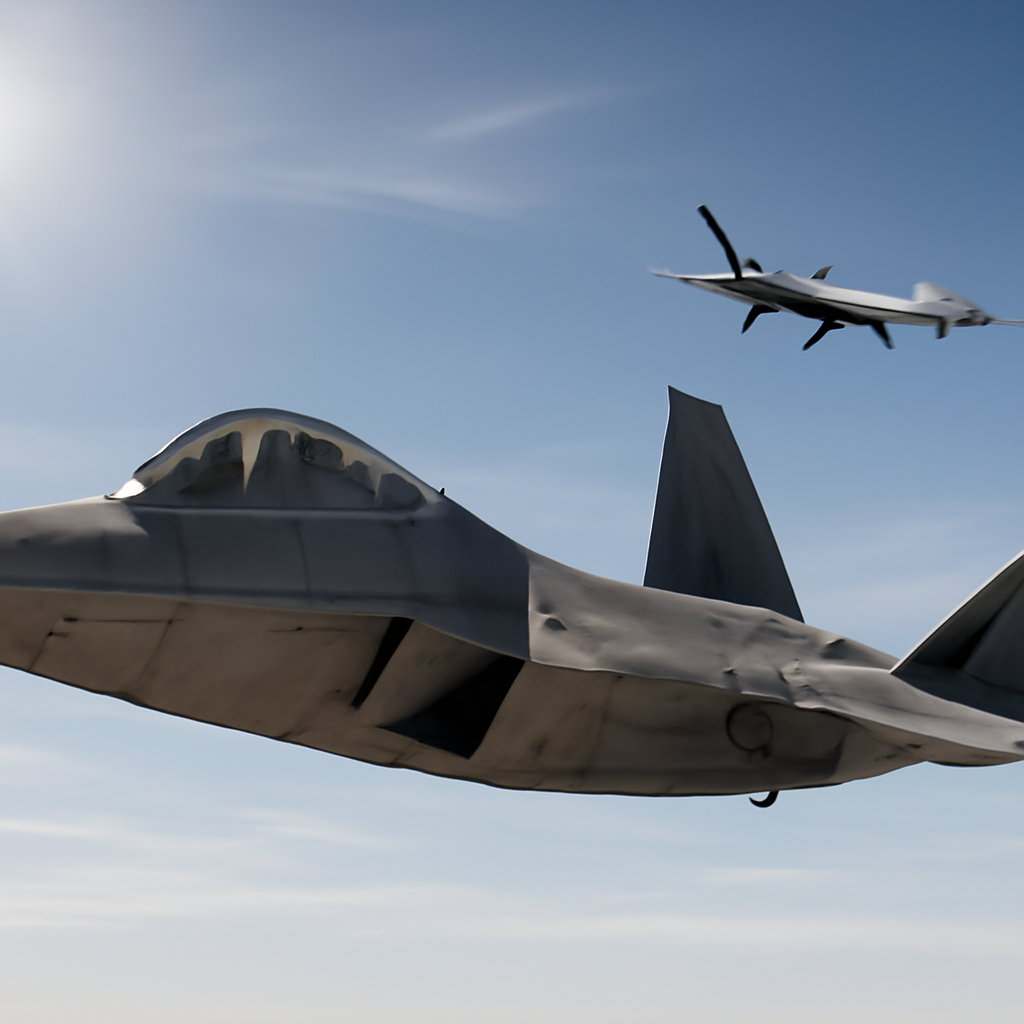
Pacific Army Leaders Warn Today’s Fiction Is Near Reality
Manned-Unmanned Teaming: From Lab to Line Units
How close is the gap between the novels on your shelf and the operational orders on a Pacific commander’s desk? For leaders across the Indo-Pacific, that gap is shrinking fast. Senior Army officials and the service secretary are telling planners to expect manned-unmanned teaming, swarms of drones, and autonomous sensors to be integral to frontline units within a few years. That forecast is not idle speculation; it reflects converging technological progress and a strategic reprioritization that together are driving capabilities out of test ranges and into battalions.
Two forces are colliding to make this happen. First, rapid advances in autonomy, sensors, processing power, and artificial intelligence have turned systems that once belonged to science fiction into practical tools. Second, the United States’ strategic focus on the Indo-Pacific — with its vast distances, island chains, and contested littorals — is accelerating experimentation and doctrinal change so those tools can be useful where they matter most. The result is an intentional push to integrate unmanned systems with soldiers at squad, platoon, and brigade levels.
Why the Pacific theater? Geography and pacing make it a proving ground. The Indo-Pacific presents long transit times, dispersed threats, and complex urban coastlines where persistent sensing, distributed logistics, and rapid reach matter. Unmanned aerial systems offer sustained observation across maritime approaches; unmanned ground vehicles can move supplies across insecure lines; and proliferated sensors can give early warning of adversary activity. Commanders value networks that sense, shoot, and sustain across distances and densities that stress traditional force models.
What’s happening now falls into clear trends:
– Increased investment in manned-unmanned teaming to augment soldiers with drones and robots for reconnaissance, targeting, and limited fires.
– Field experiments and exercises that test hardware alongside command-and-control concepts, logistics, and new training models.
– A push to shorten acquisition timelines so proven capabilities transition from prototypes to operational units faster than in the past.
– Greater emphasis on resilient communications, data fusion, and secure networks so distributed systems can share situational awareness even under jamming or denial.
Advocates—technologists and program managers—argue these systems reduce risk to personnel while increasing tempo and precision. Demonstrations in collaborative autonomy, better small-sensor performance, and commercial AI progress underpin their optimism. Policymakers who prioritize deterrence and force modernization see complementary gains: a sensor-rich, distributed force complicates an adversary’s targeting calculus and improves survivability in anti-access/area-denial environments. For Pacific planners, platforms that extend reach and reduce vulnerable footprints strengthen deterrence without a proportional rise in manpower.
But the transition raises hard operational questions from the soldiers and commanders who must use these systems under stress. How will autonomy behave in contested electromagnetic and cyber environments? How do crews retain situational awareness when part of their team is software or machines? What logistics and maintenance pipelines are needed to keep fleets of unmanned systems operational in austere, forward areas? Training, trust, and human-machine teaming doctrine are as critical as the hardware itself; without them, sophisticated systems can become brittle liabilities.
Adversaries are watching and adapting. Systems dependent on GPS, high-bandwidth links, or centralized data processing invite jamming, spoofing, or cyber intrusion. Opponents can degrade communications, inject false data, or exploit supply-chain vulnerabilities. Thus, every capability improvement compels planners to assume contested conditions from the start: resilience, fallback modes, and clear human oversight must be built in.
Legal, ethical, and policy considerations also demand attention. Autonomy and unmanned systems raise questions about rules of engagement, accountability for mistakes, and adherence to international law. These issues do not make the technology unusable, but they require explicit policy frameworks, human-in-the-loop safeguards, and robust oversight before systems see widespread deployment. The Pentagon, Congress, and allied partners must align on norms for supervision, target validation, and post-incident review.
Industrial scale-up is another hurdle. Transitioning from prototypes to serviceable fleets needs suppliers able to deliver at volume, sustainment plans suited to forward operations, and protections against unauthorized technology transfer. The commercial sector drives much of the innovation, yet military pace and security needs impose demands that differ sharply from civilian procurement cycles.
There is a strategic debate over tempo and prudence. Some argue rapid fielding and risk acceptance are necessary to maintain a technological edge. Others warn that hasty deployments could introduce immature systems that fail under combat stress and trigger cascading surprises. The right approach favors iterative testing in representative conditions, transparent assessments of failure modes, and practical contingency plans for degraded systems.
Allies and partners in the region matter, too. Interoperability, shared doctrines, and common sustainment practices amplify collective deterrence; divergent standards or restrictive export rules can hamstring coalition options. The Army’s near-term push for drone-and-soldier integration will have diplomatic and coalition-management dimensions as well as technical ones.
What to watch over the next three to five years: squad- and platoon-level experiments with persistent aerial and ground autonomy; new command-and-control nodes designed to fuse multi-domain data; autonomy integrated into sustainment and logistics; and doctrinal and training publications that reveal whether these capabilities become core force design elements or remain supplementary add-ons.
The trade-offs are stark: extended reach and tempo versus new vulnerabilities; reduced individual risk versus greater dependence on complex networks; rapid fielding versus careful validation. If manned-unmanned teaming is implemented thoughtfully—with resilient architectures, clear policies, and trained personnel—it can enhance deterrence and save lives. If it is rushed without those safeguards, it risks creating opaque dependencies and operational surprises. As fiction bleeds into doctrine and unit manuals, the guiding question should be whether these tools increase strategic clarity and operational control, not just technical capability.