Who decides when the battlefield itself appears to decide? In Ukraine, commanders have often chosen speed over certainty — and time and again speed has proved decisive. The conflict has stripped away comforting assumptions about where, how and from whom information will arrive. It has also exposed three persistent problems at the heart of modern command and control: how to see clearly and act quickly, how to survive in a denied electromagnetic and cyber environment, and how to make distributed, multinational forces function as a coherent whole.
Challenge 1 for modern C2 centers: Situation awareness at speed
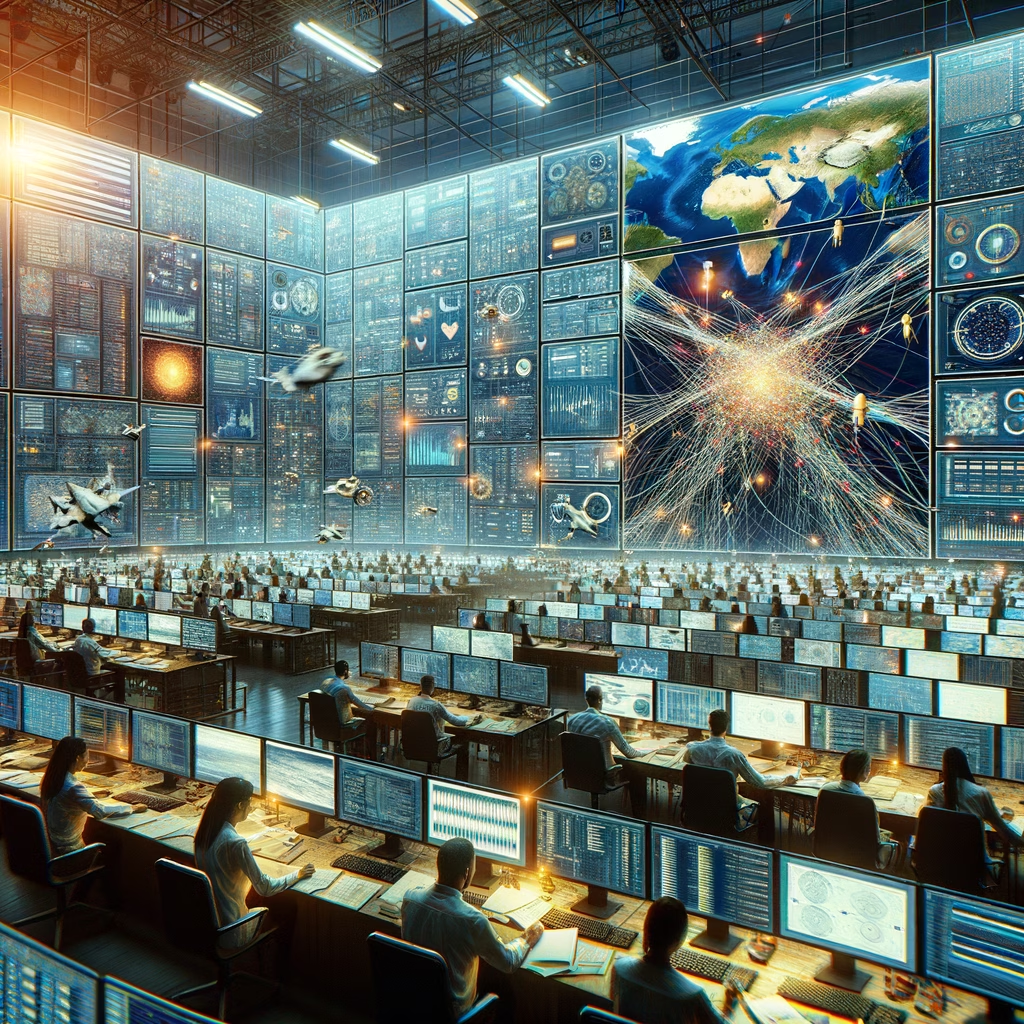
The first problem is both technical and human. Modern C2 centers ingest enormous, heterogenous streams of sensor data — satellites, manned and unmanned aircraft, ground sensors, signals intelligence, and even social-media reports — and must fuse them into a single, shareable picture fast enough to enable decisive action. Each source has different latency, resolution and trustworthiness, and the sheer volume of inputs can create decision paralysis rather than clarity.
Ukraine illustrates the tension vividly. Commercial satellite imagery, cheap quadcopters and civilian cameras have given commanders unprecedented visibility, but that visibility creates a new bottleneck: decision velocity. Greater situational awareness is useless if teams cannot verify, prioritize and assign targets quickly without overtasking shooters or breaching rules of engagement. Emerging tools — automated sensor fusion, machine-assisted target nomination and intent-aware displays — promise to shorten the OODA (observe-orient-decide-act) loop. But automation introduces risks: brittle algorithms, opaque recommendations and potential errors that propagate rapidly.
The solution is not merely more sensors or smarter models. It is an integrated approach that combines explainable automation, robust human-in-the-loop controls and doctrine that trains teams to operate at tempo. Investment in decision-support technology must be matched by training regimens, accountability frameworks and interfaces that communicate uncertainty clearly to commanders. Without that, faster inputs will simply accelerate flawed decisions.
Challenge 2 — Resilience in a contested electromagnetic and cyber domain
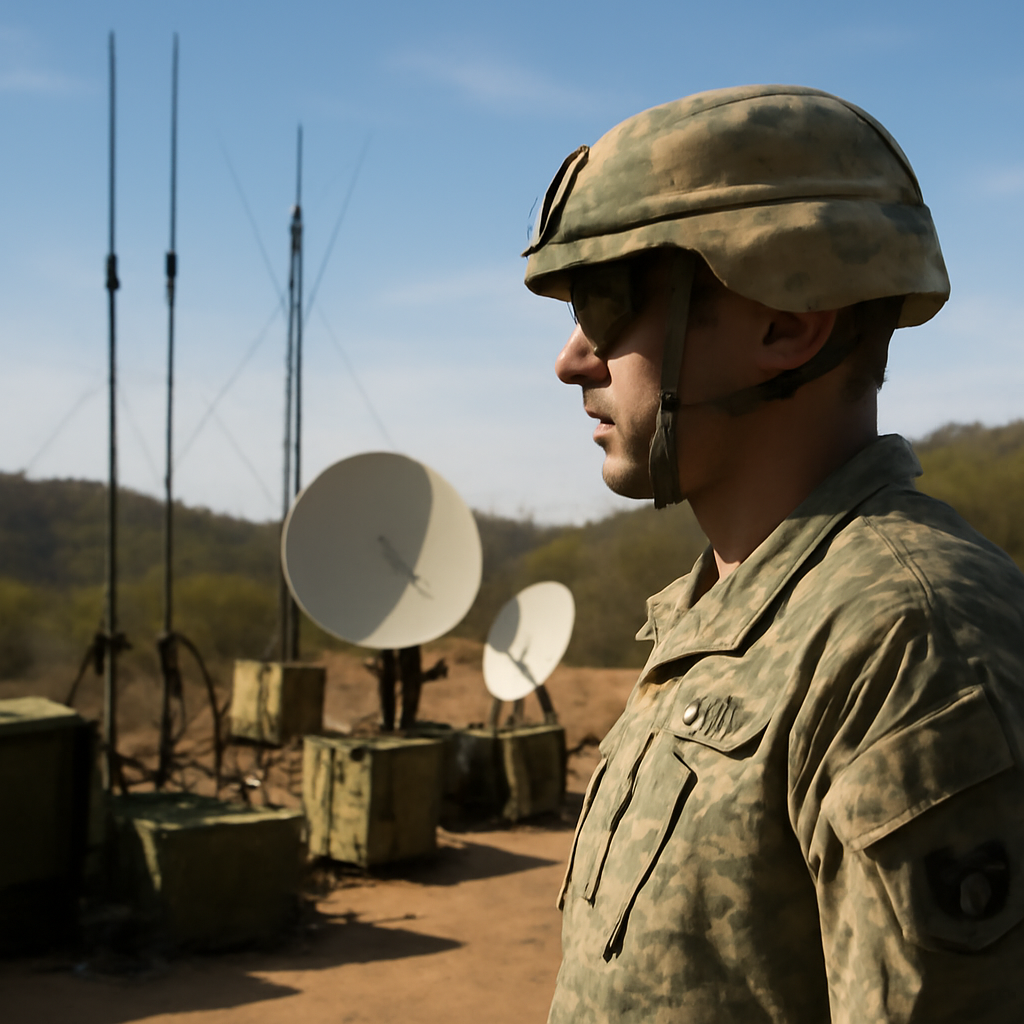
The second core issue is survivability. Modern C2 centers must remain functional when communications, navigation and data services are degraded, jammed or surgically attacked. The Ukraine conflict has featured deliberate cyber intrusions, jamming of GPS and radios, and strikes on communication nodes. Adversaries aim to blind and deafen C2 at decisive moments.
Practical resilience means redundancy, graceful degradation and rapid recovery. Architectures should incorporate low-probability-of-intercept/low-probability-of-detection (LPI/LPD) links, mesh networking, multiple satellite and terrestrial paths, and fallback procedures for manual control. Each redundancy layer, however, increases logistical complexity and widens the supply-chain attack surface.
Policy and procurement must therefore take a whole-of-system view: hardened hardware, robust encryption, supply-chain security and contracts with commercial providers that guarantee prioritized services during crises. Equally important are realistic exercises that simulate denied-communications scenarios so that doctrine and improvisation can coexist. Adversaries will continue probing seams: if radios are hardened, they will target data integrity, maintenance networks or human procedures. Resilience planning must anticipate that multi-vector approach.

Audit-ready is a season. It shouldn't be.
Evidence in spreadsheets, controls drifting between audits, frameworks multiplying on flat headcount. Nubivance runs continuous compliance on Rapid7 Cyber GRC - SOC 2, HIPAA, ISO 27001, PCI, CMMC.
End the scrambleChallenge 3 — Interoperability, trust and command in coalitions and distributed operations
The third challenge is organizational and political. Modern C2 centers increasingly must command forces that are distributed, multinational and equipped with different systems, classifications and national caveats. Allies can contribute decisive capabilities, but getting those capabilities to act together under a single commander is difficult.
Interoperability goes beyond standards and connectors; it requires shared concepts, aligned timelines and trust. Ukraine has benefited from rapid flows of intelligence, munitions and commercial services, but coalition C2 strains under differing authorities, legal restrictions and political sensitivities that slow decisions. Technologists advocate open standards, API-driven exchanges and identity-aware access controls; military users emphasize common drills, liaison elements and delegation rules that accelerate action without surrendering national control over sensitive fires.
For policymakers the tradeoffs are stark. Looser data-sharing speeds tempo but risks exposing sources and methods. Tighter national controls protect secrets but cede battlefield initiative. Adversaries exploit the seams between partners with deception and information operations. The remedy blends technical interoperability with sustained personnel exchange, joint exercises that simulate high-pressure operations, and legal-political frameworks that permit timely, accountable decision-making in crisis.
What must change
Funding matters — for resilient networks, AI-enabled decision aids and common technical standards — but technology without doctrine is brittle. C2 centers need realistic exercises that force operations under degraded conditions, multinational staff exchanges that build trust, and legal frameworks that enable fast yet accountable action. Artificial intelligence can accelerate decision cycles but raises questions about reliability, bias and responsibility; hardened communications secure links but increase logistical burdens; open data standards improve collaboration but heighten compromise risk.
These are tradeoffs to manage, not problems with single, silver-bullet solutions. The stakes are national. As the line between civilian infrastructure and military capability blurs — commercial satellites routing battlefield traffic, consumer smartphones becoming sensors, adversaries targeting supply chains — command and control becomes a whole-of-society responsibility. Defense planners must partner with industry, legal experts and allies to build C2 that is fast, resilient and trustworthy.
If modern C2 centers fail to master speed, resilience and coalition integration, they will surrender initiative to adversaries who specialize in denial, deception and disorder. The urgent question for militaries and democracies is this: will we invest not only in new sensors and weapons, but in the unglamorous, essential work of making command work when everything else is contested?