Latest Analysis
Cybersecurity intelligence, threat analysis, and national security reporting.

corruption arrests: Stunning Risks to Russia’s Defense
When the machines meant to protect a country are compromised, arrests at Kurgan’s AO Kurganmashzavod — including a former metals chief — raise alarm that corruption could slow production, degrade armor quality and put soldiers at risk. As investigators probe, the case highlights systemic weaknesses in Russia’s defense supply chain that could have far-reaching consequences.

Zorawar light tank: Exclusive Must-Have for Best Defense
India’s Zorawar light tank, built to be nimble in the Himalayas while carrying modern sensors and protection, has completed development trials and heads into user trials in September 2025. If it proves reliable, Zorawar could reshape mountain warfare and boost India’s domestic defense industry.

Scarborough Shoal Shocking: Risky Escalation Sparks Alarm
A tense collision near Scarborough Shoal — where a Chinese warship reportedly struck a China Coast Guard cutter during a Philippine relief mission — shows how everyday encounters in disputed waters can quickly turn dangerous. The incident threatens fishermen’s livelihoods, legal precedents and regional stability.

Scarborough Shoal Exclusive: Shocking Risky Collision
A collision between two Chinese government ships near Scarborough Shoal during a Philippine supply mission exposes how fragile safety and politics are in one of the world’s most contested maritime hotspots. With few confirmed details, the episode spotlights risky close-quarters maneuvers, blurred coast guard–navy roles, and how a single accident could spark wider regional fallout.

F-35B Lightning II Stunning Emergency Landing Sparks Alarm
A British RAF F-35B made a dramatic emergency landing at Kagoshima Airport with no injuries. Was it a lone technical hiccup or a warning about wider reliability—an incident that now begs thorough inspections and diplomatic scrutiny?

F-35B Lightning II Emergency Landing: Stunning, Alarming
A British RAF F-35B made a precautionary emergency landing at Kagoshima Airport — thankfully no one was injured and normal operations quickly resumed. Now technicians and allied officials are working to inspect and secure the jet while keeping the public informed.

UK-made Boxer: Stunning Boost or Risky Gamble
Britain’s first home-built Boxer rolling into service is a proud milestone — a boost for jobs and sovereign capability that could transform how the Army moves and fights. If industry and integration hold up, this Telford-made vehicle could signal real operational and strategic gains; if not, it’ll be an expensive lesson in procurement risk.

first Boxer produced: Stunning, Best Defence Milestone
Britain has just rolled out its first Boxer armoured vehicle built in Telford—an upbeat milestone that promises stronger protection for troops, local jobs and a modern, modular fleet. Whether domestic production will deliver better value and long-term operational advantage than buying off-the-shelf remains to be seen as the programme moves into service and sustainment.

vehicle-mounted laser: Must-Have or Risky Breakthrough
After years of demonstrations, the Army is poised to move vehicle-mounted high-energy lasers from prototype to production—2026 could be the year directed energy shifts from lab novelty to frontline air defense. But real impact will depend on solving power, environmental, logistics and cost challenges so these systems are reliable and practical for soldiers in combat.

high-energy lasers: Stunning, Game-Changing Breakthrough
Could lasers really replace missiles on Army vehicles by 2026? If the Pentagon’s push pays off, high-energy beams could give soldiers a cheaper, quieter way to stop drones and rockets — but only if engineers conquer persistent power, cooling, and weather challenges that separate dazzling demos from reliable battlefield gear.

vehicle-mounted directed-energy system: Best Must-Have
Imagine armored vehicles with lasers that can stop drones, rockets and mortars almost instantly, giving commanders virtually unlimited “magazines” powered by electricity — but the real test now is whether that promise can be made rugged, maintainable and seamlessly integrated for sustained combat as the Army moves toward production.
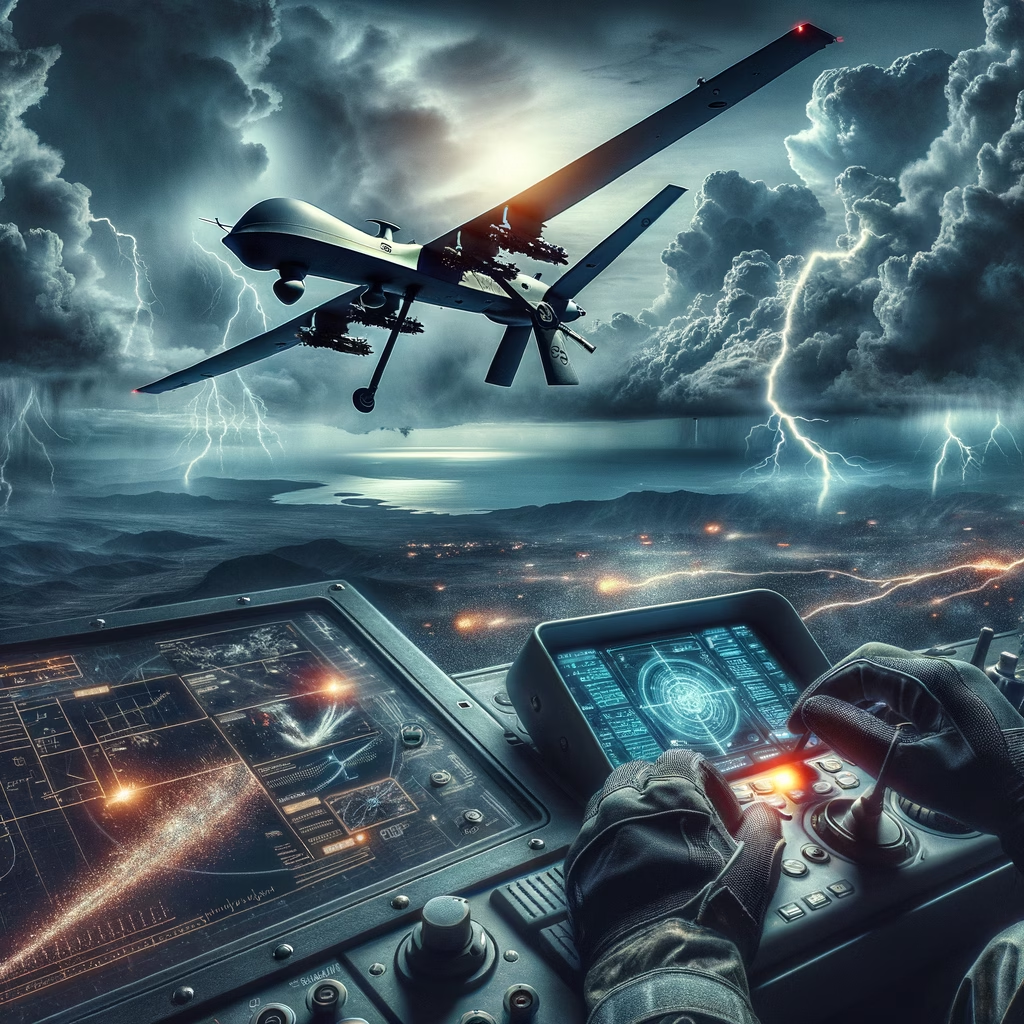
drone defenses: Must-Have Yet Risky Solutions
As autonomous drones shrink the window for decisions to seconds, militaries face a stark choice: build defenses that act instantly or risk catastrophic delay — but rushing automation without legal, ethical and technical guardrails could hand machines the power to make life-or-death calls. We must move fast to protect people, and smarter still to ensure those protections never become irreversible harms.

airspace management Must-Have: Best AI for Battle
The Army is racing to put AI into battlefield air-traffic control to stop the sky from becoming a deadly traffic jam, asking industry for near-term “fight tonight” fixes and longer-term, explainable systems that keep commanders safe and sane. Done right, AI could untangle crowded airspace and free leaders to focus on strategy; done wrong, it could make the sky the battlefield’s greatest danger.

expeditionary foundry: Stunning Resilient Advantage
INDOPACOM’s “expeditionary foundry” is turning compact 3D‑printing toolkits into a frontline superpower—able to churn out drone frames, replacement howitzer parts, and other mission‑critical gear in hours instead of weeks. It promises huge gains in resilience and agility across the vast Indo‑Pacific, but also raises tough questions about quality, security, and how to govern a future where designs travel as easily as parts.

missile-intercept satellite: Stunning but Risky Breakthrough
Lockheed Martin plans to test a Golden Dome missile‑intercept satellite by 2028 — a bold experiment that could boost missile defense from orbit while raising tricky technical, diplomatic and escalation questions.

MQ-25 Stingray Must-Have: Risky Delay Threatens
The Navy’s MQ-25 Stingray — the unmanned tanker meant to stretch carrier air wings’ reach — has slipped to a 2027 IOC, leaving planners juggling shorter-range operations and awkward logistics until it arrives. Giving engineers more time may sting now, but could mean a safer, more reliable system when the fleet finally gets the capability it’s been counting on.

inertial measurement units: Must-Have for Best Ops
Imagine the sky goes dark—300,000 IMUs already in the field show how these tiny motion sensors become the military’s lifeline, keeping vehicles, drones, and weapons on course when GPS is jammed or lost.

senior officers Must-Have Data Training: Risky Gap
A five-month Army exercise found that while sensors and algorithms are racing ahead, many senior officers lack the data fluency to turn fast, messy streams into timely, trustworthy decisions—creating dangerous delays and wasted capability. If commanders don’t get practical training on data quality, algorithm limits, and human‑machine interfaces, today’s tech advantage could quickly become tomorrow’s vulnerability.

data-driven decisions: Must-Have Training to Prevent Risk
Project Flytrap revealed that sensors and AI can spot small drones, but senior officers often lack the data literacy and realistic training to turn those outputs into safe, timely decisions. Closing that gap with better education, doctrine, and human-centered systems is essential to avoid costly mistakes on the battlefield.

self-contained hydrogen generator: Must-Have Naval Edge
Imagine warships that run cool and quiet: onboard hydrogen generators and fuel cells promise stealthier, longer-endurance vessels without bulky cryogenic tanks. The payoff could reshape tactics from manned ships to unmanned swarms — if navies can solve the safety, logistics, and engineering challenges first.

X-37B Exclusive: Stunning Tech, Risky Secrecy
Boeing’s secretive X-37B returns to orbit this August as a reusable testbed pushing tech faster than policy can keep up. Engineers love the rapid prototyping; diplomats worry its opacity could fuel mistrust — proving small missions can have huge geopolitical impact.

manned-unmanned teaming: Must-Have Best for Pacific Defense
What used to be science fiction—soldiers teaming with drones, robots, and autonomous sensors—is becoming a near-term reality in the Pacific, forcing commanders to rethink planning, logistics, and doctrine now rather than later. With experiments accelerating and deployments planned within years, the Army must balance rapid innovation with training, resilience, and ethical safeguards to turn advantage into lasting deterrence, not new vulnerability.

manned-unmanned teaming: Must-Have, Risky Future
Picture a soldier stepping ashore while drones and robots weave a single tactical picture into their helmet—manned‑unmanned teams could soon boost reach and protect troops across the Pacific, but they also raise tough challenges in communications, AI reliability, logistics, and the ethics of who pulls the trigger.

Integrated Battle Command System: Stunning Best Defense Aid
Northrop Grumman says its IBCS upgrade can stitch sensors and shooters into one smart brain—cutting expensive, wasteful anti-missile salvos and stretching logistics while keeping soldiers safer. But that efficiency brings hard choices: centralizing decisions can save billions and improve defenses, yet also creates new cyber, trust and sovereignty risks that allies and commanders must reckon with.