Tag: usa
77 articles

Pentagon Showcases Global Reach Amid Budget Uncertainty
The calm of a business-focused conference was shattered when six anti-war protesters stormed the stage, disrupting a high-stakes discussion on autonomous warfare featuring Pentagon chief Pete Hegseth and top military brass. The tense moment sparked a show of patriotism from some audience members, who countered the protesters' chants with a rousing "USA, USA".

Senators Urge Trump Admin to Bolster AI Safety Standards
Alarming revelations about undetected AI breaches have sparked urgent calls for stronger safety standards, with senators warning that current risks demand a swift and robust federal response. Hundreds, possibly tens of thousands, of incidents may have gone unnoticed, prompting Sens. Maria Cantwell and Mike Rounds to press for expanded measures to protect against AI threats.

Army Secretary Warns of Supply Chain Vulnerabilities
Acting Army Secretary Adam Telle warned of supply chain vulnerabilities, highlighting them as weak links that need to be addressed, in his largest address to soldiers and industry since taking on the role.

Raytheon Unveils Rocket-Powered Coyote Counter-Drone Interceptor
Meet the Coyote Block 2C+RM, the latest game-changing counter-drone interceptor from Raytheon, now boosted with a powerful solid rocket motor for enhanced performance. This combat-proven system has already racked up over 600 kills in US military deployments.

Hanwha Targets Army's Tracked Howitzer Program
Hanwha USA is gearing up to take on the Army's tracked howitzer program, with plans to offer a range of options, including its K9A1 and K9A2 variants. The move comes on the heels of a $233 million contract for wheeled prototype howitzers, and marks a strategic expansion of Hanwha's presence in the US military's artillery modernization efforts.

Pentagon's Autonomy Command Must Leverage Past Lessons
The Pentagon is racing against the clock to revolutionize its warfare capabilities, with Defense Secretary Pete Hegseth pushing for the rapid deployment of autonomous and robotic systems through the new Autonomous Warfare Command. This game-changing initiative aims to harness adaptability and speed to outmaneuver opponents in the modern battlefield.

Pentagon Plots Autonomous Warfare Command Overhaul
The Pentagon is shaking things up with a bold new plan to put robots and drones at the forefront of modern warfare, unveiling an Autonomous Warfare Command that will revolutionize the way the military operates. This game-changing initiative, revealed by Defense Secretary Pete Hegseth, is already taking shape as an interim office transformation.

Pentagon CFO Urges Tech Firms to Align with Military Needs
To win over the Pentagon, tech firms need to do more than just build products users love - they must also align with the military's acquisition cycles and priorities. Pentagon CFO Jules Hurst advises founders to get inside the government's planning process and hire experts who understand its inner workings.

Pentagon Unveils Autonomous Warfare Command to Scale Drone Capabilities
The Pentagon is launching a game-changing Autonomous Warfare Command to supercharge its drone capabilities, with a focus on adaptability and speed. This new four-star command will revolutionize how the military buys, fields, and commands autonomous systems.

Tech Giants Commit to AI Safety Accord
Six of the world's largest AI companies have committed to a groundbreaking safety accord, pledging to prioritize the responsible development of super intelligence. This historic agreement, signed on September 29, marks a major step forward in ensuring the safe and ethical advancement of AI technology.

Agencies Leverage Data, AI to Optimize Citizen Service Delivery
As agencies like the IRS, Social Security Administration, and Department of Veterans Affairs face mounting pressure with shrinking budgets and soaring demand, they're turning to data and AI to revolutionize citizen service delivery. By harnessing the power of AI, agencies can cut through complexity, identify conflicts, and build a unified knowledge system to better serve citizens.

Trump Proposes AI Force to Oversee Industry Growth
President Donald Trump is shaking things up with a bold plan to supercharge the AI industry - he's forming an AI Force and appointing an AI Czar to help it grow and thrive. With a focus on nurturing innovation, Trump promises to give the industry the support it needs to reach new heights.

Democrats Push for CISA Workforce Assessment Amid Cyber Threats
House Democrats are pushing for a comprehensive review of the Cybersecurity and Infrastructure Security Agency's workforce to ensure America's cyber defenses are equipped to tackle growing threats. The proposed assessment would determine if the agency has the right personnel, training, and certifications to succeed.

Pentagon Procurement Chief Warns of Industrial Base Strains
The Pentagon's top procurement officer, Air Force Gen. Dale R. White, is sounding the alarm on strains in the US defense industrial base, warning that capacity concerns are widespread and affecting multiple platforms. These worries aren't limited to specific programs like the F-35 or F/A-XX, but are a broader issue that demands attention.

Pratt Licenses Hermeus to Produce F100 Fighter Jet Engine
Pratt & Whitney is teaming up with aircraft startup Hermeus to produce the F100-PW-229 turbofan, a powerful engine that has been propelling some F-15 and F-16 fighter jets since 1992. This marks Pratt's first-ever license agreement of its kind with a fellow American company, aiming to strengthen the defense industrial base.

F-15EX Conducts First Live Bomb Drops in Operational Training
The Oregon Air National Guard's 142nd Wing just made history with the F-15EX Eagle II, successfully conducting the first live bomb drops during a training deployment to Nellis Air Force Base. This milestone achievement unlocks a world of possibilities for the aircraft's future capabilities.

Pentagon Prepares to Realign FY27 Priorities Amid Funding Uncertainty
The Pentagon is gearing up to adjust its FY27 priorities due to funding uncertainty, with Comptroller Jules Hurst hinting that the department may revisit its requests with appropriators if the $350 billion reconciliation package isn't passed. This potential shift could impact high-priority programs like Golden Dome, munitions buys, and Defense Autonomy.

Marines Refine Combat Skills in Expeditionary Environment Exercise
In a gritty field exercise at Camp Pendleton, two Marines got down to business in an underground bunker, racing against time to repair a drone's flight controller and stay one step ahead in the game. Lance Cpl. Vincenzo Morrison and Chief Warrant Officer 4 Daniel Opper II put their skills to the test in a high-pressure, hands-on maintenance challenge.

DoD Refrigerator Outages Spark Hacking Fears
A defense official has warned of possible refrigeration disruptions at some Defense Commissary Agency commissaries, sparking concerns about the security of military food storage systems. Several bases have already reported outages, including Fort Irwin, F.E. Warren Air Force Base, and Naval Station Newport.
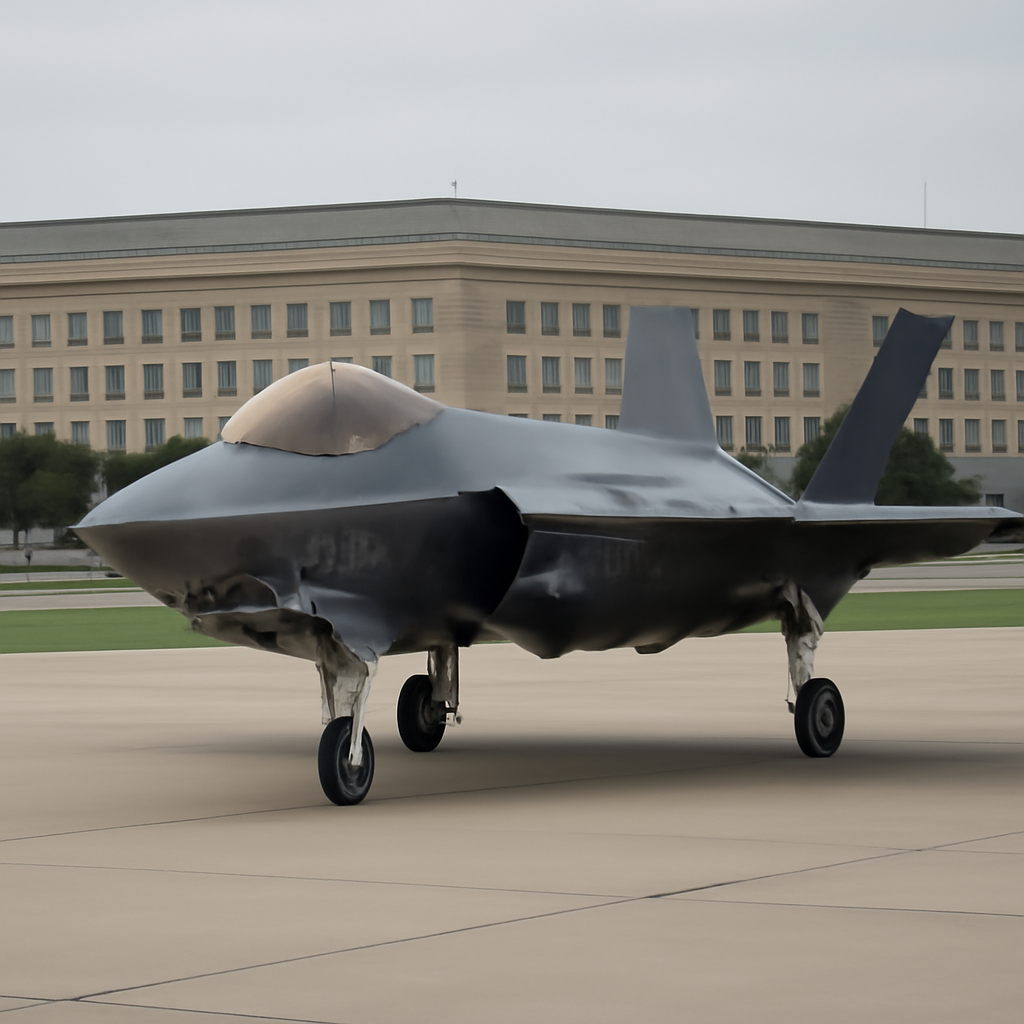
Pentagon Revises F-35 Lifecycle Costs Downward to $1.93 Trillion
The Pentagon just revised its estimate of the F-35's lifecycle costs down to $1.93 trillion, a significant drop from the previously reported $2 trillion price tag. This updated figure includes all development, procurement, operating, and sustainment costs over the jet's expected service life.

Pentagon Axes Civilian Protection Program, Faces Backlash
The Pentagon has axed its Civilian Protection Program, sparking widespread backlash, after Defense Secretary Pete Hegseth deemed its rules of engagement too restrictive. The move comes despite a 2025 poll of top commanders, who largely favored preserving the program in some form.
NSA's Non-Disclosure Pacts Omit Whistleblower Protections
The NSA's nondisclosure agreements are leaving employees in the dark about their whistleblower rights, with most failing to include crucial language that would inform them of their statutory protections. This oversight could silence employees who want to speak out about wrongdoing, undermining their ability to hold the agency accountable.

Lawmakers Probe Federal Government's Hacking of Americans
Senators are demanding answers about the federal government's secretive hacking practices, and they're calling on the Government Accountability Office to shine a light on the scope, frequency, and safety measures behind these operations. They want to know how often and how extensively the government is using hacking and spyware to investigate Americans.

Pentagon Resists Congressional Scrutiny on Golden Dome Missile Shield Costs
The Pentagon is stonewalling Congressional efforts to get a handle on the hefty price tag of the Golden Dome missile shield, with the Congressional Budget Office admitting they've been shut out from crucial briefings. It's a secrecy move that's fueling a growing public spat over the program's potentially eye-watering $1.2 trillion cost.