"That is not sufficient," Secretary of the Army Dan Driscoll told reporters today, describing long wait times for companies seeking to test interceptor missiles on U.S. ranges.
The goal: slash testing wait times and accelerate promising interceptors
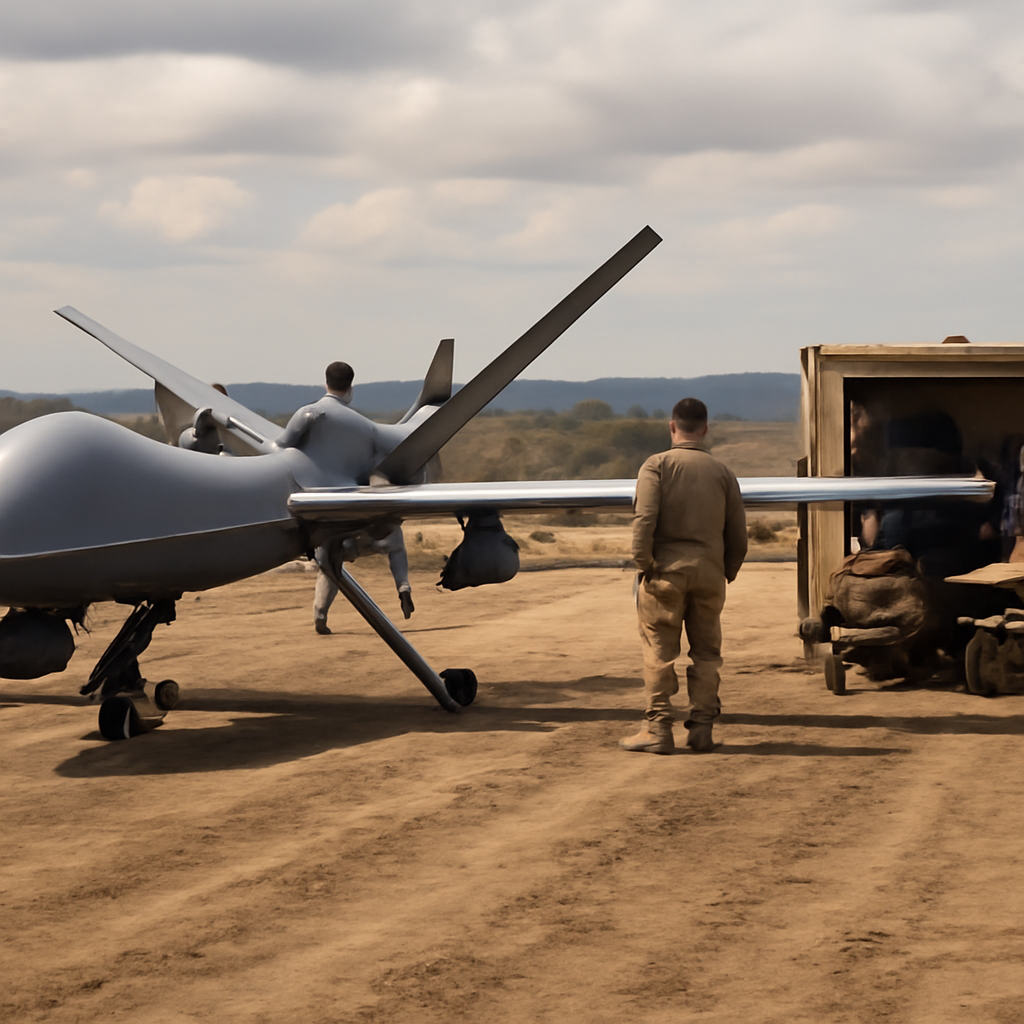
The Army announced a new effort to open four domestic ranges and one international range to private industry testing funded with companies' own internal research and development dollars (IRAD). Secretary Dan Driscoll framed the change as an effort to move far faster than current practice: defense firms, particularly smaller nontraditional vendors, can face wait times of up to 12 to 18 months for range access, the secretary said. The Army's target is to get companies onto ranges within 30 days of a submitted request via a newly launched website that will offer what Driscoll called "concierge access to every range."
Driscoll linked the shift to a broader push for speed and innovation, saying the Army wants to "break down every single barrier that we have put up over the last 20 or 30 years" and to emulate "innovation through necessity" observed in Ukraine. He repeatedly framed the move as focused on eliminating "pent up demand" for testing capacity and on enabling a rapid market response — what he described using startup language as an effort to "unleash escape velocity here."
Which ranges are open for IRAD-funded interceptor tests
Maj. Gen. Patrick Gaydon, commanding general of Army Test and Evaluation Command, identified the four domestic locations now available for IRAD testing: Camp Grayling in Michigan, Camp Shelby in Mississippi, Dugway Proving Ground in Utah, and West Cibola, described as an "unused part" of Yuma Proving Ground in Arizona. Gaydon said West Cibola is already being used at a small scale for IRAD work and that the new initiative expands that use.
The international range brought into the initiative is the Multidomain Training Area hosted in Morocco. Driscoll said that the Moroccan range is a component of a broader new Africa Multidomain Training and Experimentation Center, created via a memorandum of understanding signed last month between US Africa Command and the Moroccan Royal Armed Forces.
Driscoll also said he hopes to work with other allied nations to gain access to additional testing ranges and that the Army wants the program to grow "double, triple, quadruple" in the coming weeks and months — and to accommodate allied companies and nations alongside U.S. firms.

Audit-ready is a season. It shouldn't be.
Evidence in spreadsheets, controls drifting between audits, frameworks multiplying on flat headcount. Nubivance runs continuous compliance on Rapid7 Cyber GRC - SOC 2, HIPAA, ISO 27001, PCI, CMMC.
End the scrambleHow the testing program is structured for companies
The Army is clear about the program's financial boundaries: participating firms are expected to use IRAD money to develop and test their interceptor offers, and the Army does not plan to subsidize travel or other accommodations. Driscoll said the intent is not to help companies that "are not quite ready yet" or that have "a good idea but haven't quite gotten it to the place that it is ready to be tested." Instead, the initiative targets companies that already have development underway but face a range-access bottleneck.
The new web portal is intended to provide consolidated, expedited access to ranges. Beyond that, the Army has not promised acquisition money up front; the announcement centers on easing range access for self-funded tests with the hope that successful demonstrations will attract follow-on procurement.
How defense companies, Army test authorities, and allied partners are positioned
- Defense companies, particularly smaller nontraditional vendors: The initiative offers a practical path to schedule live tests on U.S. and allied ranges faster than the previous 12–18 month waits. Firms will need to fund tests with IRAD and cover travel and accommodation costs themselves.
- Army Test and Evaluation Command and acquisition leadership: The command, led by Maj. Gen. Patrick Gaydon, is opening range capacity and operating a website to provide "concierge access." The broader Army leadership, per Driscoll, is betting that faster demonstrations will surface candidates that can enter the acquisition pipeline sooner.
- Allied partners and host nations: Morocco's Multidomain Training Area is already in use under a recent memorandum of understanding involving US Africa Command and the Moroccan Royal Armed Forces. The Army signaled it wants to expand allied access to additional ranges in coming weeks and months.
Near-term milestones and remaining concrete markers
A private start-up, Covenant Industries, tested its Anthem missile at the Moroccan Multidomain Training Area this week, an event Driscoll cited as evidence the program can work. Covenant executive Abby Denburg told reporters the company is "preparing to begin delivering production-ready assets for our manufacturing line at the beginning of 2027 and put Anthem into the hands of the operators that need it." Neither Denburg nor Driscoll would say whether the Army is currently in contract negotiations with the California-based firm.
Concrete metrics to watch in the coming months — on the basis of the Army's own statements — include whether companies are routinely scheduled onto ranges within the 30-day target, whether additional domestic or allied ranges are added as Driscoll hopes, and whether IRAD-funded demonstrations translate into formal acquisition actions. For now, the Army has set a narrow operational experiment: open more range doors, require companies to fund tests themselves, and see if accelerated demonstration leads to faster procurement.