"If they don’t figure it out, there is no Golden Dome," Gen. Michael Guetlein told an audience at the Space and Missile Defense Symposium in Huntsville, Alabama, on Tuesday — a stark public appeal for money that the program’s leader says is now at risk because of a White House budgeting choice.
Gen. Michael Guetlein’s warning and the funding shortfall
Guetlein, the four-star Space Force officer leading the Golden Dome missile-defense effort, tied the program’s near-term survival to how Congress reacts to a specific White House decision: to seek roughly 97 percent of Golden Dome’s 2027 funding — about $17.5 billion — through reconciliation, a partisan budget maneuver. He said that creates a "tough budget environment" as lawmakers remain cool to the administration’s request for a third partisan-led defense-funding measure. The general’s public plea followed last year’s unusually strict Pentagon restriction on officials speaking about the program.
Progress reported: obligations, tests, and contracts
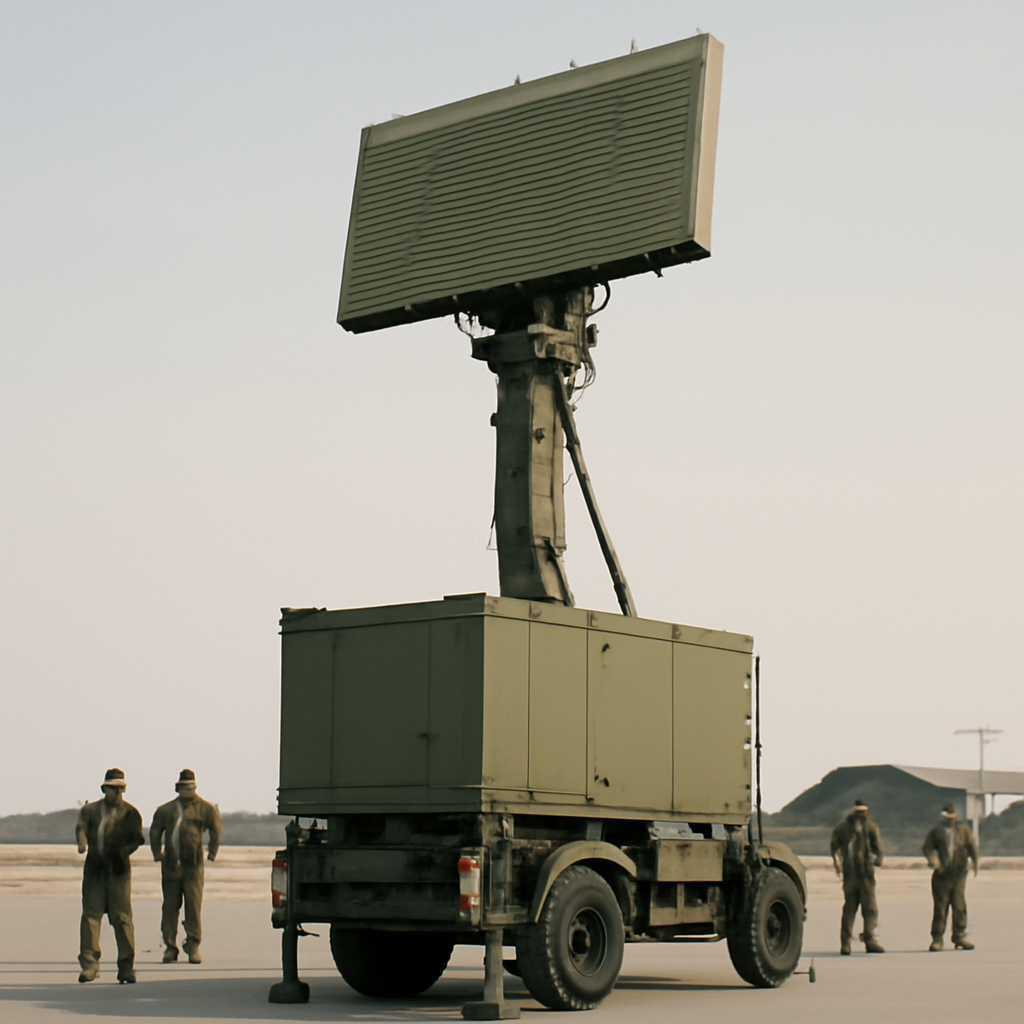
Guetlein said the program has already turned significant reconciliation dollars into concrete activity: about $24 billion was allocated through last year’s reconciliation effort, and roughly 90 percent of that money has been obligated. He also cited two "phenomenally successful" tests tied to Golden Dome and said contracts have been awarded for multiple key components, including space-based interceptors, radars, and data networks.

Audit-ready is a season. It shouldn't be.
Evidence in spreadsheets, controls drifting between audits, frameworks multiplying on flat headcount. Nubivance runs continuous compliance on Rapid7 Cyber GRC - SOC 2, HIPAA, ISO 27001, PCI, CMMC.
End the scrambleSpace-based boost‑phase interceptors and the cost problem
Not all parts of the envisioned architecture are moving forward without question. The program’s cornerstone capability — space-based boost-phase interceptors — faces an affordability and scale problem. Guetlein acknowledged the steep costs and quoted physicists who have said a boost-phase scheme would need "thousands or even tens of thousands of armed satellites to provide 24/7 defense against even a handful of incoming missiles." He told the House Armed Services Strategic Forces subcommittee in April that "if building and deploying satellites armed to down enemy missiles early in flight can’t be done affordably or at scale then 'we will not go into production.'"
Responses to outside cost estimates and industry progress
Analysts at the Congressional Budget Office fashioned a 20‑year estimate tied to an executive order described as "Iron Dome for America" and projected it would cost $1.2 trillion to "develop, deploy, and operate" a national missile defense system. Guetlein pushed back publicly, saying the analysts "did not estimate the architecture that we're building." On the industrial side, he told reporters he has not seen anything to change his mind on the fundamental affordability challenge but that he is "impressed" with how competing providers are progressing and expects some to move into the phase of building on-orbit capability. He declined to describe how Space Systems Command plans to test those interceptors.
Department of Defense contingencies and the Space Force’s role
Guetlein said the Defense Department is already discussing contingencies if the requested 2027 funding is not secured, but emphasized "we have not made any decisions on any pathway." He described "diversified execution" across capabilities and noted some systems are already requested by combatant commands. As an example of internal options, he pointed out that several Golden Dome capabilities are also being funded by the Space Force, and that the service could continue development on those elements even if the program’s centralized funding path falters.
What this means for Congress, the Space Force, and defense contractors
- Congress: Todd Harrison, a defense budget analyst at the American Enterprise Institute, said it is "not likely that Golden Dome would have to raid various service budgets" and predicted that "Congress would prioritize Golden Dome funding and find it another home, either through a supplemental bill, a smaller reconciliation package, or tuck it into a higher base budget."
- The Space Force: Guetlein indicated the service already funds some Golden Dome capabilities and could sustain work on those systems if the program’s reconciliation request falters.
- Defense contractors and providers: Companies competing to build space-based interceptors and related systems are "progressing exceptionally well," Guetlein said, and the next phase would involve building on-orbit capabilities — a step he expects some firms to reach even as affordability questions remain.
Golden Dome sits at an awkward junction: the program has tangible technical progress, obligated reconciliation dollars, and industry momentum, yet its future now hinges on whether Congress will move funding out of a politically fraught reconciliation vehicle or find another appropriation route. Guetlein’s blunt formulation — "If they don’t figure it out, there is no Golden Dome" — frames a simple but consequential choice for lawmakers and defense planners alike.