Tag: cyber warfare
142 articles

US NORTHCOM Expands Cyber Role in Golden Dome Defense
US Northern Command's task force is stepping up its game, taking on cyber warfare as a new mission to safeguard America's homeland with the Golden Dome Defense. This bold move brings together a team of experts from vendors, government agencies, and military stakeholders to shield Golden Dome capabilities from cyber threats.

US Exposed to Gaps in Cyberdefense Against China in Taiwan Scenario
The US is vulnerable to cyber defense gaps in the face of a potential Taiwan crisis with China, with a recent war game simulation revealing that federal agencies lack the budget and systematic process to effectively respond to such threats. This weakness could leave the country exposed to China's gray-zone strategy of cyberattacks and economic pressure.

AI Accelerates Cyber Attacks to Minutes, Microsoft Warns
Microsoft warns that AI is supercharging cyber attacks, condensing what once took days into mere minutes - putting defenders on the back foot and giving attackers a disturbing head start. This alarming acceleration is happening during the most critical phases of an attack, including credential discovery, lateral movement, and data exfiltration.

Cyber Threats Explosively Target Critical Infrastructure
In today's digital age, cyber threats have become a pressing national security concern, with adversaries able to bypass traditional borders and wreak havoc with just a few keystrokes. The lines between cybersecurity and strategic warfare have blurred, making it imperative to treat digital threats as a matter of national strategy.

US Cyber Arsenal Depleted Fast in Modern Conflict
The US cyber arsenal is being rapidly depleted in modern conflicts, leaving military leaders scrambling to regenerate and develop new capabilities. Vice Adm. Heidi Berg warns that high-value cyber effects can be consumed quickly, creating a strategic constraint that demands urgent attention.

US Military's Cyber Vulnerability Lies in Overlooked Infrastructure
Iranian hacking groups are using surprisingly simple yet effective tactics to wreak havoc on US critical infrastructure, businesses, and public services - and they don't need to be the most sophisticated players in the game to get results. By relying on volume, repeatability, and clear objectives, they're able to impose significant pain and disruption.

Defense Cyber Spending Poised to Double by 2031
Get ready for a surge in defense cyber spending - it's expected to nearly double from $14.99 billion in 2026 to a whopping $28.75 billion by 2031. This dramatic growth is driven by increasing threats, a reliance on connected tech, and a new focus on cyber warfare capabilities.

Cyber Warfare Targets Climate Weaknesses
In a plush Brussels hotel, a lone figure, Sgt. Tomec Majka, waited warily in a leather club chair, his mind still reeling from missions on three continents and a war that had left a trail of digital destruction. The dim glow of the Loui Bar offered a brief respite, but the shadows of cyber warfare lingered.

Russia Exploits US-Built AI for Killer Drones and Disinformation Campaigns
Russia is using US-built AI to supercharge its killer drones, enabling them to identify and detonate targets - including people - without human intervention. This alarming development is just one example of how bad actors are repurposing AI for lethal autonomy and disinformation campaigns.

Pentagon Cyber Strategy Shifts Focus to High-Impact Offensive Ops
The Pentagon's new cyber strategy is shifting gears, focusing on high-impact offensive operations that drive real results, not just defense for its own sake. It's about delivering big, muscular blows that produce tangible outcomes, according to Brig. Gen. William Wilburn, the Department of Defense's deputy principal cyber advisor.

USAF Targets Software Superiority Through Collaborative Innovation
The Department of the Air Force has redefined what it means to be ahead of the game: it's no longer just about having the best weapon systems, but also about having software superiority to outmaneuver and outsmart adversaries across air, land, cyber, and information domains.

Leaked Materials Expose Russia's Cyber-Operations Training Pipeline
Newly leaked training records reveal a shocking look into Russia's cyber-operations training pipeline, exposing a sophisticated system that churns out skilled operatives through a university-linked program called Department No. 4. This formal force-generation apparatus combines technical and ideological training to feed Russia's cyber and intelligence agencies.

US Special Ops Commanders Warn of Asymmetric War Shift
The US advantage in conventional forces is pushing adversaries to wage war in new, unpredictable ways - below the threshold of direct confrontation, using tactics like proxies, cyber attacks, and economic coercion. This shift to asymmetric warfare demands a fresh approach to defense, warns Army Brig. Gen. Michael Rose.

US Army Cyber Command Forges Integrated Cyber Warfare Capability
The US Army Cyber Command's Joint Integrated Fire Cell proved to be a game-changer, seamlessly integrating Joint Force Headquarters with Army Cyber to tackle complex cyber challenges with unprecedented speed and agility. By synchronizing cyber effects in real-time, the team achieved a major milestone in coordinated cyber warfare.

US Army Cyber Command Trains AI Agents for High-Speed Cyber Operations
Meet the US Army's secret cyber squad: Task Force Lexington is leading the charge in AI-powered cyber operations, training specialized agents to tackle high-speed missions. These agents are being molded to fill specific roles, revolutionizing the way the Army tackles cyber threats.

Autonomous AI Attacks Target Critical Infrastructure
The threat of autonomous AI attacks on critical infrastructure is no longer a distant possibility, but a looming reality that could unleash devastating kinetic disasters, warns Tom Kellermann, VP of AI security and threat research at TrendAI. The perfect storm of rising geopolitical tension and increasingly powerful off-the-shelf AI agents makes a crippling attack on our infrastructure not just plausible, but imminent.

US Authorizes Private Cyber Firms to Strike Foreign Targets
The US has just given private cyber firms the green light to take bold action against foreign adversaries, allowing them to manipulate, degrade, disrupt, and even destroy malicious computer networks. This game-changing move marks a new era in cybersecurity, where private companies can play a key role in defending the nation's digital interests.

US Authorizes Private Sector in Offensive Cyber Strikes
The White House is taking a bold stance against transnational cyber threats, authorizing the private sector to join forces with federal law enforcement on offensive cyber strikes to disrupt foreign cyber actors targeting the US. This new public-private program unlocks every available tool to protect Americans from cyber-enabled crime.

AI Enables Faster, Cheaper Cyber-Attacks
Cyber attacks just got a whole lot faster, cheaper, and sneakier thanks to AI, which is now a key player in the cybercrime world, enabling attackers to launch more sophisticated and elusive threats. ReliaQuest reports that AI is revolutionizing the attack workflow, making it easier for attackers to scale, customize, and slip past traditional defenses.

US Eyes Civilian Hackers to Bolster Cyber Operations
The US is considering a game-changing move: enlisting civilian hackers to help breach foreign computer systems, with a pilot program proposed in the Senate Armed Services Committee's defense policy bill. This bold plan would bring private sector expertise under the operational control of US Cyber Command.

Hacktivism Surges as Geopolitical Crises Expose Cybersecurity Gaps
Hacktivist attacks have skyrocketed amid rising geopolitical tensions, with over 149 incidents reported in just three days - a stark reminder of the growing cybersecurity gaps. This alarming surge is part of a larger trend that began in February 2022, with hacktivist groups increasingly targeting critical infrastructure during times of conflict.

US Army Exposes Vulnerabilities in Large-Scale Electromagnetic Warfare Exercise
In a recent large-scale electromagnetic warfare exercise, US Army soldiers found themselves in a high-stakes predicament: their radios and networks had stopped working, leaving them uncertain whether the cause was a technical glitch or a clever enemy move. As they scrambled to find a solution, the opposing force gained the upper hand, exploiting the unit's vulnerability to interference.
US Cyber Command Launches Cyber Innovation Warfare Center
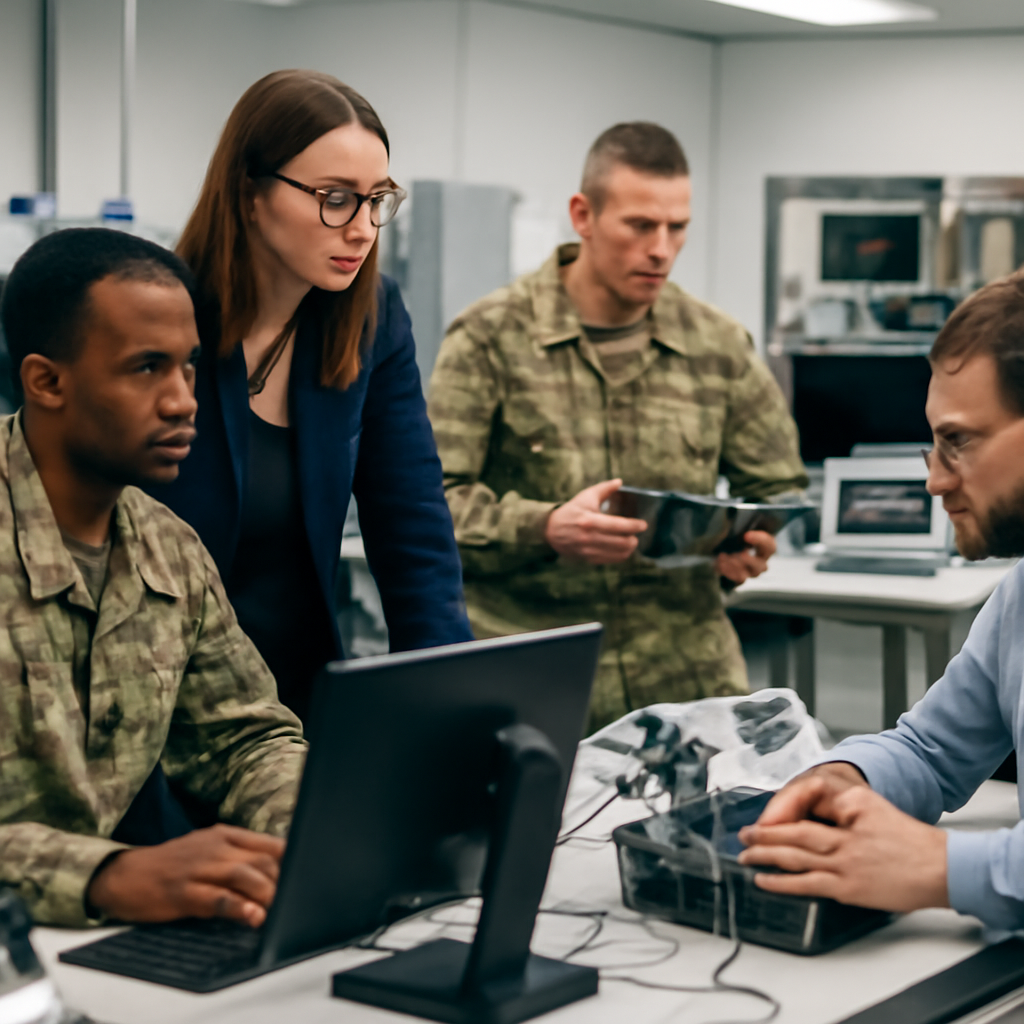
The US Cyber Command is shaking things up with its new Cyber Innovation Warfare Center, a game-changing proving ground where operators and industry experts join forces to test cutting-edge tech against real-world threats. This innovative hub will fast-track promising prototypes from the "valley of death" to operational use, driving progress at a time when time is of the essence.
Pakistan Builds Unified Commands for Multi-Domain Operations
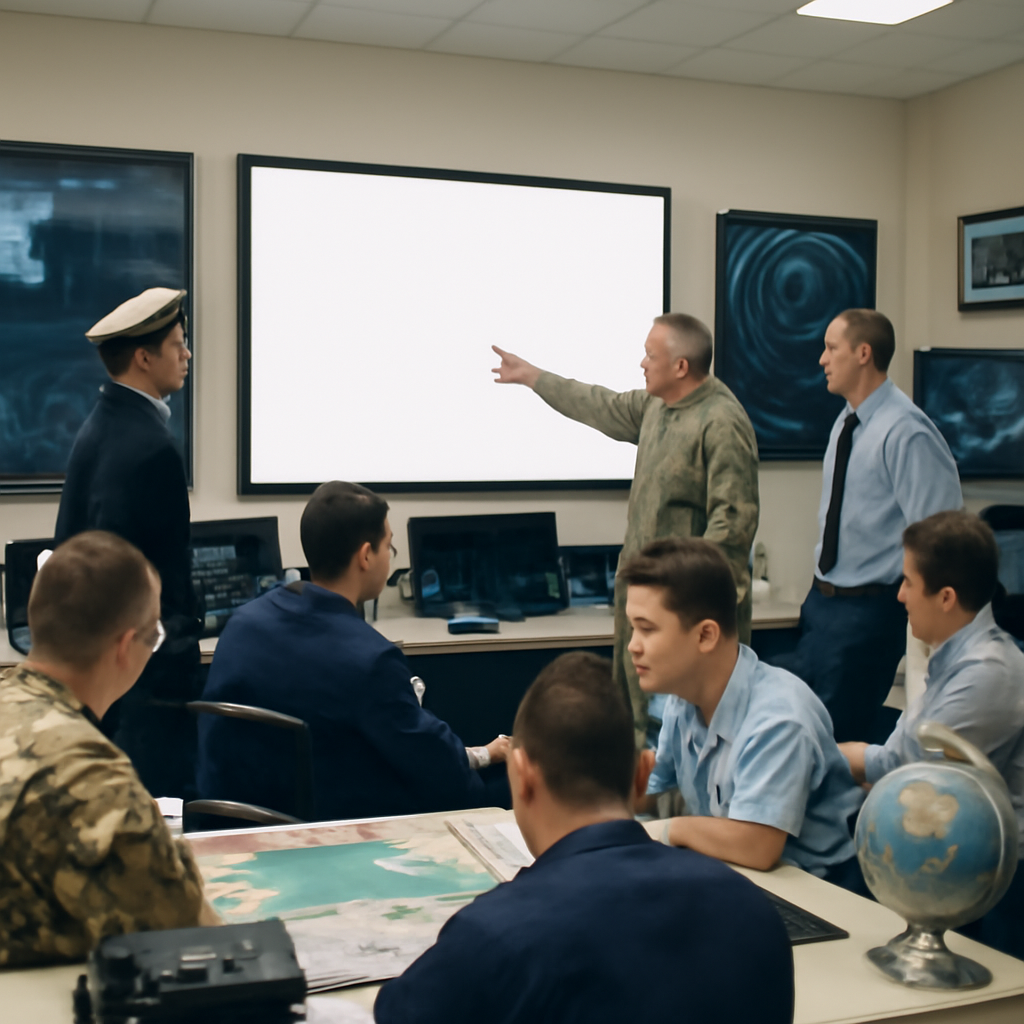
Pakistan is taking a giant leap in modern warfare with its unified commands for multi-domain operations, enabling seamless integration of cyber, electronic, and space-based capabilities to outmaneuver threats. By breaking down inter-service barriers, Pakistan's military can now synchronize its strengths to deliver devastating cross-domain effects.