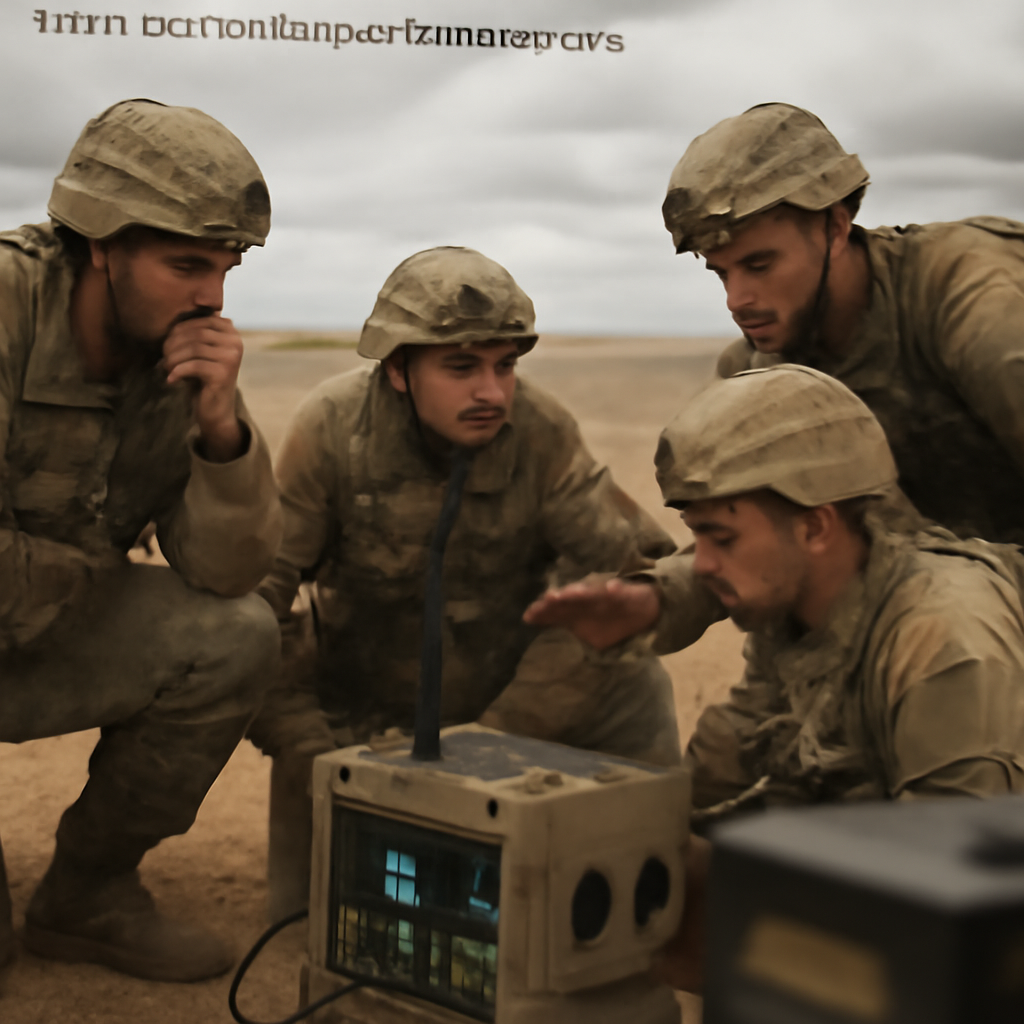
Surrounded by empty desert, a group of Army soldiers was debating a dangerous choice: their radios and networks weren’t working, but they weren’t sure whether the cause was a technical fault or enemy action. As they fumbled for workarounds, the opposing force quietly cheered — the unit was being partially jammed, not knocked out, and had been baited into troubleshooting rather than sensing and countering the interference.
At Piñon Canyon: Ivy Mass and an NGC2 prototype under strain
Ivy Mass, held for several weeks in May at Piñon Canyon Maneuver Site, was the latest event to scale a prototype of the Army’s Next Generation Command and Control (NGC2) initiative to a full division. The exercise combined cyber, space, GPS-replication, and electronic-warfare (EW) effects against a maneuvering network architecture — “the first time the Army threw combined jamming, space, GPS and cyber threats against the network architecture as it was being maneuvered by units,” according to the reporting.
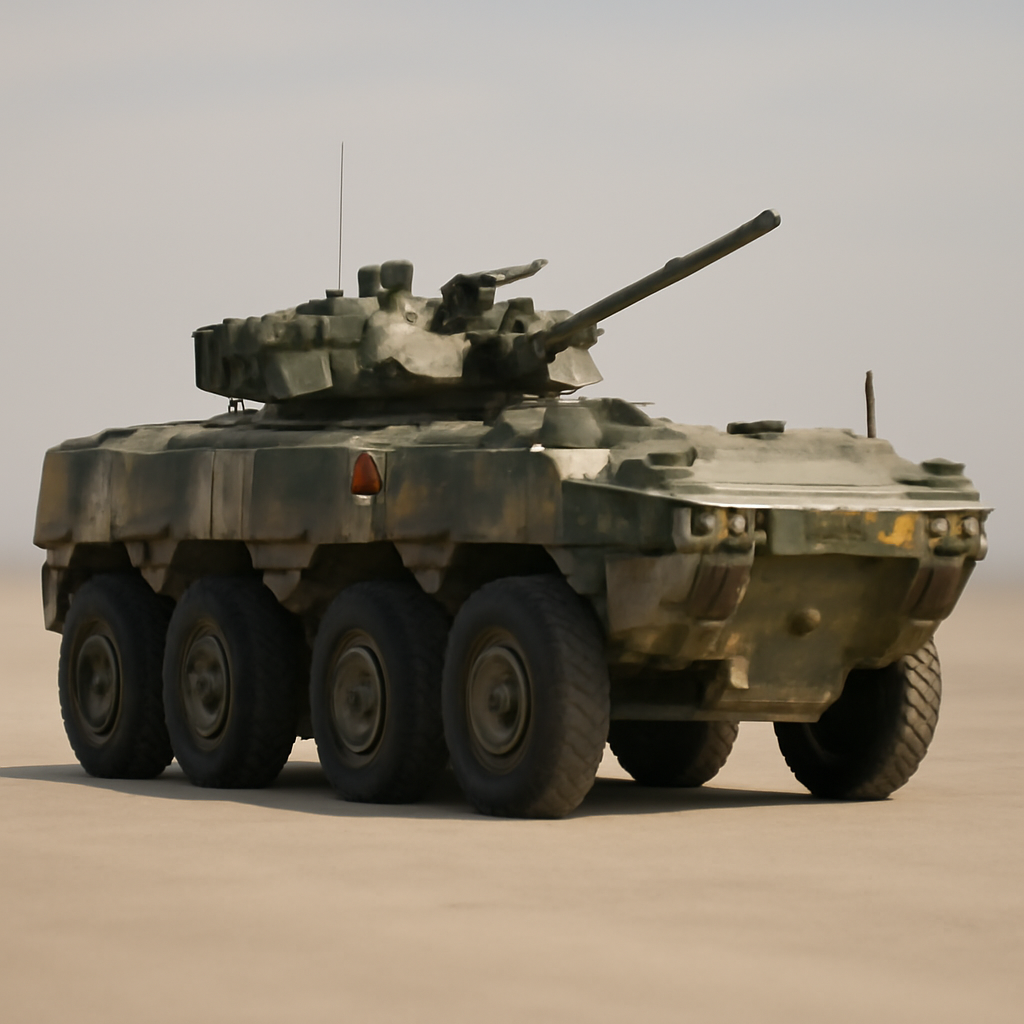
The event brought 11 cyber red teams, space capabilities that replicate contested GPS effects (real GPS jamming could not be employed due to domestic restrictions), and roughly a dozen high-powered jammers, including man‑packable modified commercial systems and the trailer-based MAMBA-E. Troy Bedsole, multidomain operations team lead at the Threat Systems Management Office, said MAMBA-E was based on “the latest pacing threat that we find in intelligence.” The Army declined to say what MAMBA is an acronym for.
Degradation over blackout: the tactical lesson from the red cell
A central finding was counterintuitive: partial degradation can be more damaging than a complete outage. Lt. Col. John Brasher, who commanded the opposing-force red cell, described success when jammers created doubt rather than certainty. “That’s actually more helpful than just shutting it down, because like any system, the brigade is going to find workarounds the longer it is,” Brasher said. If soldiers believe a failure is an equipment problem, they tend to troubleshoot instead of activating sensing equipment and countermeasures.
Brasher said the red cell randomized jamming to de-synchronize blue-force operations and sow confusion. The Army is already pursuing software mitigations inside NGC2: “Algorithms being developed as part of NGC2 will be able to better sense patterns in the network and tip users off if systems are merely down, or being disrupted by jamming techniques such as just denial,” the reporting notes.

The cyber insurance questionnaire just landed. Now what?
SOC 2, HIPAA, insurance renewals - someone has to own security strategy. Nubivance provides fractional CISO leadership without the full-time salary.
Get a security lead'Uncomfortably dispersed': pushing distance to blunt detection
Dispersion emerged as a technique but with a new caveat: units may need to be farther apart than previously assumed. “We called it ‘uncomfortably dispersed.’ If you are uneasy about how dispersed you are, you’re probably about right,” Brasher said. The tactic aimed to confuse enemy sensors and unmanned systems both spectrally and visually.
Commanders pushed nodes that handled the most frequent voice and data traffic farther back to keep command posts out of enemy detection range. Maj. Gen. Patrick Ellis, commander of the 4th Infantry Division, said NGC2 enabled this approach: “With the new technology, [what] that allows us to do is, we are completely disaggregated. I think the sky’s the limit. I think we’re just learning how far we can actually disaggregate this.”
Equipment gaps, man‑pack jammers, and the push for home‑station repetition
Organizers emphasized that the exercise should not be a one-off. “We want to ensure this is repeatable, so this is not a one-and-done. This has to be something that we can do and do at home station,” Brig. Gen. Michael Kalootian, director of the Command and Control Future Capability Directorate, told Breaking Defense. Many red-cell EW systems used at Ivy Mass were modified commercial-off-the-shelf or lab-developed capabilities and included smaller, man‑packable systems that can be fielded more broadly.
That practicality matters because some program-of-record systems still leave gaps. Warrant Officer 1 Jacob Wiley, an EW technician, said of the Terrestrial Layer Manpack (TLS) system: “TLS Manpack, there are some certain jamming they’ve been doing that we haven’t been able to fully assess because just the lack of capability on our part. ... Going up to certain frequencies [with Manpack] has been making it difficult for us to assess that outside of having a division level asset.”
Leaders expect both technological fixes and tactical adaptations. “We’re not going to tech our way out of this problem. We also have some tactics we need to adapt,” Ellis said, and Kalootian added: “I think we need more reps on this as an Army to figure that out.”
What this means for the 4th Infantry Division, the red cell, and Army acquisition
- 4th Infantry Division: learned to operate disaggregated, push critical nodes farther back, and route effects and mitigation requests up to division staff under degraded conditions.
- Red cell (OPFOR): grew operational experience with EW techniques and plans to refine randomization and sensing techniques ahead of Project Convergence, though Brasher acknowledged his team was “only moderately more experienced than the blue forces.”
- Army acquisition and training planners: will use Project Convergence in July as a final check before making acquisition decisions and beginning fielding to I Corps with a Pacific focus; they are also exploring cheaper, repeatable man‑pack solutions that can be used at home station.
Conclusion: Project Convergence will be the next proving ground
Ivy Mass stretched a division-sized force across the electromagnetic spectrum and surfaced a stark lesson: sowing doubt through partial denial can be more pernicious than total blackouts, and tactics — dispersion, sensing, and rapid assessment — matter as much as hardware. The service plans to test the NGC2 architecture again at Project Convergence in July, after which leaders intend to make acquisition decisions and begin fielding to I Corps, with a focus on the Pacific. For now, the Army is left to translate large-scale red-cell lessons into repeatable home‑station training, clearer TTPs, and acquisition choices that balance exquisite systems with broadly fieldable man‑pack capabilities.