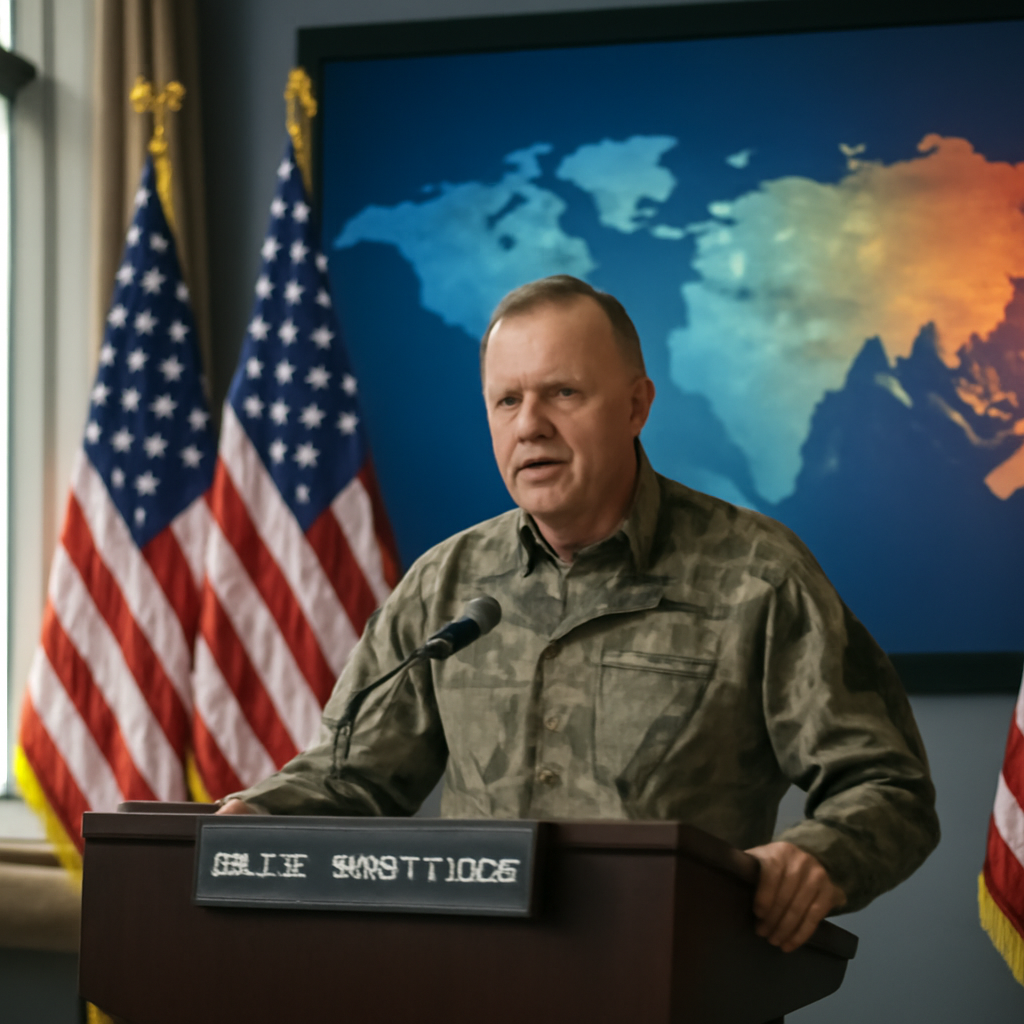
"We often hear about offense versus defense … but defense in itself is not the outcome; it’s not the goal. It is to allow us to go on offense with something big, something muscular, and something that will drive the outcomes. Our strategy attempts to do that," Brig. Gen. William Wilburn told the Billington Cybersecurity Summit, laying out the Pentagon's intent for a new chapter in U.S. military cyber operations.
Brig. Gen. William Wilburn on offense and outcomes
Wilburn, who serves as the Department of Defense's deputy principal cyber advisor, framed the forthcoming Pentagon cyber strategy not as a document about posture but as a mechanism to produce "big outcomes" for the defense secretary and President Donald Trump. That language reframes cyber activity away from pure protection toward enabling offensive options that senior leaders could employ in crisis or conflict.
He emphasized that daily defensive work remains necessary but insufficient on its own. "The takeaway is, it’s about driving big outcomes and giving the secretary and the president options, more options," Wilburn said. The stated aim is to move beyond what he described as routine contestation and toward actions that have "higher impact."
Moving away from "persistent engagement" toward higher-impact options
Wilburn explicitly contrasted the new approach with "persistent engagement," an operating concept within U.S. Cyber Command that calls for constant contestation of adversary activity and "defending forward." While acknowledging that daily engagement "would still be necessary," he signaled a shift in attitude and intent toward what he called "confrontation" and more aggressive measures.
He did not describe operational details but characterized the change as one in which cyber operations will be employed to deliver outcomes "in a way that we haven’t seen done before." That language places emphasis on measurable effects rather than continuous low-level activity.

This site is the portfolio.
OSINTSights runs on Cloudflare Workers, D1, R2, and Vectorize, with an AI pipeline on Hetzner ARM. Nubivance designed, built, and operates it. We do the same for clients.
See what we buildIntegration with kinetic operations: named recent actions
The Pentagon's shift comes amid officials' efforts to highlight cyber's role alongside traditional military activity. Wilburn and other officials pointed to recent operations during the Trump administration, naming Operation Midnight Hammer, Operation Absolute Resolve and Operation Epic Fury as examples where cyber was integrated with kinetic efforts.
Those references serve as precedent in the department's argument for a posture that can produce strategic effects—not merely deny or mitigate threats but shape the operational environment to support national objectives.
The national cyber strategy and private-sector involvement
The Pentagon's forthcoming plan follows the national cyber strategy released in March, which pushed for a more proactive and offensive posture in cyberspace aligned with sentiments from the current administration. Wilburn said the upcoming DoD strategy will be the first since the Biden administration issued its own in 2023, suggesting an institutional reorientation.
Reporting on a draft of the Pentagon plan noted interest in private-sector participation in offensive activity: Politico reported that a draft showed a desire for private companies to engage in hacking activities. Wilburn and Pentagon officials have framed the new strategy to include not only doctrine and intent but also an action plan intended to translate those aims into realized operations.
What this means for the secretary and the president, private companies, and CYBERCOM
- The secretary and the president: Wilburn described the strategy as a tool to provide "options, more options," giving senior leaders a broader menu of cyber actions to employ in crises or conflict.
- Private companies: A reported draft showed the Pentagon's appetite for private-sector participation in offensive activity, indicating that the role of industry could expand beyond defense and resilience to include active cyber measures.
- CYBERCOM and daily operators: The department signals a dual demand—continue daily contesting and defending forward, but prepare to scale or shift toward "higher impact options" and an attitude of "confrontation" when required.
Wilburn also stressed the need to avoid plans that "sit on the shelf," saying the forthcoming strategy will include an action plan "to ensure those outcomes come to fruition instead of 'sit[ting] on the shelf,'" a pointed acknowledgement that strategy must be executable to matter.
The immediate contours of those higher-impact options remain unspecified in Wilburn's public remarks: he offered intent and framing rather than operational detail. What is clear from his comments is a doctrinal pivot inside the Pentagon—one that treats defense as enabling, rather than endpoint, and that elevates offensive cyber tools to produce demonstrable effects for senior civilian and military leaders.