"What I think the JIFC did for me was more seamlessly integrate Joint Force Headquarters [JFHQ] to Army Cyber, so that the Joint Force Headquarters through the JIFC could leverage the capacity of the Army Cyber headquarters to get after things they needed help with," Lt. Gen. Christopher Eubank said in an interview at TechNet Augusta.
How the Joint Integrated Fire Cell functioned in Epic Fury
Army Cyber Command (ARCYBER) stood up a Joint Integrated Fire Cell (JIFC) for Operation Epic Fury, modeling the construct on a similar mechanism used in the run-up to Operation Absolute Resolve in Venezuela, Eubank said. The JIFC operated as a central hub that coordinated cyber effects "at the timing and tempo of the commander," a construct Vice Adm. Heidi Berg described as "instrumental" during the Venezuela raid to capture Venezuelan leader Nicolás Maduro.
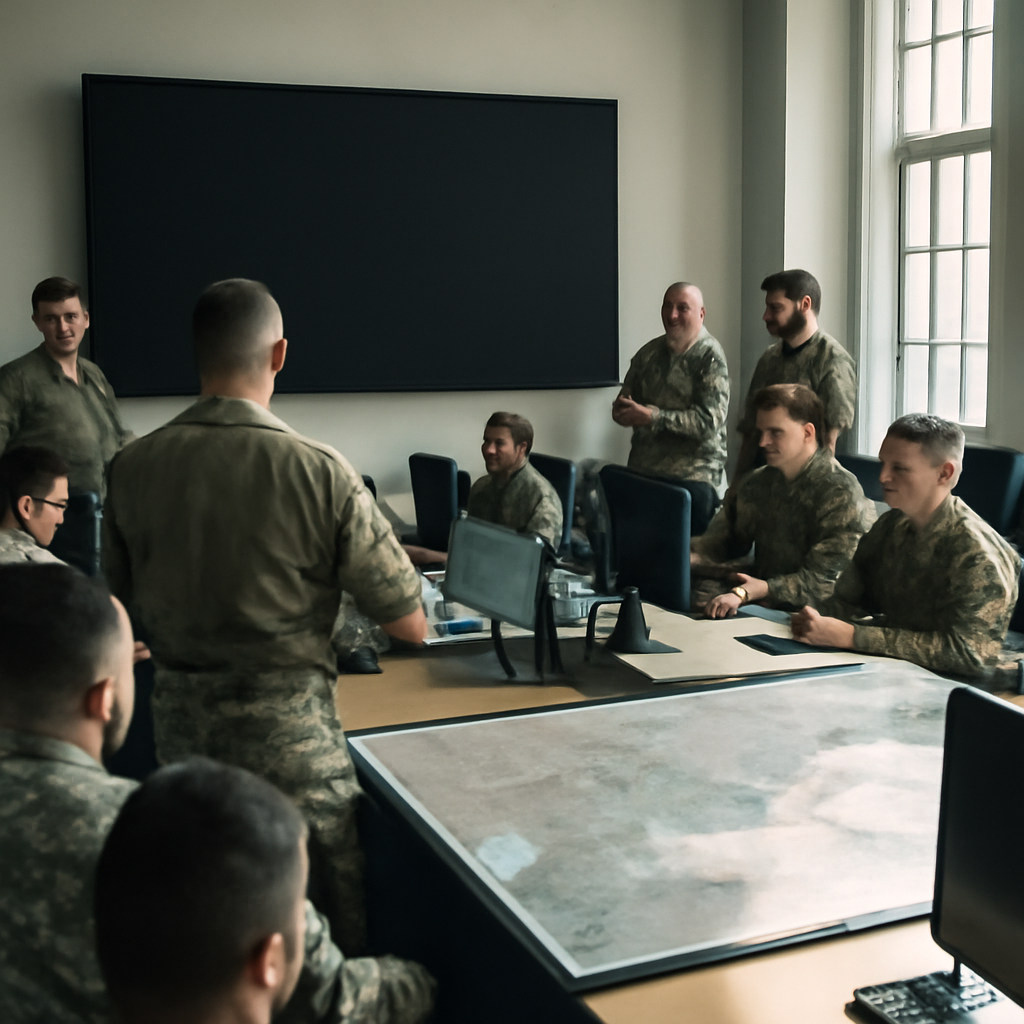
The cell is compared to a cyber version of a combined air operations center: a place where planning, targeting, intelligence, synchronization, and command-and-control can converge to deliver cyber effects in support of a joint mission. ARCYBER studied Fleet Cyber Command’s earlier JIFC, made adjustments, and replicated the construct for Epic Fury, according to Eubank.
Why Joint Force Headquarters benefited
Eubank framed the JIFC as a bridge between JFHQ and ARCYBER’s capacity. He said the cell allowed the Joint Force Headquarters, through the JIFC, to "surge intel support" and continue operations outside the immediate mission set. In Eubank’s words, when a deputy at the JFHQ requested "intel support," ARCYBER could channel that support into the JIFC so the JFHQ could sustain other work while the JIFC handled cyber-specific tasks.
That model aligns with the organizational setup in which each service’s cyber component commander also leads a Joint Force Headquarters–Cyber (JFHQ-Cyber), the US Cyber Command component charged with conducting cyber operations on behalf of combatant commands.

Audit-ready is a season. It shouldn't be.
Evidence in spreadsheets, controls drifting between audits, frameworks multiplying on flat headcount. Nubivance runs continuous compliance on Rapid7 Cyber GRC - SOC 2, HIPAA, ISO 27001, PCI, CMMC.
End the scrambleVenezuela precedent and acknowledged effects
Fleet Cyber Command established the original JIFC for the Venezuela operation; ARCYBER borrowed and adapted that construct for Epic Fury, according to Eubank. Officials acknowledged in public reporting that cyber and non-kinetic effects were used in Venezuela. The New York Times reported US cyber operations there "turned out the lights in Venezuela, interfered with air defense radars and disrupted hand-held radios," a set of effects that officials publicly associated with that mission.
Organizational changes inside ARCYBER: TOE, brigades, and teams
Eubank said ARCYBER is reorganizing to "operate more like a corps structure" to better support Army units. The command is transitioning from table of distribution allowances (TDA) to table of organization and equipment (TOE), a shift Eubank described as putting the headquarters into a main command post and contingency command post formation "just like a corps." That arrangement, he said, will include brigades, battalions and a "team-like structure" beneath them, with company, battalion and brigade commanders in place.
The change will expand capacity modestly: ARCYBER is moving from 20 to 22 cyber protection teams, and Eubank said running real-world missions has helped teams "hone their skills" over the past five months.
How offensive cyber and authorities have evolved
Brandon Pugh, principal cyber advisor for the Army, said senior leaders are now more candid about offensive cyber effects because the capabilities have proven useful. "Historically we’ve kind of shied away from that topic," Pugh said, adding that operations "are not just an isolated and siloed capability that only rests in Georgia or in Maryland." The source notes that restrictive legal authorities limited cyber operations for years, but since 2018 new authorities from the executive and Congress have permitted cyber forces to operate more freely.
What this means for Joint Force Headquarters, Army corps, and cyber teams
- Joint Force Headquarters: Can use the JIFC as a surge mechanism to obtain focused intelligence and cyber support while maintaining other operational responsibilities, according to Eubank’s description of the cell’s role.
- Army corps and component commands: Will receive a more standardized, TOE-based ARCYBER support model intended to align command-post formations and provide a corps-like construct for warfighting and contingency operations.
- Cyber teams and commanders: Face a transition toward standardized brigade/battalion/team organizations, a small increase in cyber protection teams (20 to 22), and more opportunities to refine skills in live mission environments, Eubank said.
The creation and replication of JIFCs for two named operations — Venezuela’s Operation Absolute Resolve and Epic Fury — suggests the cell model is moving from ad hoc experiment toward an operational tool inside the joint cyber playbook. How the TOE-based reorganization and the JIFC construct will function together in the next major operation, and how JIFCs will be resourced across combatant commands, are concrete implementation questions the current facts leave open.
Source: Breaking Defense — "Army Cyber created an ‘integrated fire’ cell for Epic Fury"