“For too long, prototypes developed by industry have withered in the so-called valley of death, failing to transition to operational use. We do not have the luxury of time anymore to let good technology sit on the shelf,” Katie Sutton, Assistant Secretary of Defense for Cyber Policy, said at the TechNet Cyber conference.
Katie Sutton on the Cyber Warfare Innovation Center
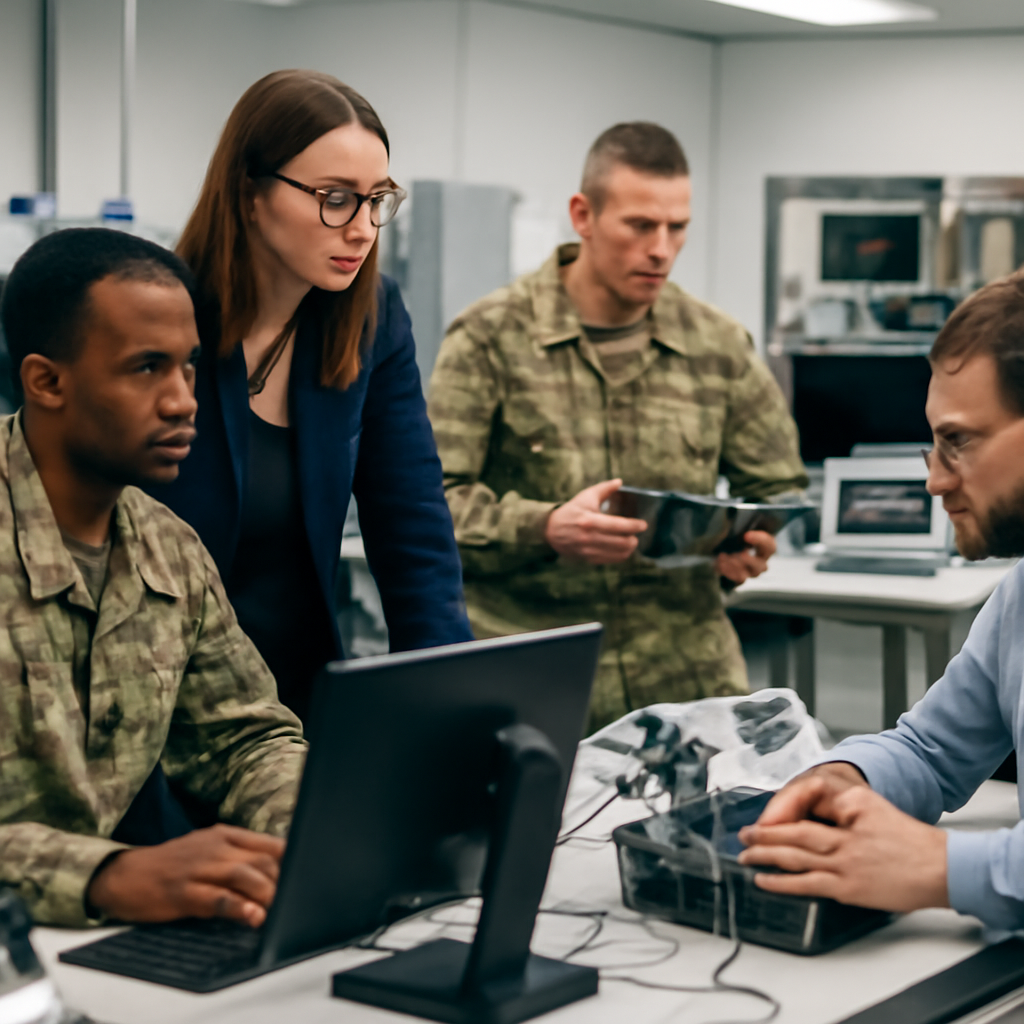
Sutton described the Cyber Warfare Innovation Center, or the CWIC, as a proving ground that will place operators and industry side by side to test new concepts against realistic threats and operational scenarios. She said the CWIC “will bring our warfighters and industry developers into the same room to build and iterate together based on the real-world operator feedback,” arguing that direct collaboration will help ensure “our best innovations actually make it to the fight and onto the cyber battlefield.”
CWIC's place in CYBERCOM 2.0
The CWIC is one of three enabling organizations under the CYBERCOM 2.0 plan intended to improve how cyber forces are generated from the services to the command. Sutton named the other two organizations as a Cyber Talent Management Organization and an Advanced Cyber Training and Education Center. She said the CWIC’s role is to feed tactics and requirements into the acquisition pipeline known as the CYBERCOM J9 so those capabilities can be built and fielded.

Audit-ready is a season. It shouldn't be.
Evidence in spreadsheets, controls drifting between audits, frameworks multiplying on flat headcount. Nubivance runs continuous compliance on Rapid7 Cyber GRC - SOC 2, HIPAA, ISO 27001, PCI, CMMC.
End the scrambleOperational role and limits: Brig. Gen. Reid Novotny
Brig. Gen. Reid Novotny, Cyber Force Generation Lead at CYBERCOM, framed the CWIC as a concept rather than a program office. He told Breaking Defense that because the CWIC “won’t necessarily have the wherewithal to develop the capabilities,” its purpose will be to feed prototypes, tactics and requirements to the J9 rather than to act as a program office that fields systems itself. That division of labor is central to the CWIC design: rapid prototyping and operational testing in close collaboration, followed by transfer to the designated acquisition channel for production and fielding.
CMSgt Bryan Neumann on closing the feedback loop
CMSgt Bryan Neumann, who most recently was the Senior Enlisted Advisor to the Office of the Assistant Secretary of Defense for Cyber Policy, said the center is intended to “increase that partnership or bring those critical aspects much closer together, as close as possible, so that the innovation from the private sector directly impacts our war fighting capability as soon as possible.” Officials emphasized a faster feedback loop from operators to developers as a primary goal.
What this means for warfighters, industry developers, and the CYBERCOM J9 acquisition pipeline
- Warfighters: The CWIC model puts operators in direct contact with developers so tools are tested “against realistic threats and operational scenarios” and operator feedback shapes iteration, tactics and potential changes to TTPs and doctrine.
- Industry developers: Sutton said the CWIC will provide “the ability to quickly interface with industry and do those prototypes and pilots to what’s going to be most operationally relevant,” reducing the risk that prototypes “wither in the valley of death.”
- CYBERCOM J9 and acquisition: The CWIC will channel proven concepts, tactics and requirements to the J9, which is charged with building and fielding capabilities — a handoff necessary because the CWIC itself is not a program office and “won’t necessarily have the wherewithal to develop the capabilities.”
Sutton also warned that tools have non‑materiel consequences: “A tool is not just going to make us do a task better, it may change how we fight, it may change what our TTPs are, what our doctrine is. We’ll have to identify what training we would need to support that tool. What kind of data? Are we going to need policy changes?” That observation frames the CWIC’s remit beyond hardware and software to include training, data needs and possible policy work required to operationalize new capabilities.
Sutton declined to offer exact specifics on how CWIC will stand up, saying it “is not starting from scratch” and that the department is attempting “to refocus, scale and grow” elements of the concept that are already operational. The practical measure of success will therefore be how quickly those operational elements produce actionable tactics and requirements for the J9, and how fast the J9 can move from prototypes and pilots to fielded systems that change operational practice.