"Port Alpha is planned to be the largest shipyard in the Western Hemisphere," Saronic co‑founder and chief commercial officer Rob Lehman said, summing up the company's ambitious plan to pour private capital into U.S. shipbuilding capacity.
Saronic’s Port Alpha plan and investment
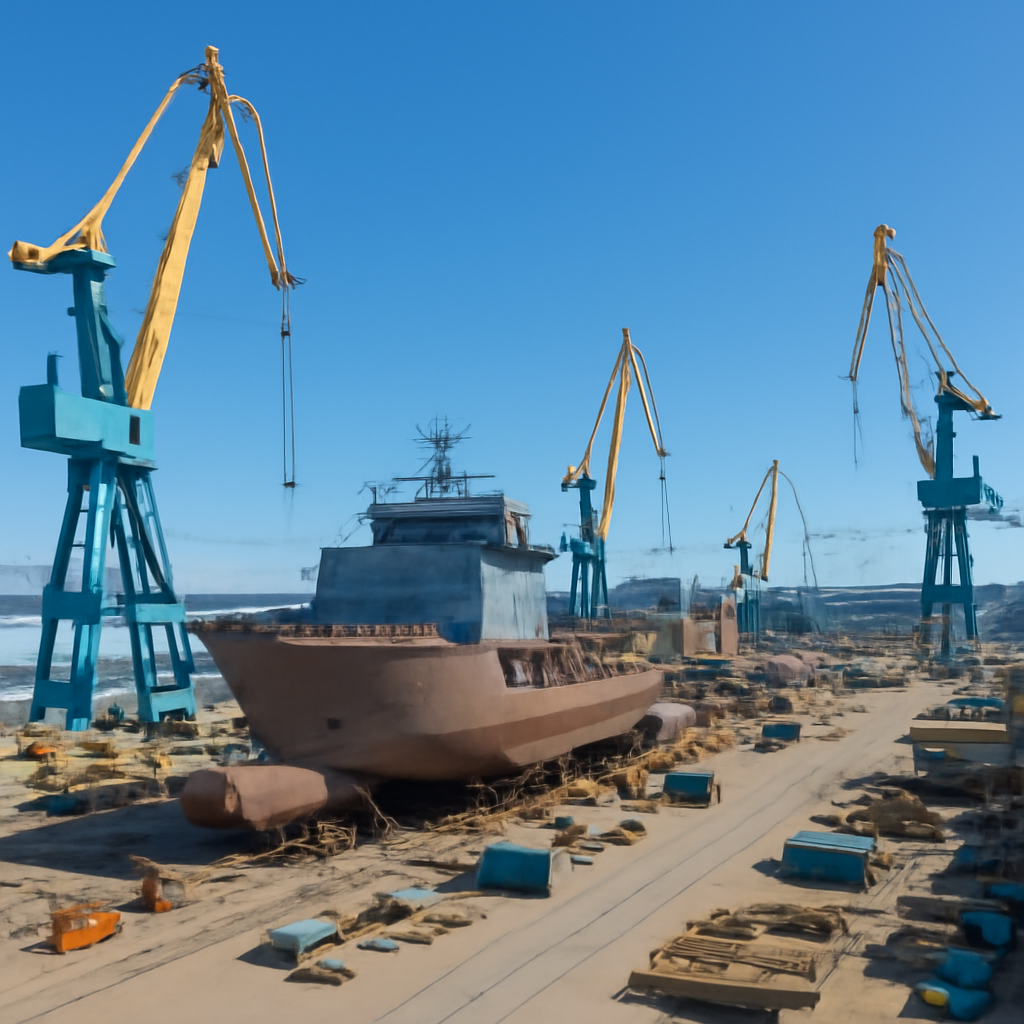
Saronic, an Austin, Texas‑headquartered maker of uncrewed surface vessels (USVs), announced it will invest more than $3 billion of its own money to build a new greenfield shipyard it calls Port Alpha at the Port of Brownsville, Texas. The company said the initial site covers 835 acres with the opportunity to expand to nearly 4,400 acres, and that the yard will be capable of producing vessels up to 850 feet long, with future expansion potentially supporting production of vessels over 1,200 feet.
Site selection: Brownsville, waterfront access, and logistics
Saronic said Brownsville was chosen after a year‑long search "after a rigorous review of workforce availability, infrastructure readiness, land scale, logistics, and expansion potential." The company described the site as providing "hundreds of acres of waterfront access, deepwater channel connectivity, multimodal logistics infrastructure, and room for long‑term expansion—everything required to anchor a next‑generation shipbuilding hub." Construction is anticipated to begin in 2026, with operations expected to open in 2028, according to the company's release.

The cyber insurance questionnaire just landed. Now what?
SOC 2, HIPAA, insurance renewals - someone has to own security strategy. Nubivance provides fractional CISO leadership without the full-time salary.
Get a security leadSaronic’s existing USVs and recent operational use
Currently, Saronic produces three USV models. Corsair is a 24‑foot vessel capable of carrying up to 1,000 lbs over 1,000 nautical miles. Mirage is a 52‑foot USV with a 2,500 NM range and 3,500 lbs of payload capacity. Marauder, the company’s largest current craft, is a 180‑foot USV with a 5,200 NM range and capacity for up to 150 metric tons in modular payloads (four 40‑foot containers or eight 20‑foot containers, the company said).
The company’s platforms have seen operational use: U.S. Central Command (CENTCOM) announced that on July 13, 2026 three Corsair unmanned surface vessels struck a submarine and ship maintenance facility at Bandar Abbas Naval Base, which CENTCOM described as marking "the first time American forces have employed sea drones as kamikaze attack weapons." Separately, the company said a Corsair USV last month rescued the crew of a U.S. Army AH‑64 Apache that crashed in the Gulf of Oman after it was downed by Iran — the company described that as the first known instance of a drone boat being used to recover personnel in a search and rescue mission.
Contracts, prior acquisitions, and capacity building
Saronic noted prior investments and contracts as part of its push to scale. In December 2025 the company was awarded a $392 million contract from the Navy for production of USVs like the Corsair, with "nearly $200M immediately put on contract," according to the company. Lehman also referenced the firm’s acquisition of the former Gulf Craft yard "last April," saying Saronic had invested $300 million into that yard to expand capacity and that Port Alpha will replicate that production model on a much larger, greenfield scale.
What this means for the Navy, the Coast Guard, and Cameron County
- Navy: Saronic observed that Port Alpha could provide additional capacity for the Navy; the firm noted the Navy is set to evaluate Marauder alongside designs from six other companies under the first round of prototyping for its Medium Unmanned Surface Vessel (MUSV) effort.
- Coast Guard: Saronic said Port Alpha is intended to serve "the Navy, Coast Guard — all of our sea services," indicating the company expects the yard to support a mix of commercial and military vessel production up to Panamax scale.
- Cameron County and Texas: In its release Saronic claimed the project is "expected to generate more than $160 billion in regional economic impact for Cameron County and $264.5 billion for the State of Texas," and said Port Alpha could create up to 10,000 direct jobs, calling it "one of the largest economic development projects in modern Texas history."
Lehman framed Port Alpha as a flexible, high‑agility yard "built for software‑defined..." (the company has emphasized software and modular payloads repeatedly) and said it would be open to building a range of ship classes, including Panamax‑sized cargo and roll‑on/roll‑off vessels, commercial ships, military ships and modular sections. Company officials did not specify exactly which ship classes will be produced at Port Alpha beyond those general capabilities.
Port Alpha arrives against a backdrop the company and its spokespeople invoke repeatedly: a need to increase U.S. shipbuilding capacity and to field more unmanned surface capabilities faster. The immediate next milestones set out by Saronic are construction start in 2026 and operational opening in 2028, while the Navy’s MUSV prototyping and the company’s ongoing contracts and yard investments provide concrete early indicators of how that plan will be tested in practice.