Tag: sensorfusion
17 articles

Zero-G HMDS+: Lightweight, Feature-Rich, Future-Proof
Meet the Zero‑G HMDS+ — a featherweight, modular helmet display that plants sensor feeds, targeting cues and battlespace data in a pilot’s natural view to speed decisions and cut head movement. Its promise of being “future‑proof” hinges on smart symbology, training and resilient integration, because more data isn’t better unless pilots can trust and use it when it matters.

Why 300K MEMS IMUs Were Needed for Guided Weapons
When every shot must count, governments quietly ordered roughly 300,000 tiny MEMS IMUs — thumb‑sized accelerometer/gyro “navigation brains” that, when fused with GNSS or vision cues, let cheap rockets, drones and mortar kits stay on target even under GPS jamming. That bulk buy isn’t a gadget fad but a strategic shift: commodity sensors plus smarter software are turning low‑cost munitions into scalable precision tools, reshaping tactics, logistics and geopolitics.

Why 300K MEMS IMUs Were Deployed to Guide Global Weapons
When every shot must count, governments quietly bought roughly 300,000 tiny MEMS IMUs — cheap inertial sensors that turn rockets, drones, and retrofit kits into precise, GPS‑resilient weapons. That bulk buy marks a battlefield shift: better ISR, cheaper effectors, and smarter sensor fusion are making ubiquitous, low‑cost guidance the new normal.
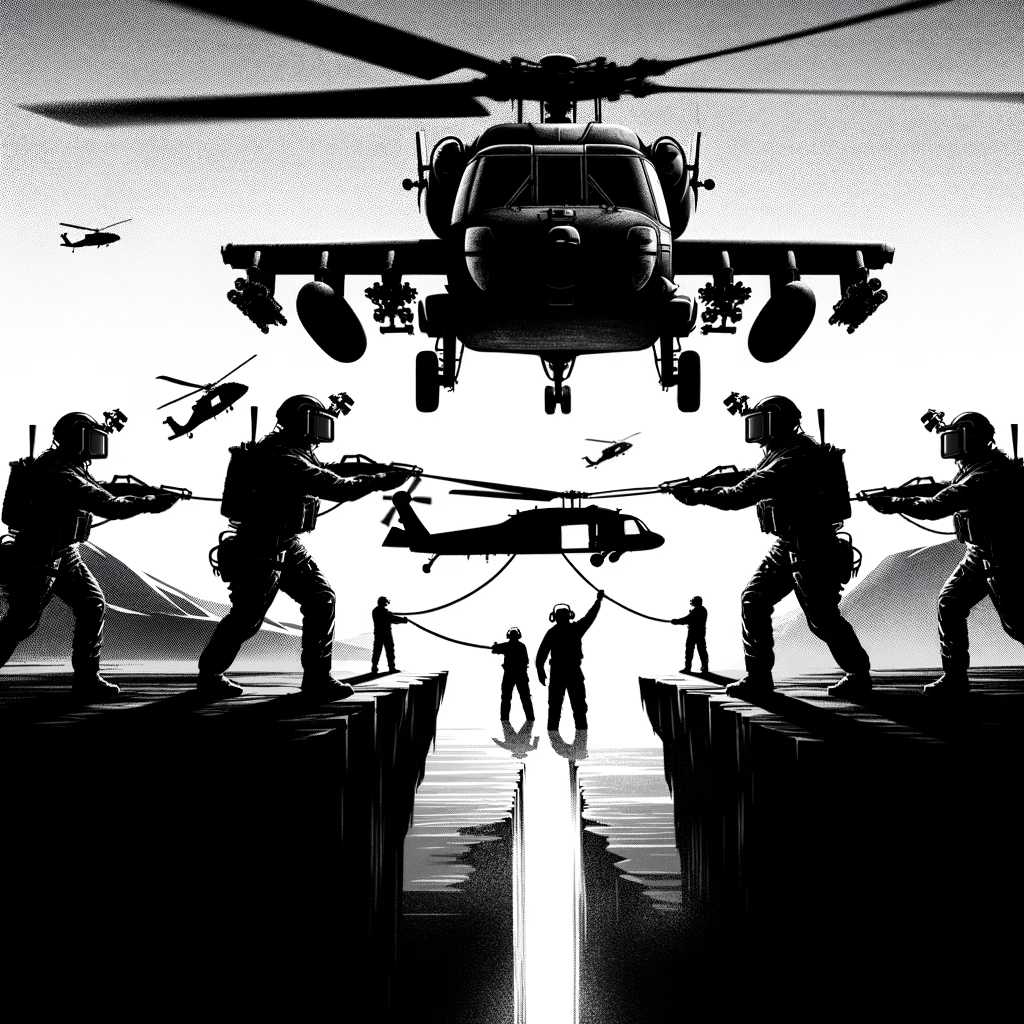
HMDs Close Rotary-Wing Pilot-Crew Awareness Gap
Imagine every crewmember seeing the same eyes‑out, real‑time picture—helmet‑mounted displays fuse sensors and shared symbology to collapse communication delays and turn split‑second threats into coordinated action.
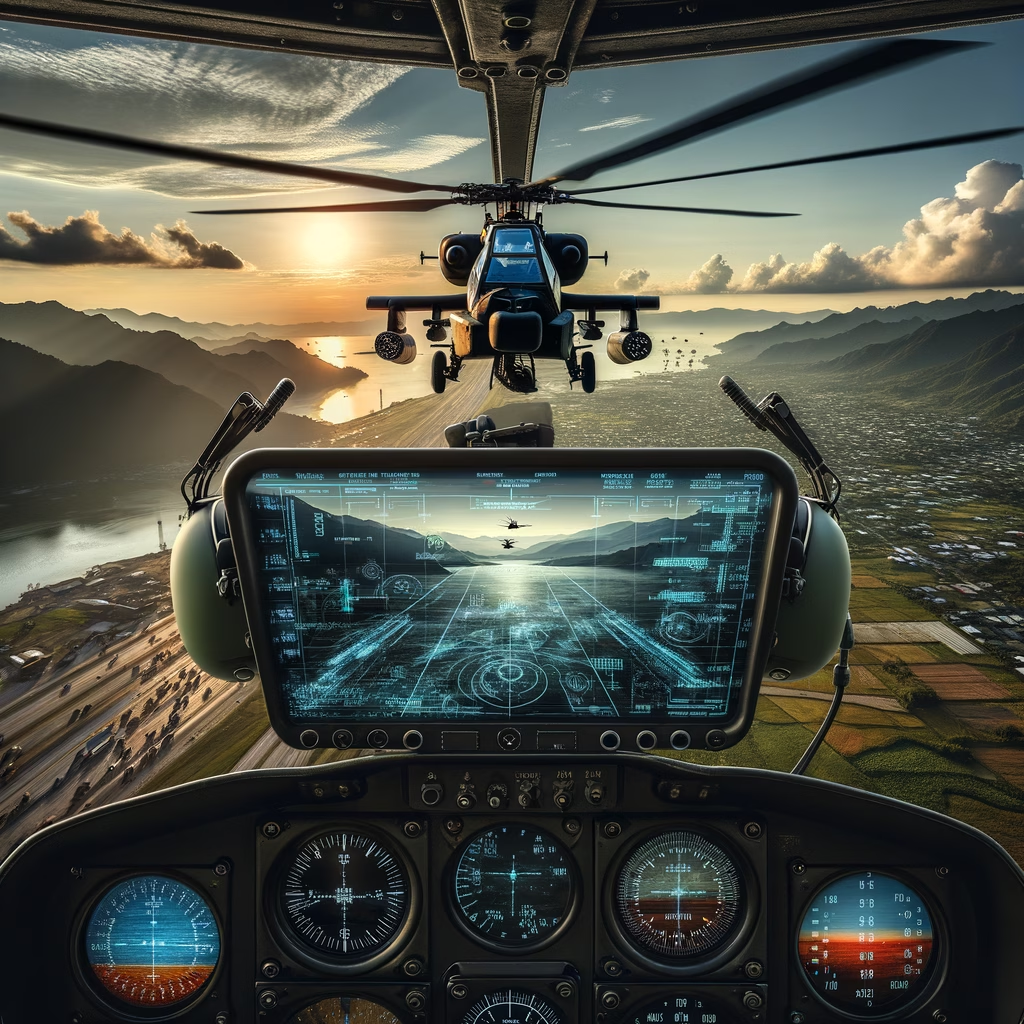
HMDs Close Rotary-Wing Situational Awareness Gap
When a helicopter pilot sees a threat but the crew doesn’t, head‑mounted displays (HMDs) are the game‑changer that puts the same real‑time battlefield picture into every crewmember’s eyes. By fusing sensors, stabilizing visuals, and trimming cockpit chatter, HMDs collapse delays and make rotary‑wing teams faster, safer, and far more effective in contested low‑altitude environments.

Army Eyes AI to Staff Artillery and Air Defense
The Army is exploring AI to augment—not replace—artillery and air-defense crews, promising faster sensor fusion, quicker target ID and persistent operations; but leaders warn the tech is still brittle, data-starved and vulnerable in contested battlefields.
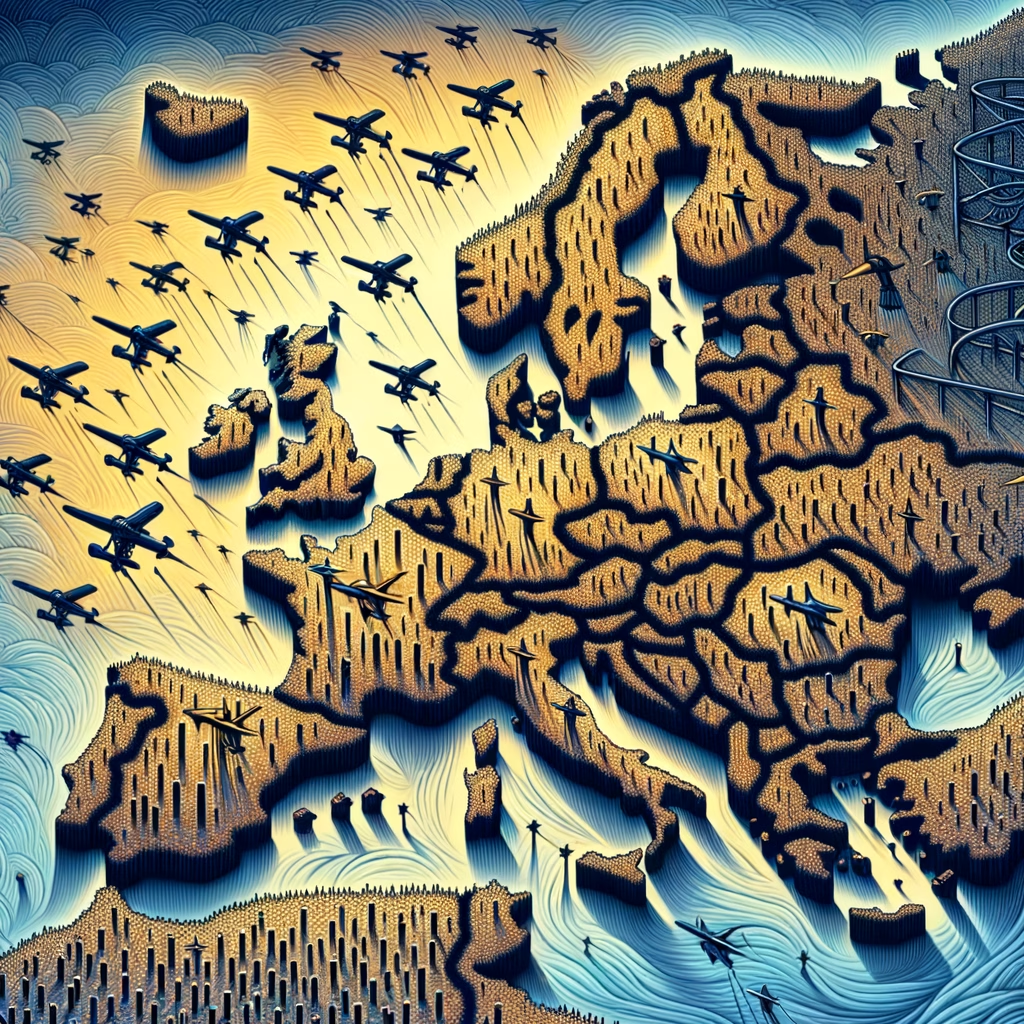
Inside Europe’s Race to Build a Drone Wall
Europe is racing to build a drone wall — not of stone but of sensors, software and beams of light — to blunt swarms of cheap, lethal drones made painfully real over Kyiv and Kharkiv. A patchwork of emergency programs, private innovation and military improvisation is rethinking air defenses for a world where small, smart, low‑cost unmanned aircraft can swarm, loiter and strike with impunity.

helmet-mounted displays: Exclusive, Best Tactical Edge
Helmet‑mounted displays are no longer niche pilot toys but powerful force multipliers that merge sensors, targeting, and comms into a pilot’s line of sight—while also creating new vulnerabilities to jamming, spoofing, and human error. Keeping the tactical edge means hardening systems, training for degraded conditions, and designing HMDs pilots can trust.

inertial measurement units: Must-Have for Best Ops
Imagine the sky goes dark—300,000 IMUs already in the field show how these tiny motion sensors become the military’s lifeline, keeping vehicles, drones, and weapons on course when GPS is jammed or lost.

senior officers Must-Have Data Training: Risky Gap
A five-month Army exercise found that while sensors and algorithms are racing ahead, many senior officers lack the data fluency to turn fast, messy streams into timely, trustworthy decisions—creating dangerous delays and wasted capability. If commanders don’t get practical training on data quality, algorithm limits, and human‑machine interfaces, today’s tech advantage could quickly become tomorrow’s vulnerability.

data-driven decisions: Must-Have Training to Prevent Risk
Project Flytrap revealed that sensors and AI can spot small drones, but senior officers often lack the data literacy and realistic training to turn those outputs into safe, timely decisions. Closing that gap with better education, doctrine, and human-centered systems is essential to avoid costly mistakes on the battlefield.

Integrated Battle Command System: Stunning Best Defense Aid
Northrop Grumman says its IBCS upgrade can stitch sensors and shooters into one smart brain—cutting expensive, wasteful anti-missile salvos and stretching logistics while keeping soldiers safer. But that efficiency brings hard choices: centralizing decisions can save billions and improve defenses, yet also creates new cyber, trust and sovereignty risks that allies and commanders must reckon with.

Integrated Battle Command System: Must-Have, Best Saver
What if the answer to missile saturation isn’t more interceptors but a smarter brain that makes each shot count? Northrop Grumman’s Integrated Battle Command System fuses sensors and shooters into one coherent picture to cut wasted launches, stretch magazines, and lower costs—if the network is hardened and trusted under fire.

head-mounted displays: Must-Have Best Warfighter Tech
On the battlefield, the best head‑mounted displays don’t win by flash alone — they must deliver clear, timely, and secure information that helps soldiers survive and decide under fire. Demand real-world performance, interoperability, cyber hardening, and user-centered sustainment, because a helmet is only as good as the system behind it.

modern C2 centers: Must-Have Resilience for Victory
As battlefields blur and speed trumps certainty, modern C2 centers face three urgent hurdles: turning overwhelming, messy data into rapid, trustworthy decisions; staying resilient when networks and sensors are jammed or hacked; and knitting multinational, misaligned systems into a single, trusted command. Solving them will mean smarter tech, tougher doctrine, and real-world drills that bind militaries, industry and allies together.
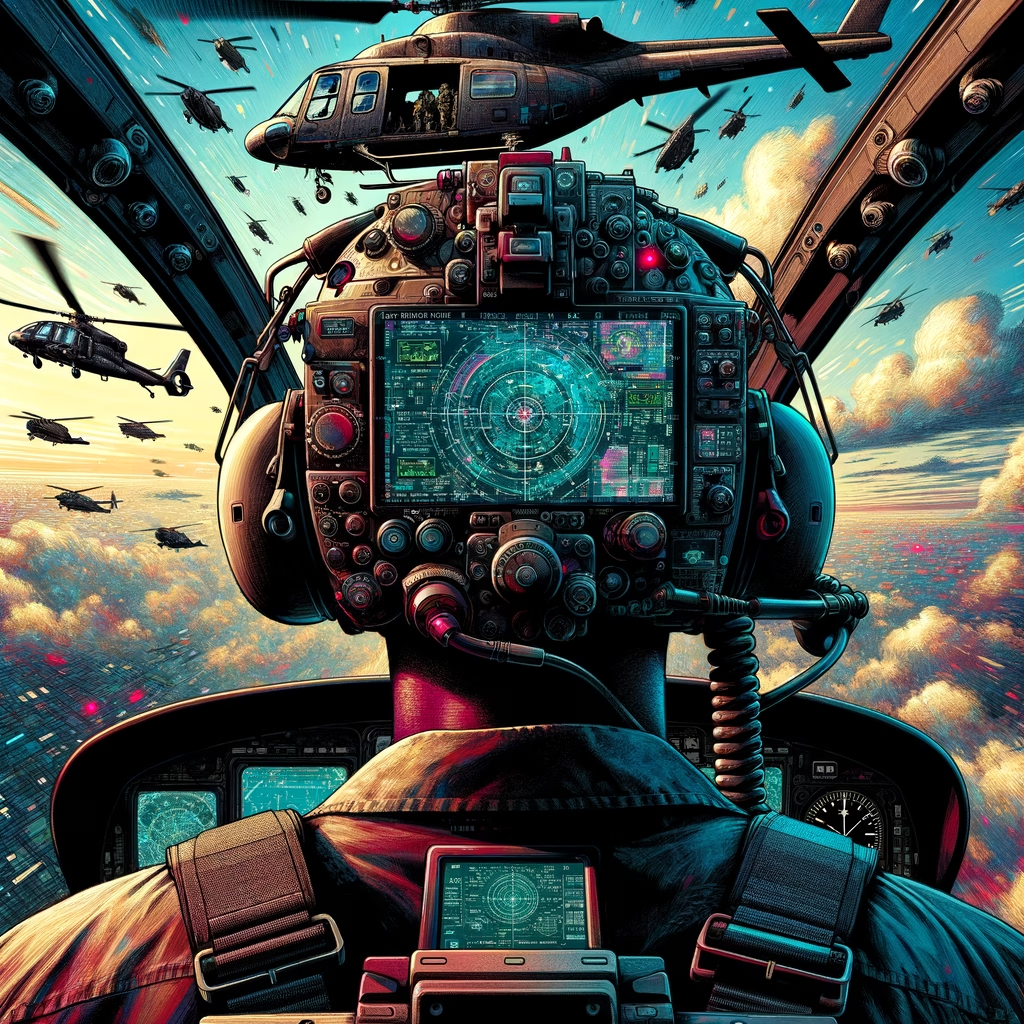
situational awareness gap: Must-Have HMDs for Best Safety
Could a visor really save lives? Helmet‑mounted displays bring pilots and crews the same real‑time picture—cutting radio clutter, speeding decisions, and closing the situational‑awareness gap that can mean the difference between mission success and disaster.

F-35 GPS denial: Must-Have Resilience Boost
Collins Aerospace’s delivery of the 1,000th anti‑jam GPS receiver for the F‑35 is a big, practical win in the race to keep pilots and weapons on target when satellites go silent. It’s a crucial step toward resilient navigation—but real safety will come from layered tech, training, and fast integration across the fleet.