[SPONSOREDNUBIVANCE]
Know a small business winging it on security?
No IT department, no security budget, real exposure. Nubivance builds right-sized security foundations for small companies. Send them this.
Send it along
Meet a machine that refuses to wait for a runway: Shield AI’s new jet-powered autonomous VTOL can launch from ships, forward sites or improvised clearings, slashing response times and making enemy targeting far trickier. It’s a bold leap in autonomy and propulsion that could reshape how air power is projected—and how wars are fought.

What happens when a commander can’t see, speak to, or trust her staff? Ukraine has turned that question into a real-world test—jamming, cyberattacks, swarms and long-range fires are making information a weapon and forcing militaries to rethink how they protect and run C2 centers.

This summer Collins Aerospace will deliver SPARTA — a deployable afloat/ashore E-2D trainer — into the DoD’s Joint Simulation Environment, letting crews rehearse sensing, command-and-control, and joint multi‑domain operations in a single shared synthetic battlespace. By simulating the Advanced Hawkeye’s sensors and C2 functions, SPARTA slashes flight hours while sharpening the carrier strike groups readiness for real-world contingencies.

Training for tomorrow’s naval fights requires more than plane-and-range time — it needs LVC: live, virtual and constructive systems stitched together to deliver the reach, realism and repeatability NAVPLAN demands. Federating simulators, live assets and computer-generated forces lets the fleet rehearse complex, distributed missions at scale and keep readiness high without burning endless sorties.

NAVPLAN requires training that mirrors modern, multi-domain warfare — and Live, Virtual, Constructive (LVC) training is the scalable, lower-risk solution, blending real forces, simulators, and computer-generated scenarios. It expands realistic practice, cuts cost and danger, and helps sailors and aviators stay ready for the fights ahead.

A thumbnail-sized MEMS IMU is quietly reshaping the battlefield: these tiny sensors can turn cheap rockets and mortar rounds into precision-guided weapons. The global buy of 300,000 units shows militaries are favoring affordable, mass-produced accuracy over sheer volume.

When a helicopter pilot sees a threat but the crew doesn’t, head‑mounted displays (HMDs) are the game‑changer that puts the same real‑time battlefield picture into every crewmember’s eyes. By fusing sensors, stabilizing visuals, and trimming cockpit chatter, HMDs collapse delays and make rotary‑wing teams faster, safer, and far more effective in contested low‑altitude environments.

Instead of clinging to big, fixed bases, the Air Force is adopting Agile Combat Employment. Think nimble teams, temporary runways, and prepositioned supplies that let aircraft disperse, survive, and strike back in a high-tech, contested battlespace.
No IT department, no security budget, real exposure. Nubivance builds right-sized security foundations for small companies. Send them this.
Send it along
GPS jamming won’t ground the F‑35 — Collins Aerospace’s delivery of the 1,000th anti‑jam receiver proves the jet’s layered navigation system can keep it finding its way, fixing targets and staying in the fight even when satellite signals are denied.

Rather than scrap battle-tested Arleigh Burke destroyers, the Navy is retrofitting their radars—from SPY-1 upgrades to AN/SPY-6 installs—to outpace China’s and Russia’s longer-range missiles and advanced sensors and keep these ships combat-ready while new warships are built.

Before you assume the Modular Handgun System is dead, know the Army says the modest $6 million in FY2020 reflects procurement pacing and shifting priorities—its a signal, not the whole story.
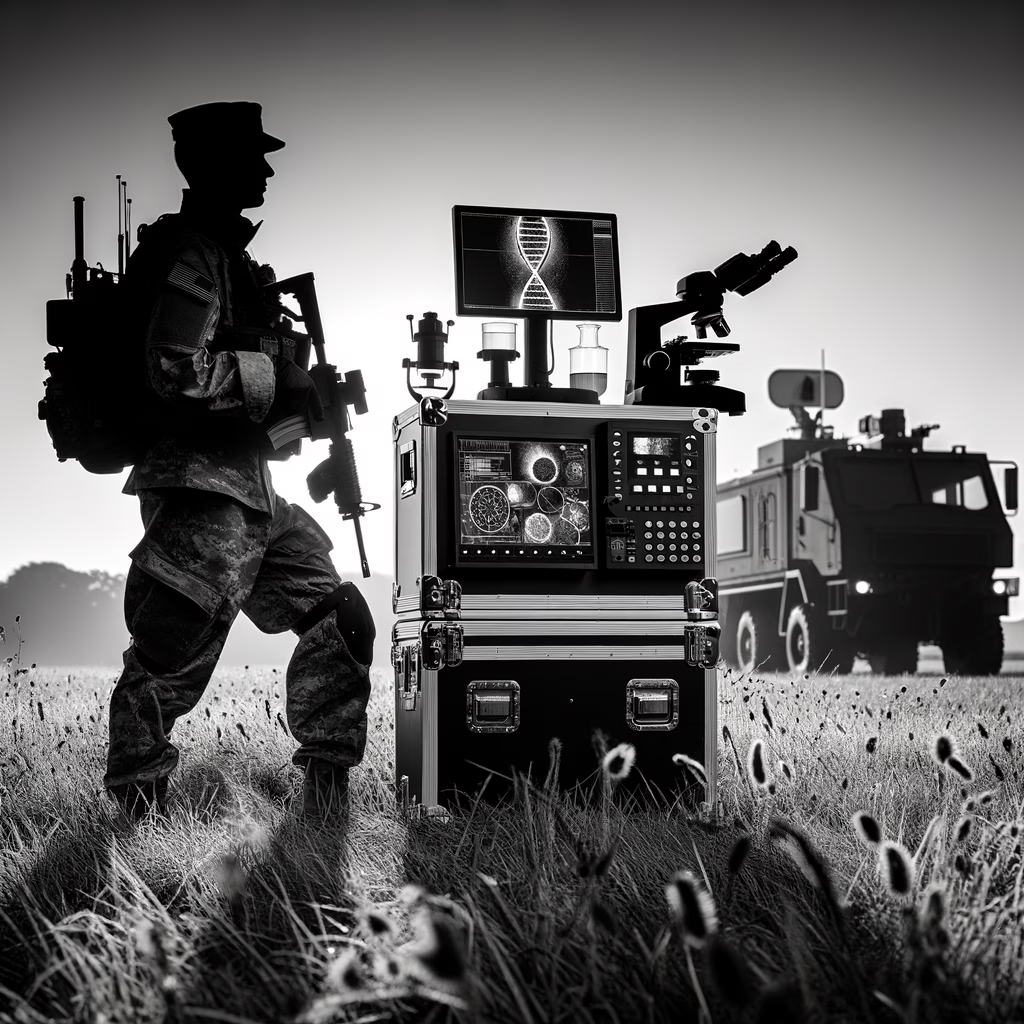
Imagine a patrol that can turn evidence into answers on the spot. The Marine Corps is fielding upgraded portable forensics kits—compact sensors, biometric readers and ruggedized computing—that speed identification, sharpen intelligence and help separate insurgents from civilians in austere environments.

Shield AI says it has built a jet-powered, runway-free autonomous VTOL fighter — a drone that can launch from ships, forward sites or improvised clearings. If proven, it could slash response times, confound air-defense planning and fundamentally reshape how air power is projected.

When enemy drones cost less than the missiles that try to stop them, you need a smarter, cheaper solution. The U.S. Army is fast‑tracking purpose‑built interceptors—tapping AeroVironment to build the Next‑Generation C‑UAS Missile and a Long‑Range Kinetic Interceptor to make airspace denial precise and affordable.

The U.S. Army has tapped AeroVironment with a $95.9 million award to build a long‑range kinetic interceptor under its NGCM/LRKI program. It’s a concrete step toward turning cheap, garage‑built drone swarms from an overwhelming nuisance into a targetable threat by extending engagement range and reaction time.

When the sky stopped feeling safe, the Army turned to AeroVironment — makers of the Raven and Puma — awarding $95.9M to build a Next‑Gen interceptor missile that brings kinetic punch to stop swarming quadcopters, fast drones and loitering munitions.
Evidence in spreadsheets, controls drifting between audits, frameworks multiplying on flat headcount. Nubivance runs continuous compliance on Rapid7 Cyber GRC - SOC 2, HIPAA, ISO 27001, PCI, CMMC.
End the scramble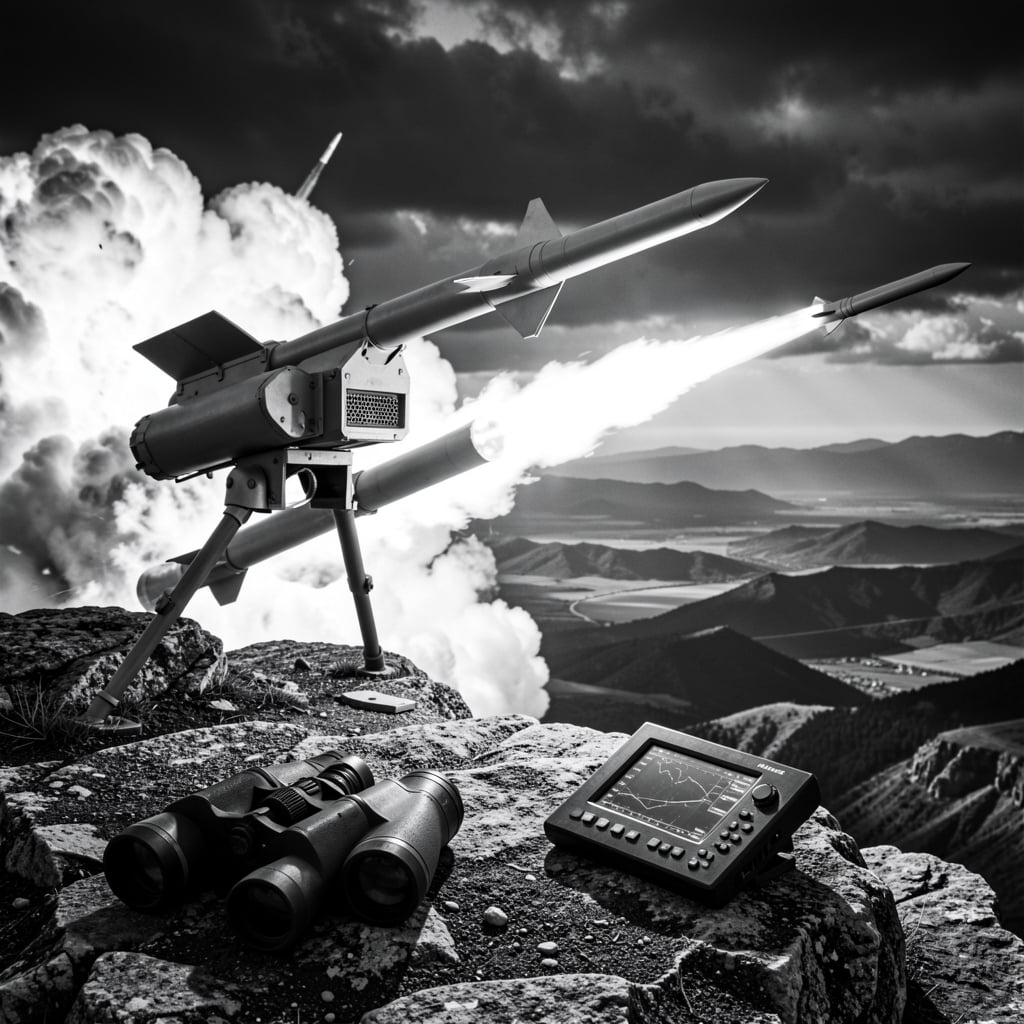
Could a troop‑carrying Bushmaster become a sea‑hunter? In Norway Thales and Kongsberg proved it can — firing a Naval Strike Missile from a Bushmaster‑based StrikeMaster to demonstrate a containerised, vehicle‑mounted anti‑ship system that turns a protected mobility vehicle into a nimble, road‑mobile sea‑denial asset.

Think of the trusty Bushmaster with fangs: Thales and Kongsberg just proved a protected land vehicle can launch the Naval Strike Missile in live trials in Norway, showcasing a fast, concealable, networked coastal-strike option. The StrikeMaster demo pairs Australian mobility with a modern NSM seeker to slash reaction times and validate performance under tough, real-world conditions.

Imagine the Bushmaster with fangs: Thales and Kongsberg just fired a Naval Strike Missile from a Bushmaster-based StrikeMaster, turning a protected mobility vehicle into a mobile coastal strike launcher. That shift could let Australia disperse anti-ship firepower, complicate enemy targeting and strengthen sea-denial defenses.

France is testing a next-generation missile for combat helicopters — promising smarter targeting, longer range, and a big boost to pilot safety that could reshape battlefield airpower.

Ukraine has launched talks to buy over 100 Gripen fighters — a bold, potentially game-changing move that could dramatically strengthen its air defenses and reshape regional air power.

Imagine spotting a flying doughnut over the front lines — Ukrainian electronic‑warfare specialists say Russian units are testing an unusual annular ring‑wing drone that looks nothing like the usual quadcopters. Its circular design could trade wingspan for endurance, potentially changing how drones loiter, scout and strike.

Meet CALAMAR, France’s new multi‑domain test range at Cazaux where Rafales, Tigers, guided munitions and advanced sensors are run through realistic, integrated trials to prove they work together in contested air and electromagnetic environments. By centralizing those tests, the DGA speeds development, cuts technical risk and strengthens France’s ability to certify and field cutting‑edge systems independently.

Imagine drones that don’t just follow waypoints but actually grasp a commander’s intent and act like teammates — the Army’s draft UAS strategy calls for a new career field, advanced autonomy training, and even soldier-built, mission-tailored drones to make that vision operational.