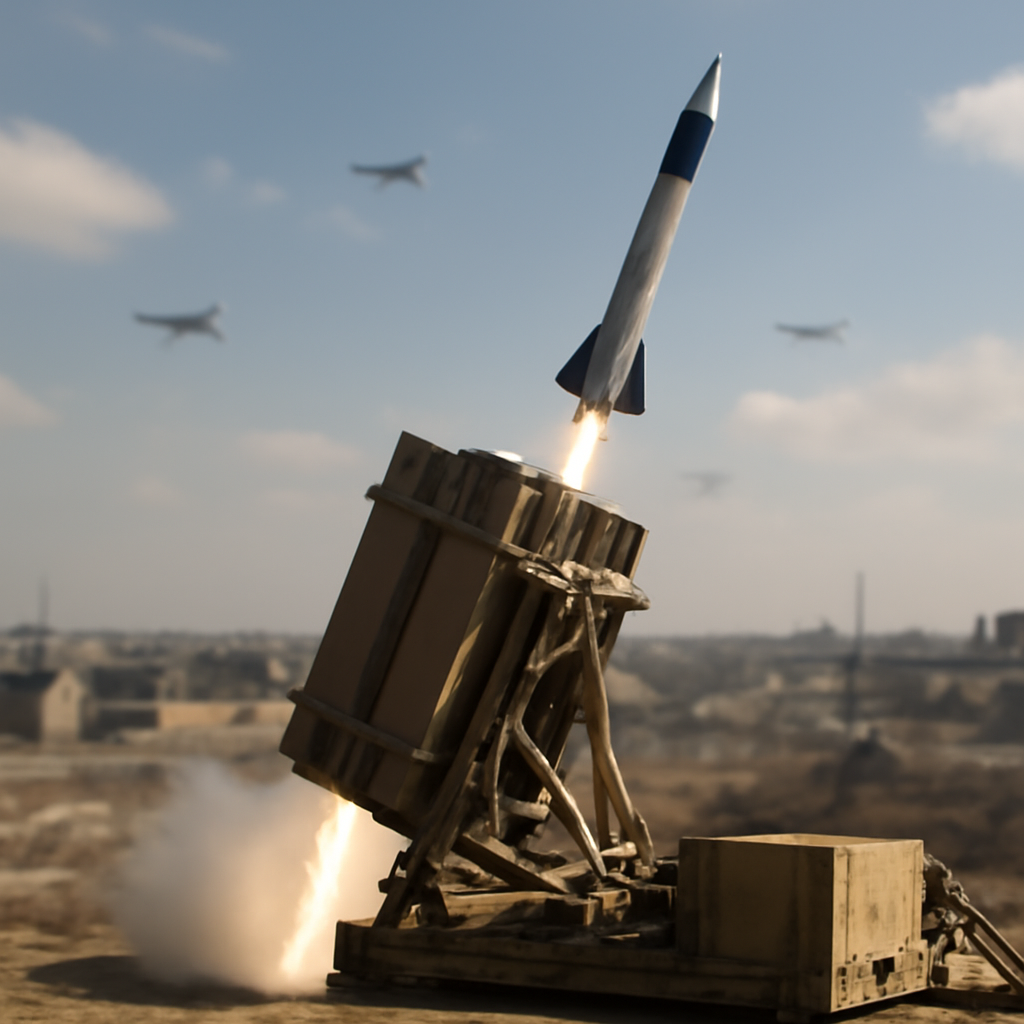
<p“Can a helicopter keep its distance and still change the outcome of a firefight?” That is the question implicit in France’s recent announcement that its armaments agency has again pushed the envelope on air-to-ground weaponry — testing a next-generation missile intended to give combat helicopters longer reach and greater lethality while operating from safer standoff positions.
<pFrance’s Directorate General of Armaments (DGA) said the latest live trial involved the Akeron Long-Range missile, developed by European defence firm MBDA as part of the Future Tactical Air-to-Ground Missile (MAST-F) program. The DGA conducted the test at its land systems technical centre, using a 280‑metre rail platform designed to simulate real‑world impact conditions. MBDA is identified as the developer; the agency framed the exercise as another step toward validating the weapon’s airworthiness and mission effects before integration on service helicopters.
<pThe basics are simple: the new weapon is meant to expand the envelope of what rotary-wing platforms can accomplish. By increasing stand-off range, a combat helicopter can engage targets such as armoured vehicles, hardened positions or other high-value threats without flying directly into the lethal corridor of ground defences. That capability matters more now than it did a decade ago, as modernised air-defence systems and battlefield sensors restrict freedom of manoeuvre close to contested front lines.
<pContext helps explain why the DGA and MBDA are investing in this line of development. European armies have been reshaping their tactics and procurement since Russia’s invasion of Ukraine highlighted the centrality of anti-armor fires, mobility and precision strike. For France — already a major helicopter operator with types such as the Tiger attack helicopter in service — an indigenous, helicopter-launched long-range missile fits into broader plans to modernise strike and deterrent capabilities while retaining sovereign control over critical armaments technology.
<pTechnically, the DGA’s use of a 280‑metre rail to reproduce “real-world impact conditions” speaks to two intertwined priorities: ensuring the missile survives launch and flight stresses, and validating terminal effects against representative targets. The rail platform allows repeatable, instrumented shots that are less costly and safer than full airborne firings while yielding high-fidelity data on seeker performance, flight stability and warhead effectiveness. The DGA’s statement — and industry practice more generally — suggests that some performance parameters (such as exact range, seeker type and warhead details) remain programme-sensitive and therefore not released publicly at this stage.
<pWhy that opacity matters. For policymakers and planners, secrecy protects operational surprises and export prospects; for potential adversaries, it complicates countermeasure planning. For soldiers and aviators, it means procurement decisions will continue to rely on classified testing reports, contractual negotiations and long-term integration trials rather than headline figures alone.
<pThe implications stretch beyond engineering. Consider the perspectives at play:
<p/ Technologists: Engineers will view successful rail trials as a validation of guidance algorithms, structural integrity and propulsion under controlled but stress‑relevant conditions. They also know the next hurdles — environmental qualification, integration with helicopter avionics, and seeker performance in cluttered, contested electromagnetic environments.
<p/ Operators: Helicopter crews welcome stand-off weapons that reduce exposure to air defences. Yet they also face trade-offs: missile weight and carriage capacity limit how many rounds a single sortie can carry, and adding long-range weapons alters mission planning, sensor-tasking and rules of engagement.
<p/ Policymakers and budget holders: Long-range precision weapons are costly. Decision-makers must weigh procurement and sustainment costs against the strategic dividends of deterrence, alliance interoperability and export potential. France’s investment also signals a desire to keep key defence-industrial capabilities onshore rather than rely solely on foreign suppliers.
<p/ Potential adversaries: The advent of more capable helicopter-launched missiles will prompt investments in countermeasures — from electronic warfare and soft‑kill systems to more layered air-defence networks and dispersion tactics. That dynamic can spur an arms‑control conversation or, absent restraint, an incremental arms competition in regional theatres.
<pThere are broader market and alliance considerations as well. MBDA is a multinational European maker; a successful French programme could become an exportable product for allied air arms, boosting interoperability among NATO partners that operate attack helicopters. Conversely, export approvals will be politically contentious if the weapons are sold into unstable regions.
<pOperationally, the missile under test could change how commanders think about close combat air support, anti‑armor strikes, and maritime littoral operations where helicopters operate from smaller ships. But the weapon is only a tool. Its real effect depends on intelligence fusion, target identification, pilot training and the ability to operate in denied environments.
<pNo test is the end of the story. The DGA’s rail platform trials are significant milestones, not finish lines. The programme must still demonstrate consistent performance in airborne launches, integration with sensor and fire-control suites, durability under operational tempos, and adherence to export and safety regulations. Each of those stages offers opportunities for improvement — and for delay.
<pThere are also political and ethical dimensions. As precision strike becomes more distributed across platforms, the risk of escalation or misidentification in complex engagements grows. How states choose to deploy such capability — for deterrence, for battlefield advantage, or as part of coalition operations — will shape both military outcomes and public perceptions.
<pFrance’s test underscores a common defence paradox: advancing technology can make force projection safer and more precise, yet it also raises the bar for rivals and complicates restraint. The DGA and MBDA framed the rail trial as a technical step toward fielding a capable missile for helicopters; the strategic calculus, however, will play out in procurement rooms, on training ranges, and in the diplomatic back-and-forth of arms sales and alliance planning.
<pAs military systems grow more lethal and more mobile, one question remains unavoidable: can the pursuit of ever-greater stand-off and precision be balanced with the need to manage escalation, limit proliferation, and keep decision-making clear in the fog of combat?
<pSource: https://defence-blog.com/france-tests-next-gen-missile-for-combat-helicopters/