Could a troop-carrying armoured vehicle become a sea‑hunter? “The Bushmaster now has fangs,” Thales Australia quipped after live trials in Norway — a pithy line that masks a complex military and strategic shift: mounting a sophisticated anti‑ship capability on a highly mobile protected mobility vehicle.
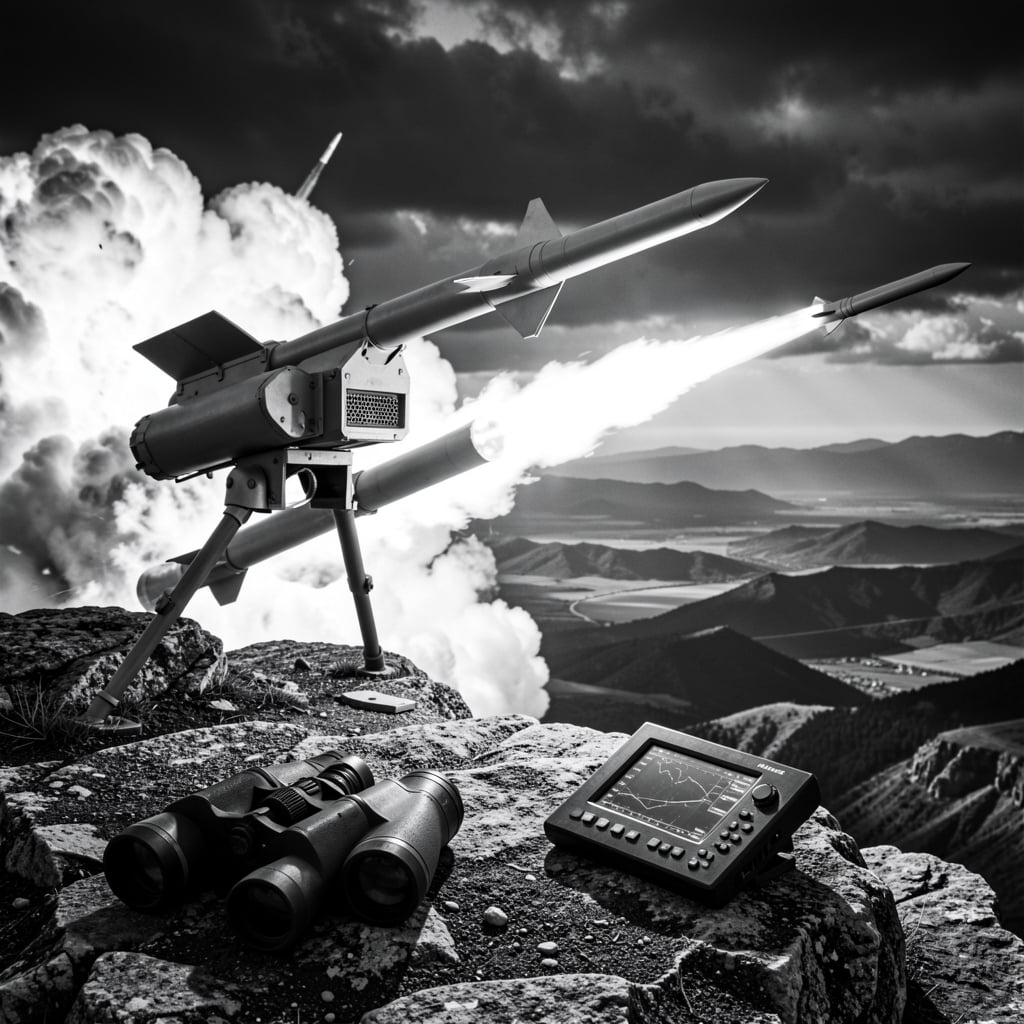
On 23 October, Thales Defence announced that Australia’s StrikeMaster missile launch system successfully fired an anti‑ship missile test munition in Norway. The shot used Kongsberg’s Naval Strike Missile (NSM) launched from a platform based on Thales Australia’s Bushmaster Protected Mobility Vehicle (PMV). The trial, reported by Defence Blog and confirmed in Thales’ statement, marks a collaboration between Thales and Kongsberg to demonstrate a containerised, vehicle‑mounted strike capability for littoral and expeditionary operations.
Background: the Bushmaster is a 4×4 armoured PMV in service with the Australian Defence Force and several international operators, prized for its crew protection and mobility. The Naval Strike Missile, developed by Kongsberg Defence & Aerospace, is a sea‑skimming, anti‑ship cruise missile with an imaging infrared seeker and advanced guidance suite that gives it high target‑discrimination and survivability against layered defences. Combining those two pieces of equipment seeks to create a dispersed, road‑mobile sea denial and strike option that can operate from austere bases or on short notice along coastlines.
Technically, the test is notable for systems integration more than for raw novelty. Putting a maritime strike weapon on a land vehicle requires careful attention to launcher stability, fire‑control integration, communications links to target cueing sensors, and safe handling of propellant and warheads. Thales and Kongsberg’s demonstration used a test munition rather than a live warhead, but it validated the launch mechanisms, seeker function and the general concept of a containerised launcher that can be fitted to Bushmaster‑derived platforms.
To military planners and technologists, the advantages are straightforward: vehicle mobility enables dispersed deployments, complicates an adversary’s targeting, and supports shoot‑and‑scoot tactics. A force with truck‑ or PMV‑mounted NSMs can threaten hostile vessels in littoral waters without relying on permanently sited coastal batteries or host nation basing. For smaller navies or expeditionary forces, that translates into asymmetric strike options that are less expensive than new surface combatants.
For policymakers, the demonstration raises policy and doctrinal questions. How will rules of engagement and escalation management be adapted when land forces can field precision anti‑ship fires at stand‑off ranges? Where and how should such systems be stationed in peacetime to avoid unintentionally provocative postures? Export control and arms‑transfer policy also come into play: the proliferation of mobile anti‑ship strike capabilities across different regions could alter naval balances and complicate coalition operations.
From the user perspective — soldiers and commanders — the idea has appeal and limits. A Bushmaster‑based launcher preserves mobility and protection for crews, while enabling organic anti‑ship fires. Yet mounting and firing a cruise missile brings additional training, logistics and maintenance demands. Commanders must integrate maritime surveillance feeds or targeting information from other platforms (aircraft, drones, ships, coastal radars) to employ the system effectively; a truck with a missile launcher does not become an effective sea denial asset in isolation.
Adversaries will take note. A mobile coastal strike capability complicates naval manoeuvre in littorals, threatens logistic and littoral support ships, and forces changes in sea lines of communication. Naval planners must consider dispersed anti‑access threats that can hide in civilian traffic or terrain. That, in turn, has implications for rules of engagement, identification procedures and the kinds of escorts and counter‑measures ships will need when operating near contested coasts.
There are also broader strategic and ethical considerations. Cruise missiles mounted on armoured vehicles reduce the cost of entry for maritime strike capabilities; that can deter aggression but also heighten the risk of miscalculation in crises where short‑warning strikes are possible. Policymakers must balance deterrence benefits with crisis‑management safeguards to avoid inadvertent escalatory steps. Exported widely, such systems could erode regional naval stability if deployed without transparency and confidence‑building measures.
Technologically, the trial underscores a trend toward modular, containerised weapon systems: a common launcher and fire‑control package that can be adapted to ships, fixed coastal sites, or vehicles. That modularity eases logistics and opens commercial and defence markets but also concentrates knowledge and components that, if proliferated, change the geometry of conflict in littoral zones.
Operationally, the next steps will matter. Demonstration flights prove concept; operational adoption requires doctrine, integration with sensors and command nets, supply chains for missiles and spare parts, and training pipelines for crews and maintenance personnel. For navies and armies contemplating acquisition, affordability and interoperability with existing surveillance and targeting architectures will determine whether StrikeMaster on Bushmaster becomes a niche capability or a new standard for mobile sea‑denial.
Neither Thales nor Kongsberg has framed the test as a deployed weapon system for a specific customer in this announcement. The companies are, however, signaling capability and intent: to offer a flexible, land‑based delivery option for an already fielded anti‑ship missile. For allies and partners, the demonstration is an invitation to explore options for coordinated land‑sea defence; for competitors, it is a marker of evolving asymmetric threats.
In the end, the image of a protected mobility vehicle with “fangs” speaks to a broader reality of modern warfare: platforms are becoming increasingly multi‑domain, and the line between land and sea capabilities blurs. That fusion can enhance deterrence and operational reach — but it also requires clear doctrine, robust command and control, and careful consideration of how, when and where such capabilities are employed.
Will mobile, containerised anti‑ship systems make littoral waters safer by deterring aggression, or will they lower the threshold for maritime confrontation? That question will shape procurement choices, alliance planning and naval tactics in the years ahead.
Source: https://defence-blog.com/thales-and-kongsberg-test-new-strike-system/