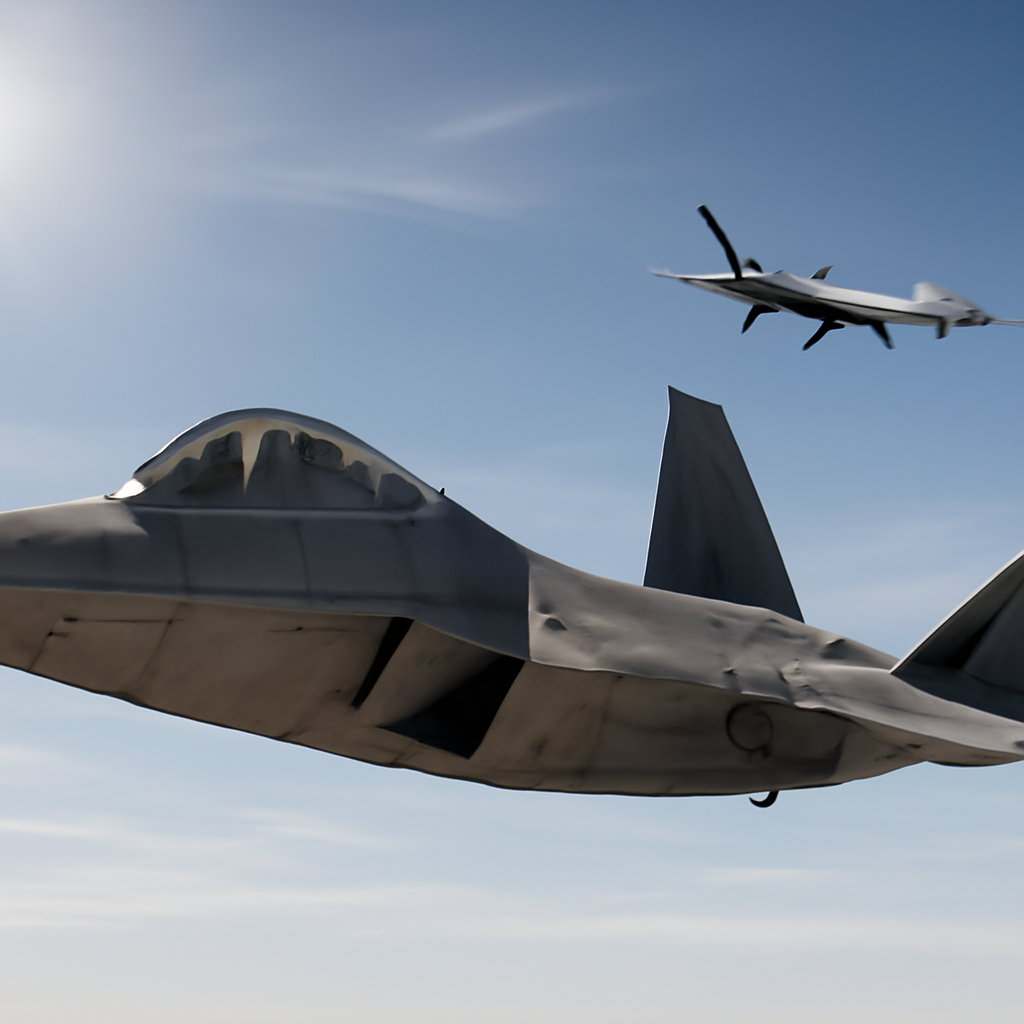
autonomous VTOL — What happens when a machine built to fight refuses to wait for a runway? That is the dilemma Shield AI has put before planners, pilots and policymakers with its claim to have produced a jet-powered, runway-free vertical take-off and landing (VTOL) autonomous fighter drone that can launch from ships, forward sites or improvised clearings, shortening response times and complicating an adversary’s targeting calculus. The company frames the announcement as a leap in autonomy, propulsion and operational flexibility at a moment when militaries worldwide are racing to fuse artificial intelligence and unmanned systems into combat formations.
autonomous VTOL: background and technical challenge
The concept combines three demanding engineering and doctrinal problems. First, a jet engine is required to deliver speed and range; second, vertical-lift capability must permit takeoff and landing without runways; third, the flight-control, sensor and decision-making stack must be reliable enough to execute complex missions without an onboard pilot. Shield AI says the vehicle can operate from dispersed locations — ships, improvised clearings or forward sites — which would allow armed forces to project air power from unexpected places and reduce reliance on fixed airfields.
Technically, integrating propulsion, lift mechanisms and stealth, while packing sensors, communications and survivability features into a compact airframe, forces trade-offs among endurance, payload, detectability and cost. Autonomy is particularly knotty: safe vertical takeoff and landing in contested, GPS-denied or electronically contested environments demands resilient perception, robust control, and rigorous verification. Security researchers warn autonomy can be deceived by spoofed sensors, data poisoning or jamming — weaknesses that a determined adversary could seek to exploit.
How Shield AI’s claim fits into current trends
- Proliferation of unmanned systems: Small and large UAVs have already transformed surveillance and strike options over the last decade.
- Maturing autonomy: AI has progressed from waypoint navigation to more sophisticated mission-level decision-making that seeks to operate with minimal human intervention.
- Operational decentralization: Militaries are emphasizing dispersed, resilient basing to reduce vulnerability to strikes against large airfields.
Combined, these trends make a runway-free, jet-powered autonomous fighter an attractive proposition for commanders seeking speed, survivability and dispersed lethality. But they also mean new logistics, training and command-and-control models are required to integrate such systems into existing forces rather than merely adding another airframe to the inventory.
Why it matters — operational and strategic implications
An autonomous VTOL that can operate from ships and improvised clearings can:
- Shorten sensor-to-shooter timelines by dispersing launch points closer to contested areas.
- Complicate an adversary’s air-defense planning by increasing the number and unpredictability of launch sites.
- Reduce the vulnerability of operations that depend on fixed, high-value airfields.
Those advantages translate into tactical flexibility and force-multiplying effects for users — but also into escalation risks. If one actor fields such platforms at scale, adversaries will accelerate countermeasures: more aggressive electronic warfare, layered sensing across spectrums, and hardened or mobile defensive systems. The result could be an arms race in autonomy, deception and counter-deception techniques.
Perspectives to weigh
- Technologists: For engineers and autonomy researchers, the VTOL fighter is a testbed for resilient perception, adversarial robustness and verifiable decision-making. Demonstrating safe takeoff, landing and combat operations without a human aboard would be a milestone — but one that demands transparent testing and peer review.
- Policymakers and ethicists: Autonomous weapons that can select and engage targets raise legal and ethical questions. Debates will focus on command-and-control frameworks, whether humans remain “in the loop” for lethal decisions, and how to ensure auditable, accountable systems consistent with international law.
- Military users: Commanders may welcome the operational flexibility, but they will also confront new logistics, maintenance, and doctrine challenges to sustain jet-powered VTOLs in dispersed, austere conditions.
- Potential adversaries: Rival states will view such a capability as both a threat and a spur to develop sensing, jamming, or soft-kill measures to deny or degrade autonomous VTOL effectiveness.

The cyber insurance questionnaire just landed. Now what?
SOC 2, HIPAA, insurance renewals - someone has to own security strategy. Nubivance provides fractional CISO leadership without the full-time salary.
Get a security leadRisks and verification
Claims by defense firms require careful validation. Independent testing, red-team assessments and open-source intelligence are essential to determine whether the system performs as described under contested conditions. Equally important are questions about cybersecurity and the integrity of autonomy: can the system resist electronic attack, sensor spoofing and data manipulation? Without robust, verifiable answers, operational adoption risks catastrophic failure modes in combat.
Legal and ethical lines of flight
The prospect of lethal action by machines compels policymakers to define clear rules of engagement and oversight mechanisms. Human rights groups, international lawyers and many states have urged limits or bans on fully autonomous lethal systems; others argue the technology can reduce collateral harm by improving precision. Any deployment will prompt renewed debates about accountability and the chain of command when a machine takes a life.
Shield AI’s announcement is thus not only a technical assertion but a political and moral one: it raises questions about how societies choose to weaponize autonomy and where they draw the line between tactical advantage and ethical responsibility.
Conclusion — a question that outflies the runway
Shield AI’s runway-free, jet-powered autonomous VTOL promises to remodel how air power is projected — bringing speed and unpredictability — but it also tightens the knot of verification, resilience and governance. As engineers attempt to teach machines to land, loiter and, if authorized, fight, the rest of us must decide how much autonomy and risk we are willing to accept in exchange for battlefield agility. Will the promise of dispersed, runwayless air power make conflict more controllable — or simply more complex and harder to constrain?
Source: https://go.theregister.com/feed/www.theregister.com/2025/10/24/shield_ai_x_bat/