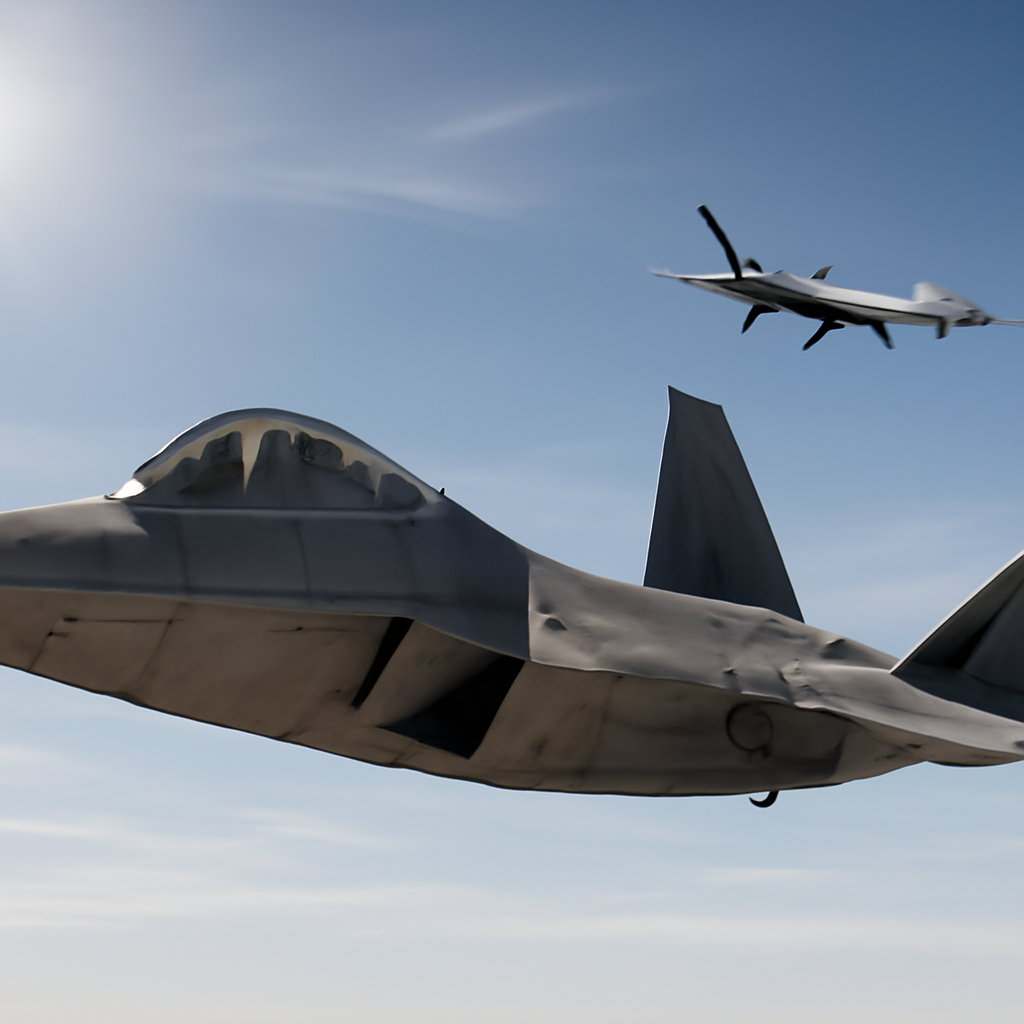
<p“Can a small neutral country’s small fighter do big heavy-lifting in a war that has reshaped European security?” That was the question implicitly posed in Linköping this week as Sweden’s prime minister, Ulf Kristersson, told reporters the government is preparing to export up to 150 Gripen fighters to Ukraine and is “exploring all the possibilities in providing Ukraine” with long-term defense cooperation.
<pThe announcement — made after a face-to-face meeting between Kristersson and Ukrainian President Volodymyr Zelenskyy at Saab’s Linköping facilities — marks the opening of what could become one of the most consequential military-technical partnerships in the war that began in 2022. It is important to stress at the outset: these are talks and a framework in formation, not a signed sales contract or an overnight delivery schedule.
<pBackground: what is the Gripen and why does it matter? Saab’s JAS 39 Gripen series is a family of single-engine, multirole fighters designed for cost-effective operations, short-field basing and rapid turnaround. Sweden built the aircraft to protect its own airspace, but Saab has long marketed Gripen as an export product to nations seeking a modern yet affordable fighter. The latest versions, commonly called Gripen E/F, include updated sensors, radar and weapons integrations that bring the jet closer to Western fourth-generation standards.
<pOperationally, Gripen is pitched as a blend of survivability and economy: modest procurement and operating costs, networked avionics and compatibility with a range of NATO-standard munitions. For Ukraine — whose air force has been operating largely Soviet-era airframes, weapons and support systems — Gripen would represent a major step toward Western interoperability while offering a platform that some European manufacturers say can be fielded and sustained without the extreme costs of heavier fighters.
<pWhat the Swedish announcement actually says: Kristersson framed the move as part of a long-term defense cooperation framework between Sweden and Ukraine, and as a commitment “exploring all the possibilities.” Sweden’s government is discussing up to 150 jets — an ambitious ceiling that far exceeds what most single-nation transfers have provided in the past. Saab’s plants in Linköping are the production center for Gripen, and the location underlines the industrial and political complexity: any export must reconcile Swedish national stock, NATO interoperability concerns, export-control law and Saab’s production capacity.
<pWhy this matters — three practical considerations
<p/Production and delivery: building and delivering dozens of modern fighters is not a matter of weeks. Even if Sweden were to transfer existing airframes, other operational, training and legal issues arise. If Ukraine were to receive newly produced Gripens, Saab would need production slots, supply-chain resilience and a multiyear schedule.
<p/Training and logistics: Ukrainian pilots and ground crews will require months of conversion training, simulators, weapons integration and spare-part pipelines. Infrastructure upgrades — hardened runways, maintenance hangars, spare parts depots and secure logistics — would have to keep pace.
<p/Weapons and integration: achieving fully useful operational capability means integrating the Gripen with Ukrainian command-and-control, air defenses and munitions. The Gripen can carry Western missiles and sensors, but those systems must be certified, supplied, and maintained under export and licensing regimes.
<pDifferent stakeholders see the proposal differently. Technologists and aviators point to the Gripen’s logistical and networking advantages: it can operate from dispersed bases, accept modular sensor and weapons packages, and do so at lower sustainment cost than heavier Western fighters. That makes it attractive for a protracted conflict where runway survivability and sortie rates are critical.
Policymakers must weigh the diplomatic and escalation risks. On one hand, a transfer would deepen Sweden-Ukraine ties and bolster Kyiv’s capacity to contest Russian air operations. On the other, Moscow is almost certain to denounce such a move and could respond with political, cyber, or military measures targeted at Swedish and Ukrainian interests. Western allies will watch closely: a big Swedish contribution might galvanize broader NATO assistance, or it could trigger debates over who pays for pilots’ training, munitions, and sustainment.
For Ukrainian users, Gripen offers a plausible path to rebuild and modernize an air force under pressure. Yet the human factor matters: pilot conversion, doctrine changes, and new maintenance cultures are not trivial. The transition from Soviet-era platforms to NATO-standard avionics and weapons requires institutional adaptation at the unit and ministry level.
From an adversary’s perspective, a 100-plus Gripen fleet in Ukrainian hands would alter calculations. It would increase air-denial potential, complicate Russian air operations, and elevate the value of long-range air-to-air missiles and suppression-of-enemy-air-defense (SEAD) capabilities. Russia’s theater-level planners would have to account for a more networked Ukrainian airspace, which in turn could change targeting priorities and operational tempo.
Practical obstacles and political caveats
<p/Swedish export controls and parliamentary oversight: even a government that wants to assist must comply with export law and obtain political consensus at home.
<p/Industrial capacity: Saab’s ability to free up jets for export without hollowing Sweden’s own defenses is finite. Building new jets takes time and supply-chain certainty.
<p/Cost and finance: whether the transfer is an outright gift, a subsidized sale, or financed by third-party support will matter for both budgeting and speed. Each Gripen carries tens of millions of dollars in procurement and sustainment costs; fueling a fleet of 100-plus is a multiyear, multimillion-dollar commitment.
Timing and next steps: expect negotiations, technical assessments, and phased commitments. A framework agreement can set principles — numbers, timelines, training packages, industrial cooperation — but operational capability will grow stepwise. Initial deliveries, if they occur, might be modest and focused on training and infrastructure before larger volumes are released or produced.
Context matters beyond the aircraft themselves. Sweden’s own security posture has shifted in recent years; its deeper integration with NATO partners and growing defense industrial cooperation make a move like this both more feasible and more politically sensitive. For Ukraine, modern fighters are only one piece of a larger puzzle that includes longer-range fires, air defenses, logistics, and economic resilience.
The announcement in Linköping is less a fait accompli than a signaling event: Sweden is offering to open technical and political channels for a major transfer. For Kyiv, Saab and Stockholm, the path ahead will test industrial endurance, diplomatic resolve and the capacity to adapt training and logistics under wartime conditions.
If the talks succeed, the Gripen could become a symbol of how Western technology and small-state industry help reshape battlefield parity. If they falter, the exercise will still have clarified trade-offs — cost vs. capability, speed vs. volume, and the political limits of military assistance. Either way, the question remains: can sustained, industrialized support change the balance of air power over a contested European battlefield, or will the complex logistics of modern air capability prove a bottleneck too stubborn to bypass?
Source: https://defence-blog.com/ukraine-begins-talks-for-100-gripen-fighter-jets/