“Inject[ing] uncertainties for Taiwan’s domestic drone manufacturers who are seeking clarity in the budget,” warned analyst William Yang — a blunt assessment of a parliamentary compromise that authorises money for Taiwan’s drone build-up but stops short of giving the government immediate, flexible access to it.
The numbers: T$240 billion authorised, T$40 billion a year for six years
On 27 August, Taiwan’s legislature approved a T$240 billion package (US$7.57 billion / A$10.5 billion) folded into the regular annual budget rather than the special lump-sum that President Lai Ching-te had sought. The president had proposed a T$210 billion special budget that would have been available immediately and, officials calculated, could have bought roughly 210,000 drones and uncrewed vessels by 2031. Instead, the approved text caps spending at T$40 billion per year for six years.
What authorisation does — and what it does not
The parliamentary bill is an authorisation, not appropriation: it creates the funding ceiling but does not release cash immediately. Under the final text, the extra money must still be appropriated through the ordinary annual budget process. That means the funds will be subject to the usual budget negotiations, may compete with other priorities, and — as the source notes — “can only begin once the 2027 budget is passed.” The 2026 budget experienced a record delay and was not accepted until 14 August, illustrating how long appropriations can take in practice.

This site is the portfolio.
OSINTSights runs on Cloudflare Workers, D1, R2, and Vectorize, with an AI pipeline on Hetzner ARM. Nubivance designed, built, and operates it. We do the same for clients.
See what we buildWho runs and who buys: ministries and procurement authority
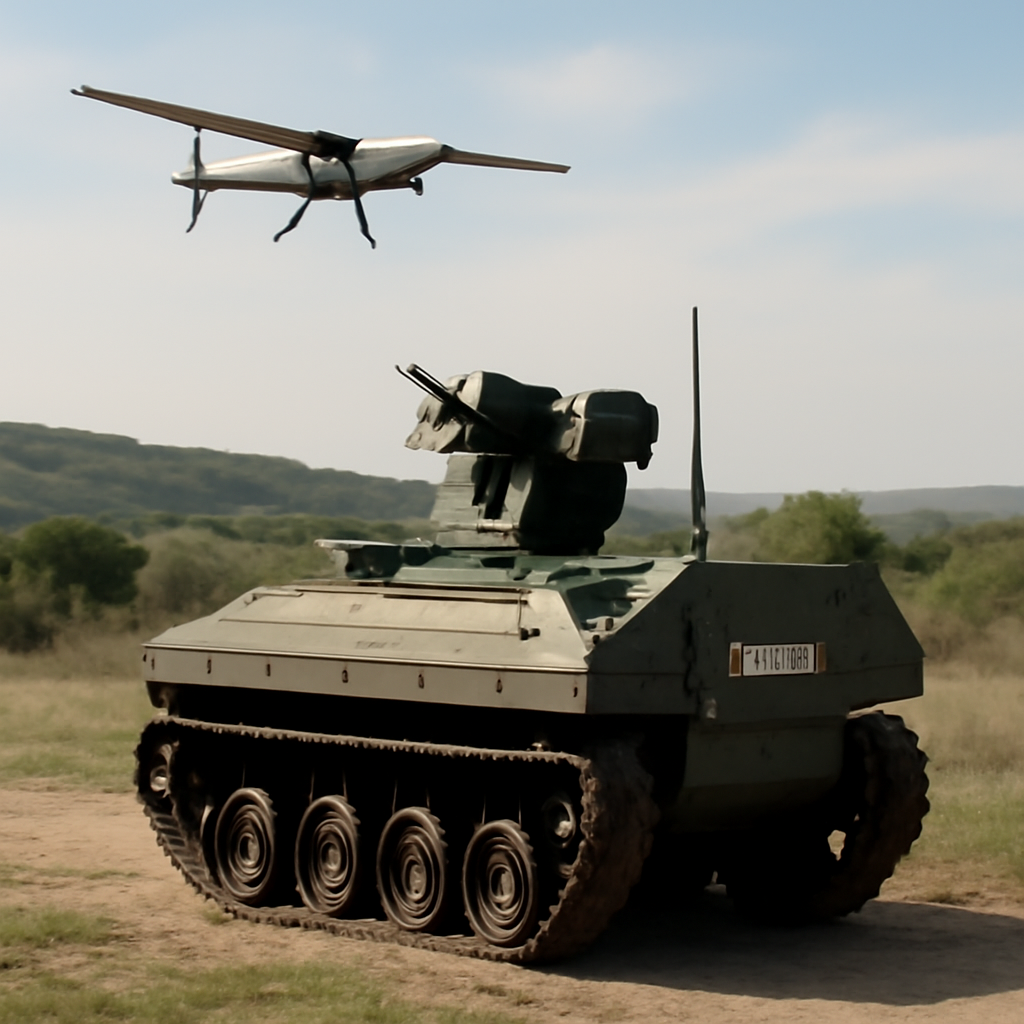
The KMT made last-minute concessions that mirror government requests. The Ministry of National Defense will retain authority over all military procurement paid for by the extra money, while the Ministry of Economic Affairs will run the overall drone programme. Local-content rules were softened, and the final bill explicitly specifies acquisitions the military asked for: coastal surveillance drones, coastal-attack drones and one-way attack boats. Premier Cho Jung-tai declined to say whether his government was satisfied with the result, and some members of President Lai’s Democratic Progressive Party were reportedly surprised by how supportive the final text was.
Politics on three fronts: Taiwan’s parliament, Washington pressure, and election timing
The compromise is the product of layered political pressures. The legislature, controlled by the Kuomintang (KMT), insisted on folding the money into the regular budget so it could preserve oversight. The KMT had earlier excised domestic drone procurement from a broader defence special budget proposed in November — when Lai sought to include drone funding inside a T$1.25 trillion defence special budget that the opposition pared to T$780 billion by keeping only funding for foreign procurement.
International pressure played a visible role. KMT chair Cheng Li-wun was repeatedly questioned on drones during a June trip to the United States and subsequently announced the KMT’s parliamentary proposal. Legislative Speaker Han Kuo-yu led a bipartisan delegation to the US weeks later that discussed drones, and a bipartisan US congressional delegation pressed Taiwan’s government and opposition directly when it visited Taipei in early August. The KMT pushed its version through on the legislature’s last sitting day, apparently mindful of November local elections and unwilling to face an overt defence fight ahead of them. An INDSR poll in May showed 62 percent support for the government’s proposed special defence budget — a popular backdrop to these manoeuvres.
How Taiwan’s domestic drone manufacturers, the Ministry of National Defense, and Washington are responding
- Taiwan’s domestic drone manufacturers: Likely to view the bill as an incomplete victory — authorised funds exist on paper, but William Yang’s critique captures their central worry: budgetary uncertainty and delayed appropriations will complicate planning and growth. The industry has been growing, largely on foreign demand from Ukraine and the Middle East, but T$40 billion a year is not the immediate industrial surge some in Taipei had sought.
- The Ministry of National Defense: Gains the procurement authority it requested for military purchases funded by the programme, and the bill explicitly allows acquisitions the ministry specified (coastal surveillance and attack drones, and one-way attack boats), aligning the authorisation with operational requirements.
- Washington and US interlocutors: Their sustained pressure helped break the stalemate; US questioning of KMT leaders abroad and reciprocal delegations to Taipei are noted in the passage of the legislation and in the timing of KMT decisions.
Constitutional questions and practical limits remain. One constitutional interpretation holds that parliament may not add items into the regular budget; Premier Cho has previously refused to countersign bills on that basis, which could set up a legal fight at a time when Taiwan’s constitutional court has been unable to function since early last year because of quorum rules imposed by opposition parties. And even with the T$240 billion authorised, spending will not flow until legislators and the executive agree appropriations in the yearly budgets — a process that can be slow and, history suggests, uncertain.
The net result is a partial victory: parliament authorised a defence-relevant programme and preserved key procurement authority for the Ministry of National Defense, but it turned a fast, flexible special budget into a slower, annualised funding stream. For an industry and defence strategy that both seek scale and speed, that difference may prove decisive.