"The aero‑engine is the 'heart' of an aircraft," Defence Minister Rajnath Singh told assembled workers at Hindustan Aeronautics Limited's (HAL) Koraput Division on 6 October 2026, as he announced a stepped‑up production plan for one of the Indian Air Force's primary fighter engines.
HAL to raise AL‑31FP annual output to 50 engines
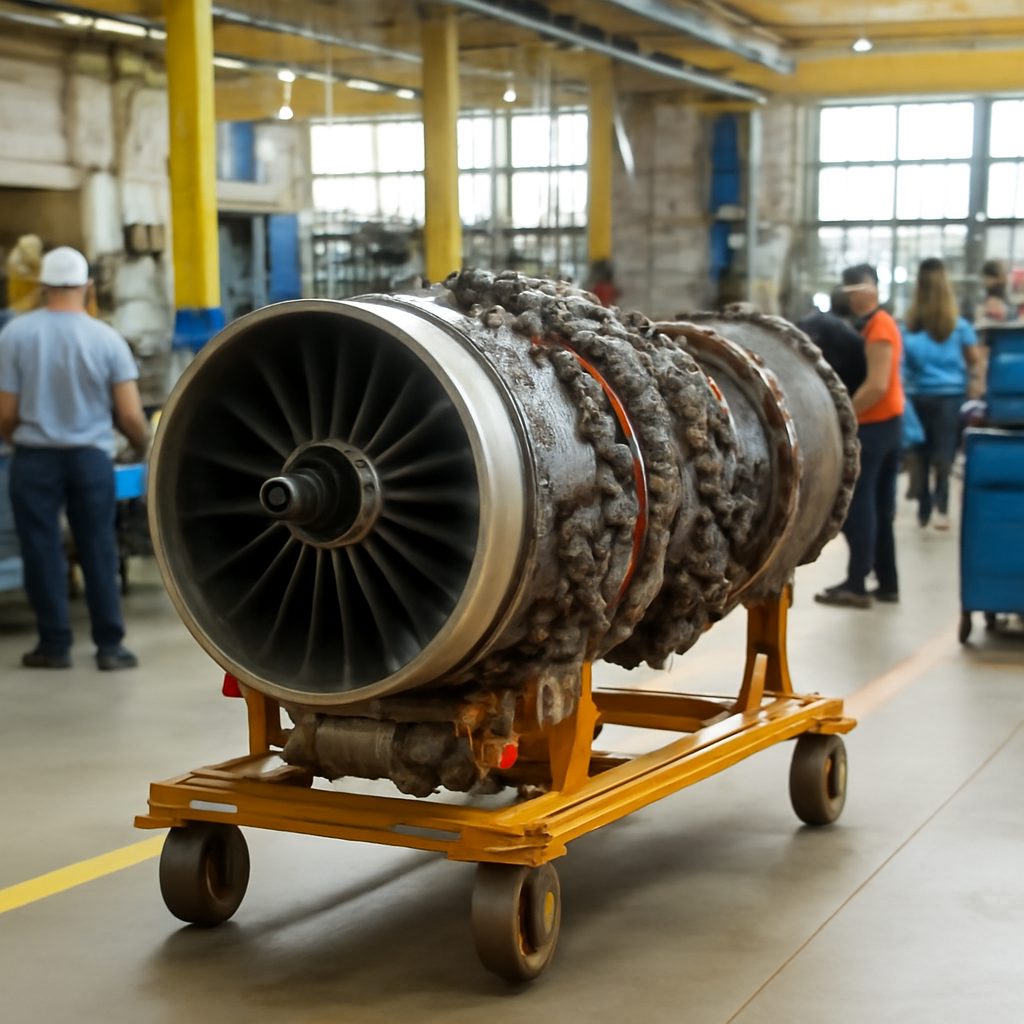
India's Ministry of Defence (MoD) announced that HAL will increase annual production capacity of the AL‑31FP turbofan from 30 to 50 engines. The expansion is backed by an investment of ₹335 crore, according to Singh. The AL‑31FP powers the Indian Air Force's Su‑30MKI fleet; HAL's Koraput Division delivered its 2,000th aero‑engine during the minister's visit.
Progress under the 240‑engine contract
In September 2024 the MoD placed an order with HAL for 240 AL‑31FP engines under a ₹26,000 crore (US$3 billion) contract scheduled for completion by 2032. HAL reported that deliveries reached 63 engines by the end of the program's second year, exceeding the target of 60. Singh said HAL handed over the first engine ahead of schedule despite global supply‑chain and raw‑material disruptions. With 63 delivered, the remaining 177 engines under the order will be produced at the new rate of 50 per year.

This site is the portfolio.
OSINTSights runs on Cloudflare Workers, D1, R2, and Vectorize, with an AI pipeline on Hetzner ARM. Nubivance designed, built, and operates it. We do the same for clients.
See what we buildIndigenization targets and the Shakti engine line
The September 2024 engine order includes an indigenization target. HAL expects the AL‑31FP's indigenous content to rise to 63% by the contract's end, with an average of more than 54% over the entire production run. Singh used the Koraput event to announce a second Shakti engine production line at the facility, with ₹218 crore in investment; that line is designed to produce up to 100 engines annually and is scheduled to be fully established by 2028–29. The Shakti is an Indian derivative of Safran's Ardiden 1H1 and powers HAL's Dhruv advanced light helicopter and Prachand light combat helicopter.
Koraput Division, investments, and the propulsion ecosystem
HAL's Koraput Division was established in 1964 and has manufactured engines for the MiG‑21, MiG‑27, MiG‑29 and Su‑30MKI and overhauled more than 9,000 engines, the MoD noted. Singh framed the Koraput delivery as requiring a propulsion ecosystem that brings together micro, small and medium enterprises (MSMEs), start‑ups, industry, academia and research institutions. He urged HAL to expand Koraput's role from engine production to a broader aerospace propulsion ecosystem, and the government has put forward an investment of about ₹5,000 crore for an indigenous high‑thrust engine program. Taken together, the AL‑31FP expansion and the Shakti line account for ₹553 crore in combined investment announced at Koraput.
How HAL, the Indian Air Force, and MSMEs are positioned
- HAL: Will manage simultaneous responsibilities—continuing airframe obligations for the Su‑30MKI while raising engine output and pursuing indigenization targets; it has also appointed DRDO Director General (Aero) Anindya Biswas to its board as a government nominee director, effective 7 October 2026.
- Indian Air Force: Gains a planned, higher annual engine production rate for the AL‑31FP supporting the Su‑30MKI fleet; the engine contract is structured to deliver through to 2032 and already shows early‑delivery progress.
- MSMEs, start‑ups and research institutions: Are explicitly named in the MoD's propulsion ecosystem proposal as partners whose involvement will be needed to meet production and indigenization goals, and to support lifecycle availability and upgrades for helicopter engines as orders rise.
Singh also referenced HAL's wider fighter commitments: a December 2024 agreement requires the company to supply 12 additional fighters for ₹13,500 crore (US$1.58 billion). The Shakti line is intended to bolster domestic aero‑engine supply as orders for indigenous military helicopters rise sharply.
Short‑term milestones to watch inside the record are concrete. HAL's remaining engine deliveries will proceed at 50 per year until the 240‑engine contract completes in 2032; the Shakti second line is slated to be fully established by 2028–29; and HAL's next quarterly results are due on 11 November 2026. The combination of announced investments, an explicit indigenization trajectory and the appointment of a DRDO aero director to HAL's board ties the production surge to formal government management of propulsion capability rather than a standalone manufacturing decision.